30 Years of Hurt, 30 Years of Hope: The Story Behind 'Three Lions'
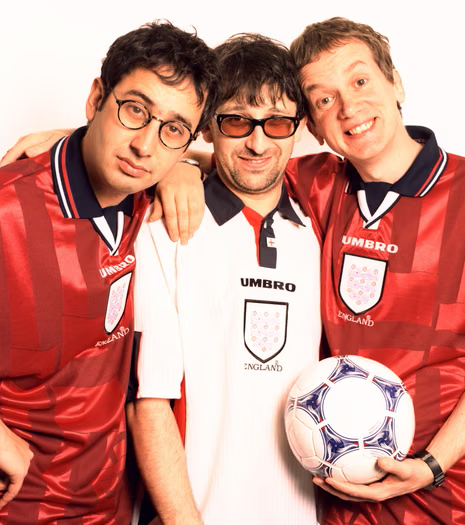
In late 1995, the Football Association (FA) reached out to Ian Broudie, the acclaimed producer and frontman of the indie-pop band The Lightning Seeds, to commission an official song for the upcoming 1996 European Football Championship. The FA had a proven track record with this approach; six years earlier, for Italia ’90, they collaborated with New Order to create the iconic 'World in Motion'.
That track famously blended synth-pop with appearances from the England squad, most notably featuring a legendary rap by John Barnes alongside cameos from Paul Gascoigne and Peter Beardsley. Band member Peter Hook recalled that the players arrived at the studio fresh from a pub lunch, resulting in a rowdy, chaotic recording session. While most of the team provided backing vocals, a handful of players, including Paul Gascoigne, Peter Beardsley, Chris Waddle, and John Barnes, auditioned for a mid-song rap section written by comedian Keith Allen.
England squad songs were traditional, booming brass-band marches. New Order replaced that outdated formula with a cutting-edge, Balearic club beat that perfectly mirrored the booming UK acid house and "Madchester" youth culture of the era.
Liverpool winger John Barnes won the audition, creating what is widely considered the most iconic verse in football music history. Delivered with genuine rhythm and flow, Barnes’ rap ("You've got to hold and give, but do it at the right time...") became a cultural phenomenon in its own right.
Naturally, the FA offered Broudie a similar arrangement, suggesting he utilise the current crop of England players for vocal duties. Broudie firmly declined. He wanted to steer clear of anything overtly nationalistic or boastful. Instead, he wanted to capture the true essence of English fandom, later reflecting: "It was more about being a football fan, which, for 90% of the time, involves losing."
To capture this authentic, long-suffering fan perspective, Broudie enlisted comedians Frank Skinner and David Baddiel. As the hosts of the wildly popular BBC comedy show Fantasy Football League, the duo perfectly understood the bittersweet reality of supporting the national team. Broudie provided them with a soaring melody inspired by traditional terrace chants, and the comedians set to work writing the lyrics.
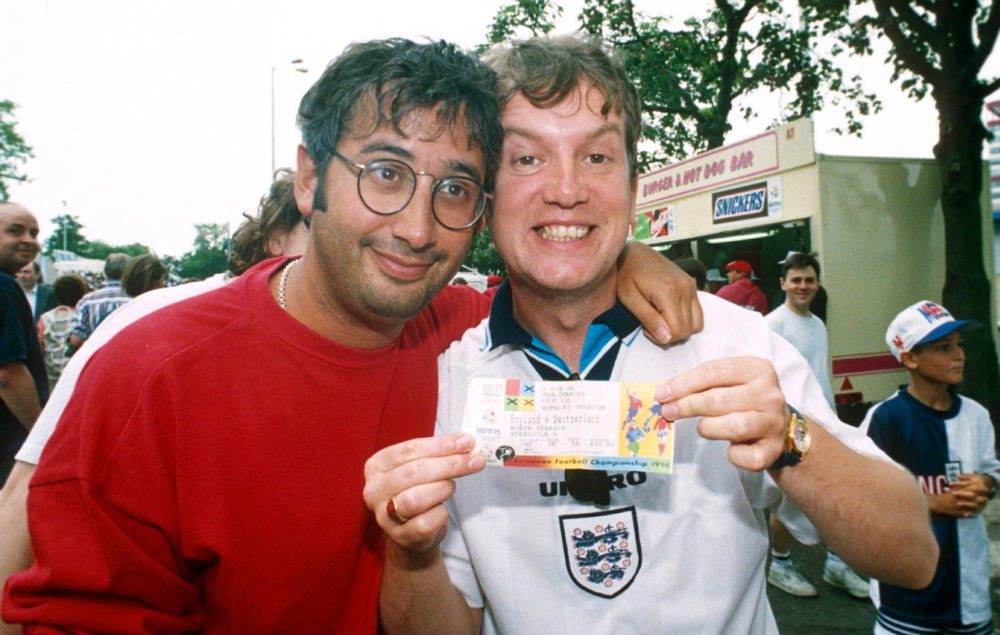
When David Baddiel and Frank Skinner sat down with a legal pad to write the lyrics over Ian Broudie's acoustic guitar melody, they explicitly intended to pen a bittersweet love letter to football fandom. As hosts of the cultural phenomenon Fantasy Football League, they knew that true support is rooted in a unique combination of shared trauma and unwavering loyalty,
The pair intentionally rebelled against the traditional, hyper-masculine "war march" football songs of the past. Their lyrics tapped into what Baddiel termed "magical thinking", the irrational, beautiful mindset of a fan who fundamentally expects a loss based on decades of harsh experience, yet passionately hopes for a miracle anyway.
The writing process was highly collaborative, and some early, comical drafts were rightfully left on the cutting room floor. Baddiel later revealed that one scrapped version of the chorus humorously leaned into historic eccentricities.
"Three Lions on a shirt / Pickles has found a bone, look. Do it for Millichip, Bert / as he's listed in the phone book."
Instead, they wisely pivoted to concrete memories, using imagery that felt deeply personal yet universally understood by every generation of England supporters. They masterfully wove the phrase "Jules Rimet still gleaming" through the track, a nod to the original World Cup trophy won in 1966. The genius of the lyric lies in the fact that even though the physical trophy was long gone, the psychological brilliance of that victory still shone brightly in the hearts of fans.
The song's title directly references the three lions on the England national team crest, while its infectious chorus, "It's coming home," originally played on the tournament's official slogan, celebrating Euro '96 as the first major football competition England had hosted since the 1966 World Cup. Over time, however, the phrase evolved into a broader cultural mantra representing the dream of a trophy finally returning to the homeland of modern association football. Unlike the unbridled optimism of traditional sports anthems,
'Three Lions' leaned heavily into collective trauma. It acknowledged that every tournament since 1966 had ended in heartbreak, yet it celebrated the defiant, irrational hope that keeps fans coming back. To bridge the gap between past glory and modern heartache, the lyrics beautifully weave together specific, iconic moments from English football history:
- "That tackle by Moore": Referencing captain Bobby Moore’s flawlessly timed, legendary tackle on Jairzinho during the intense 1970 World Cup clash against Brazil
- ."When Lineker scored": Recalling Gary Lineker's dramatic, late equalizer against West Germany in the tragic 1990 World Cup semi-final.
- "Bobby belting the ball": A nod to Bobby Charlton’s spectacular, long-range thunderbolt goal against Mexico during the 1966 group stage.
- "Nobby dancing": Immortalising the joyful image of midfielder Nobby Stiles dancing on the Wembley pitch while holding the Jules Rimet Trophy aloft in 1966.
While the track is today revered as a flawless cultural treasure, it almost never saw the light of day due to an intense clash with the Football Association (FA).
Steve Double, the FA's former head of media relations, later admitted to acting as the "faceless FA bureaucrat" who nearly derailed the project. When the creators delivered the raw demo to the governing body, executive panic immediately set in. In the mid-1990s, English football was desperately fighting to distance itself from its dark history of hooliganism, and the FA wanted Euro '96 to project a modern, strictly controlled, and relentlessly positive image.
The FA hierarchy took major issue with the song's opening and structure:The
- "Depressing" Intro: Executives were deeply unsettled by the soundbites from downcast pundits and pessimistic fans. They argued that airing defeatist declarations like "We'll go out, we'll lose on penalties" right at the start of a major home tournament was completely counterproductive.
- The "Aggressive" Edits: The FA combed through the lyrics line by line. They vehemently objected to an early draft line mentioning being "ready for war," forcing Baddiel and Skinner to scrub anything that could accidentally incite aggressive fan behaviour on the streets.
- Demands for Triumphalism: The FA actively pressured the trio to completely rewrite the lyrics to focus strictly on winning, nationalism, and traditional triumph.
Broudie, Baddiel, and Skinner fiercely stood their ground, aided by FA conduit Rick Blaskey, who managed to convince the executives to trust the bittersweet, self-deprecating nature of the track. They argued that fans would instantly reject a hollow, corporate song about guaranteed victory because it lacked authentic emotional resonance. The creators won the standoff, and the original "pessimistic" intro remained intact.
The definitive, almost poetic twist of the 'Three Lions' story arrived at the tournament's heartbreaking conclusion. During the semi-final at Wembley, England faced their historical rivals, Germany. In a cruel twist of fate that mirrored the song's opening soundbite precisely, the match went to a penalty shootout,and England lost. German forward Stefan Kuntz played an instrumental role in sealing the victory. In a hilarious bit of cross-cultural irony, Kuntz's name had been the subject of frequent, cheeky mockery on Baddiel and Skinner’s Fantasy Football show due to how it sounded to English ears.
However, instead of mocking the song, the German national team absolutely fell in love with it. Having heard 80,000 English fans belt out the track with bone-chilling passion at Wembley, the German squad adopted it as their own unofficial soundtrack.
On their celebratory charter flight back to Berlin, the German players sang "Three Lions" at the top of their lungs. Even more remarkably, when the squad stood before hundreds of thousands of fans on the balcony of the historic Römer building for their official European Championship victory parade, the German players grabbed the microphone and chanted "It's coming home" to the roaring crowd.
The track became so deeply embedded in German pop culture that David Baddiel and Frank Skinner were later officially invited to the German Sports Personality of the Year awards to perform the anthem. Proving that they never truly lost their defiant sense of humour, the comedy duo showed up to the German broadcast defiantly wearing their classic 1966 England shirts. When confused German producers asked if they genuinely understood what the English-centric lyrics were about, Baddiel famously shot back: "You are aware of what this song is about? We'll leave it there."
The commercial success of 'Three Lions' is completely unprecedented in the history of British music. It is the only song in UK chart history to reach Number 1 on four separate occasions with the exact same artist line-up. Its chart journey is a direct reflection of the emotional rollercoaster of the nation. The original track debuted straight at Number 1 in May 1996 as anticipation for Euro '96 reached a fever pitch.
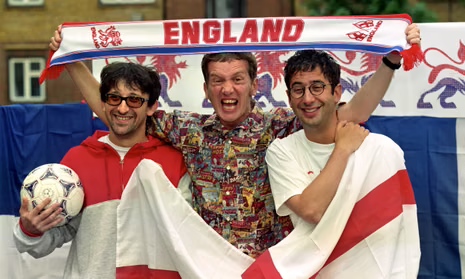
After briefly slipping down the charts, the euphoric atmosphere of the tournament pushed the song back to the Number 1 spot in June 1996, just as England reached the semi-finals. Exactly two years later in June 1998, the re-recorded 'Three Lions '98' stormed the charts for the World Cup in France, spending three consecutive weeks at the summit. Finally, in July 2018, the original 1996 version experienced a stunning display of longevity, surging 23 places in a single week to claim the Number 1 spot again, fueled by England's dramatic run to the World Cup semi-finals in Russia.
Two years after the heartbreak of Euro '96, the trio reunited to update the anthem for the 1998 FIFA World Cup in France. Instead of just releasing the same track, Baddiel, Skinner, and Broudie completely reworked the lyrics to reflect the new era of the national team under manager Glenn Hoddle. 'Three Lions '98' cleverly addressed the emotional scars of Euro '96 while looking forward to the future.
The intro explicitly addressed Gareth Southgate’s infamous missed penalty in the Euro '96 semi-final. The song also looked past the heroes of '66 to praise the modern squad.
- Paul Ince – "Ince ready for war" – his performance against Italy in a crucial qualifier for that year's World Cup.
- Paul Gascoigne – "Gazza good as before" – the long-awaited return of his 1990 World Cup form in Euro 96, particularly his goal against Scotland.
- Alan Shearer – "Shearer certain to score" – with five goals, he had been the top scorer of Euro 96, despite a poor run of form in internationals before the tournament.
- Stuart Pearce – "And Psycho screaming" – his primal celebration after scoring a penalty in the Euro 96 quarter-final shoot-out against Spain, which lifted the burden he had felt after failing to score in the semi-final shootout at the 1990 World Cup.
Amid much controversy, neither Gascoigne nor Pearce were selected for England's 1998 World Cup squad, which was not announced until some time after the song had been recorded.
The 1998 release sparked an all-out Britpop chart war. It went head-to-head with 'Vindaloo', a raucous, unofficial, terrace-stomping parody track created by Fat Les featuring Blur's Alex James, artist Damien Hirst, and comedian Keith Allen. Despite the fierce competition, 'Three Lions '98' won the battle.
Ultimately, 'Three Lions' succeeded because it told the absolute truth about what it means to be a football fan. It swapped out corporate arrogance for authentic human vulnerability, acknowledging that while the history books are filled with pain, the future is always unwritten. It gave English football a timeless vocabulary, transforming the simple phrase "it’s coming home" from a corporate marketing slogan into an eternal, cross-generational prayer. More than thirty years after Ian Broudie first recorded those Danish fans at Anfield, the song remains a living, breathing cultural monument. A song that still is a melancholic, misunderstood masterpiece.