2025 Wrapped

2025 has officially redefined the British music landscape, marked by the seismic Oasis reunion tour and a powerful UK indie revival. From the historic Oasis 'Live 25' tour kickoff at Cardiff's Principality Stadium to The Maccabees' triumphant comeback headline set at All Points East in Victoria Park, the year has been a masterclass in nostalgia and new energy. But it wasn't just about the legends; Charli XCX dominated the 2025 Brit Awards following the global 'Brat Summer' phenomenon, while rising stars like Wunderhorse and The Royston Club have proved the scene's future is in safe hands.
In this post, we break it all down: the awards shows, the emotional reunions, those we've lost along the way, and the live performances that have made 2025 an unforgettable year for music.
The Brat Awards Sweep: Charli XCX Claims Her Crown
If 2024 was the year of the "Brat Summer" phenomenon, 2025 was the year of the Brat Awards. Charli XCX didn't just attend the Brit Awards; she dismantled them, walking away with a historic haul of five trophies. In a night that felt more like a victory lap for the London-born artist, she claimed Album of the Year for Brat, Song of the Year for the Billie Eilish-assisted anthem ‘Guess’, British Artist of the Year, and Best Dance Act. These followed the prestigious Songwriter of the Year title, which was announced before the ceremony.
What Charli achieved with 'Brat' is nothing short of a cultural miracle. She managed to take an abrasive, club-rooted sound and turn it into a global language. It was a record that infiltrated every corner of society, reaching its surreal peak when Charli famously declared US Presidential candidate Kamala Harris was "Brat," effectively merging hyper-pop with the American political machine.

But beyond the memes and the neon-green aesthetic, the record’s longevity is rooted in its depth. Having spent 38 weeks in the UK Top 20, Brat was hailed for its vulnerability. Tucked between relentless club bangers like ‘360’ were some of the most emotionally raw moments of her career, tracks that laid bare her anxieties regarding industry rivalries, the pressures of fame, and the complex internal dialogue surrounding motherhood.
The success wasn't limited to British soil, either. Brat conquered the US, peaking at No. 3 on the Billboard 200 and securing three Grammys, proving that Charli’s "cult" sound had finally become the mainstream standard. At the Brits, as she stood on stage accepting her fifth award, it was clear that she wasn't just a pop star; she was the architect of the decade's most important cultural movement.
A Wake-Up Call: Saving the Grassroots
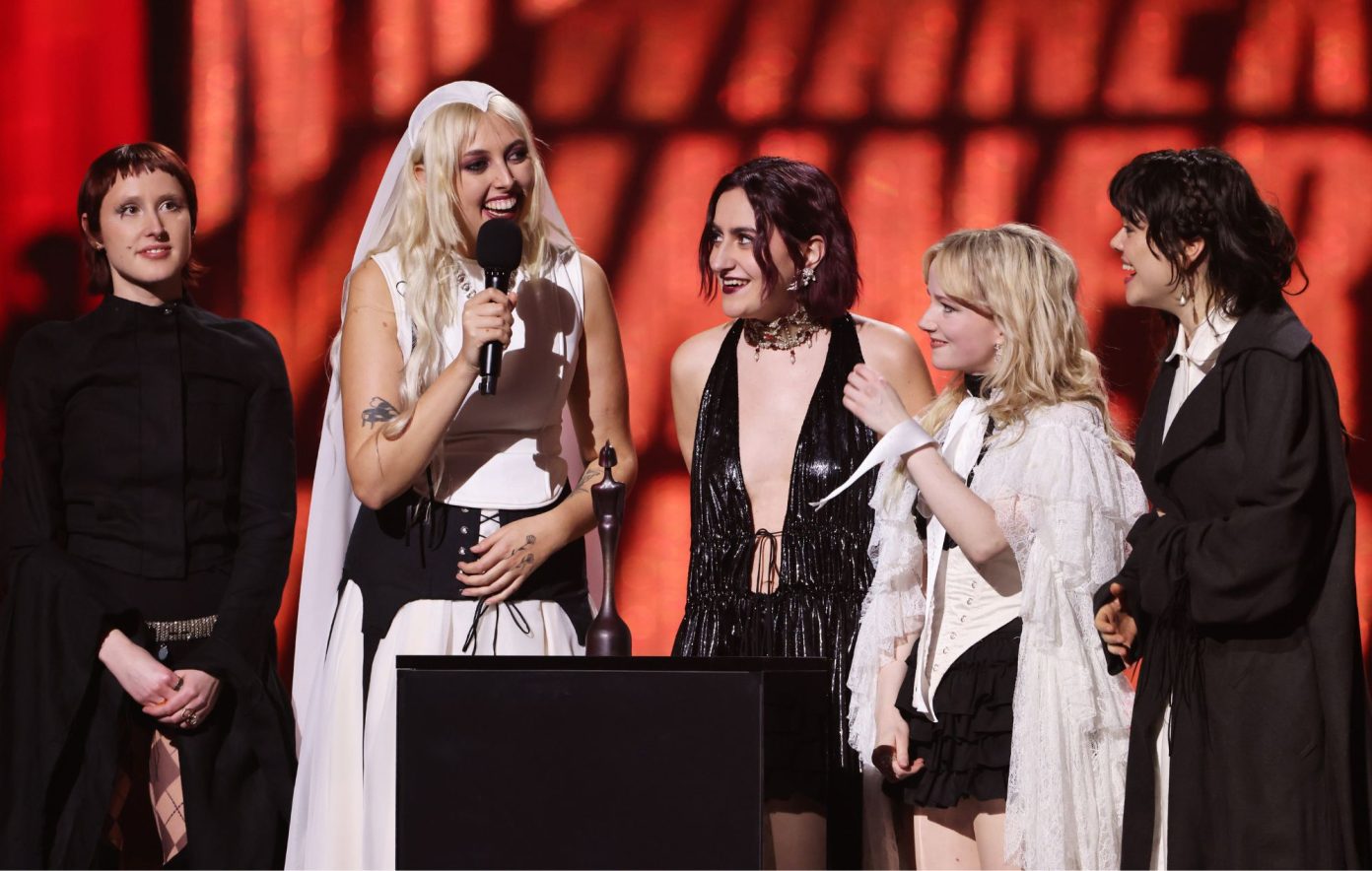
The 2025 Brit Awards will be remembered not just for the trophies but as a definitive wake-up call to the music industry. While the night celebrated global success, winners like Myles Smith (Rising Star), Ezra Collective (British Group), and The Last Dinner Party (Best New Artist) used their speeches to shine a spotlight on the crumbling foundations of British music: the Grassroots Music Venues.
Myles Smith delivered a searing indictment, asking the industry and the government:
"If British music is one of our most powerful cultural exports, why has it been treated like an afterthought? How many more venues need to close before we realise you can’t just celebrate success, you have to protect the foundations that make it?"
Ezra Collective, making history as the first jazz group to win a BRIT, echoed this by championing youth clubs and music education as the solution to society’s wider problems. Meanwhile, The Last Dinner Party used their platform to warn that without a contribution from arena and stadium-level tours, the very venues where they and every artist in that room started would vanish at an "alarming rate."
This wasn't just talk; 2025 saw major artists putting their money where their mouths are.
Leading the charge for structural change were Sam Fender and Wolf Alice. Fender, embarking on his massive 2025 'People Watching' stadium tour, including historic nights at St. James' Park and the London Stadium, implemented a £1 grassroots levy on every ticket. This initiative raised over £100,000 for the Music Venue Trust, providing a lifeline to 38 struggling independent venues.
Wolf Alice followed suit during their 2025 arena tour in support of their fourth album, 'The Clearing'. By adding a mandatory levy to their ticket sales, they ensured that as they commanded the country's biggest stages, they were directly funding the small, sweat-soaked rooms like the Bullingdon or the Joiners, where they first cut their teeth.
These artists are proving that while moments fade, careers and the venues that build them require investment. The message from the BRITs was clear: the industry can no longer just "chase moments." It’s time to protect the ecosystem that makes those moments possible.
Sophomore Spells and Second Dates: 'From the Pyre' and 'Moisturizer'
While the conversation around grassroots venues continued throughout the year, 2025 became the defining moment where the "next big things" of the early 2020s had to prove they weren't just flashes in the pan. The Last Dinner Party met this challenge head-on with their sophomore effort, ‘From the Pyre’, released in October. If their debut was an invitation to a lavish, decadent banquet, ‘From the Pyre’ is the sound of the morning after, where the candles have burned down, and the myths have turned a little more dangerous. Produced by Markus Dravs, the record is a darker, earthier collection that leans into "folk horror" and baroque art-rock.
The album is steeped in a sense of coming undone, trading the opulence of their debut for something more raw and skeletal. On tracks like ‘The Scythe’, Abigail Morris delivers a haunting meditation on grief and mortality, while ‘Count The Ways’ drips with a mature, sensual angst. Perhaps the most striking moment on the record is the venomous ‘Catch These Fists’, a track that trades their usual orchestral flourishes for a gritty, percussive confrontation that feels like a literal brawl in a velvet-lined room. It is a record that rewards deep listening, filled with choral harmonies that sound like a "pagan hymn" and lyrics that read like gothic prose. By the time the closer ‘Inferno’ finishes, it is clear that the band has successfully shed the "industry plant" misconceptions of their debut, evolving into a technical powerhouse that feels both ancient and vital.
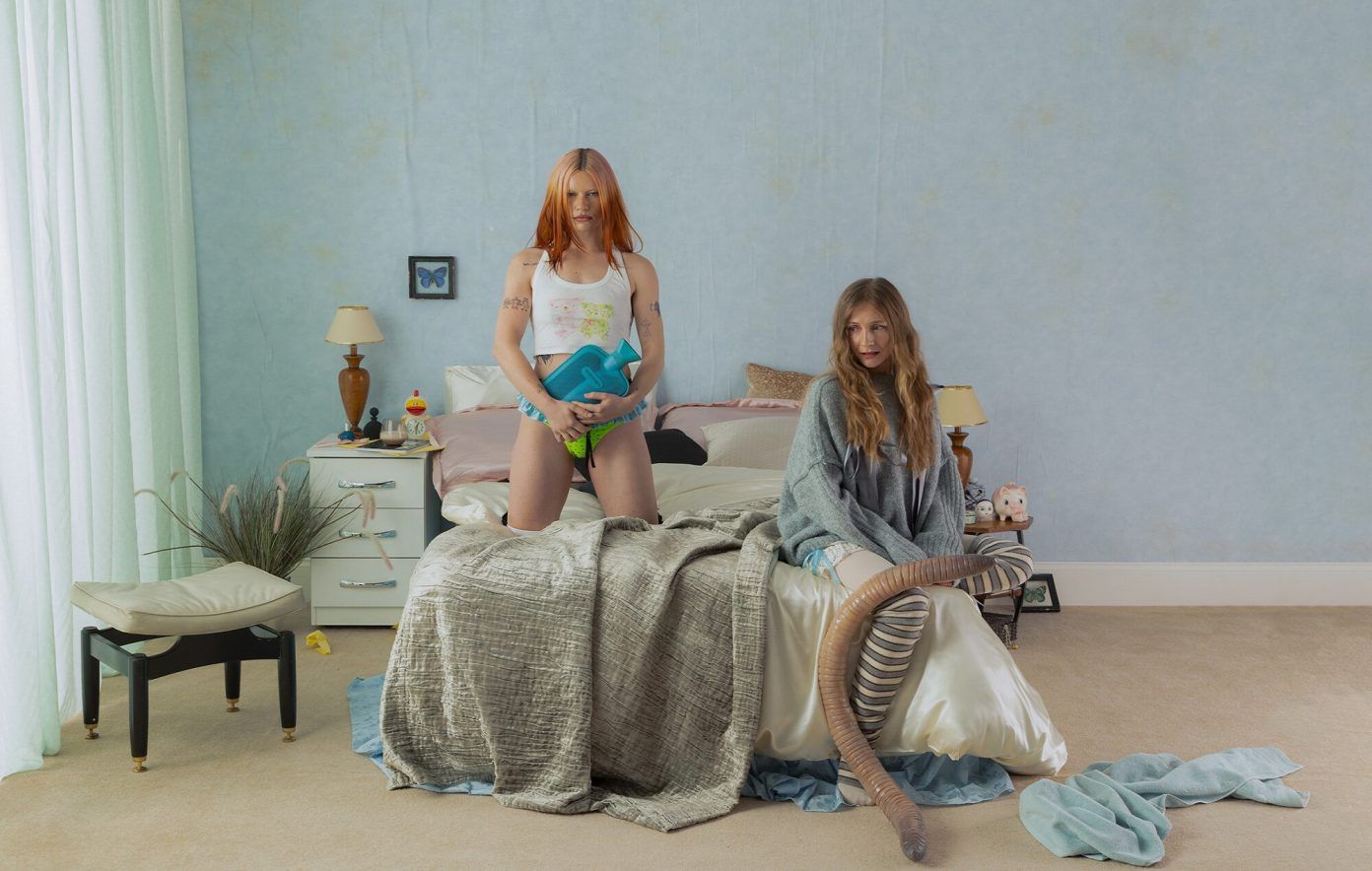
Meanwhile, the Isle of Wight’s finest, Wet Leg, returned in July with ‘Moisturizer’, an album that proved their brand of dry, deadpan indie-rock had plenty of room to grow. While their debut was a whirlwind of viral hooks, ‘Moisturizer’ is a punchier, more confident beast. The band officially expanded to a five-piece for this record, with their long-time touring members now full contributors, resulting in a sound that feels more cohesive and lived-in.
The record is littered with their signature surrealism and unexpected pop-culture nods; most notably on the track 'Catch These Fists', which features a bizarre and hilarious spoken-word cameo from Davina McCall. The legendary presenter’s voice interjects with a classic "Big Brother" style countdown, heightening the track's chaotic, tongue-in-cheek energy.
The standout anthem 'Mangetout' remains the best example of this evolution. A lost Strokes classic? A forgotten ‘Youth & Young Manhood’ era Kings Of Leon banger? 'Mangetout' could have passed for either. Except, of course, with its surreal imagery, seemingly inspired by Jack and the Beanstalk, saucy lyrics and sassy pay-off (“Get lost forever”), this indie anthem is quintessential Wet Leg. The track uses clever wordplay, the title doubling as "man, get out" to deliver a scathing but danceable dismissal of an ex-lover.
Together with the theatrical grit of 'From the Pyre', these records represent a "coming of age" for British guitar music, proving that these new acts are more than capable of sustaining the hype.
The Alternative Pop Prophecy: Inhaler and the Expansive World of 'Open Wide'
The conversation around 2025’s musical landscape wouldn't be complete without acknowledging the daring evolution of Dublin’s Inhaler, who traded the gritty, garage-rock foundations of their early work for something far more expansive on their third studio album, 'Open Wide'. Released in February, the record marks a significant shift in sound, moving away from the indie-rock of their debut toward a polished, high-fidelity production. This new direction was perfectly summed up by Sam Fender, who championed the album as a definitive example of "alternative pop." It’s a fitting description for a record that retains the band's cinematic scale while embracing infectious, synth-driven melodies and even the soulful depth of the House Gospel Choir.
The album is a masterclass in sonic textures, produced by Kid Harpoon, who helped the band explore a more layered and sometimes psychedelic sensibility. Tracks like 'Your House' and the title track 'Open Wide' showcase Elijah Hewson’s vocals at their most confident, soaring over shimmering production that feels designed for the biggest stages. By leaning into this pop-forward direction, Inhaler has successfully carved out a unique space where big, radio-ready hooks and artistic experimentation live in perfect harmony.
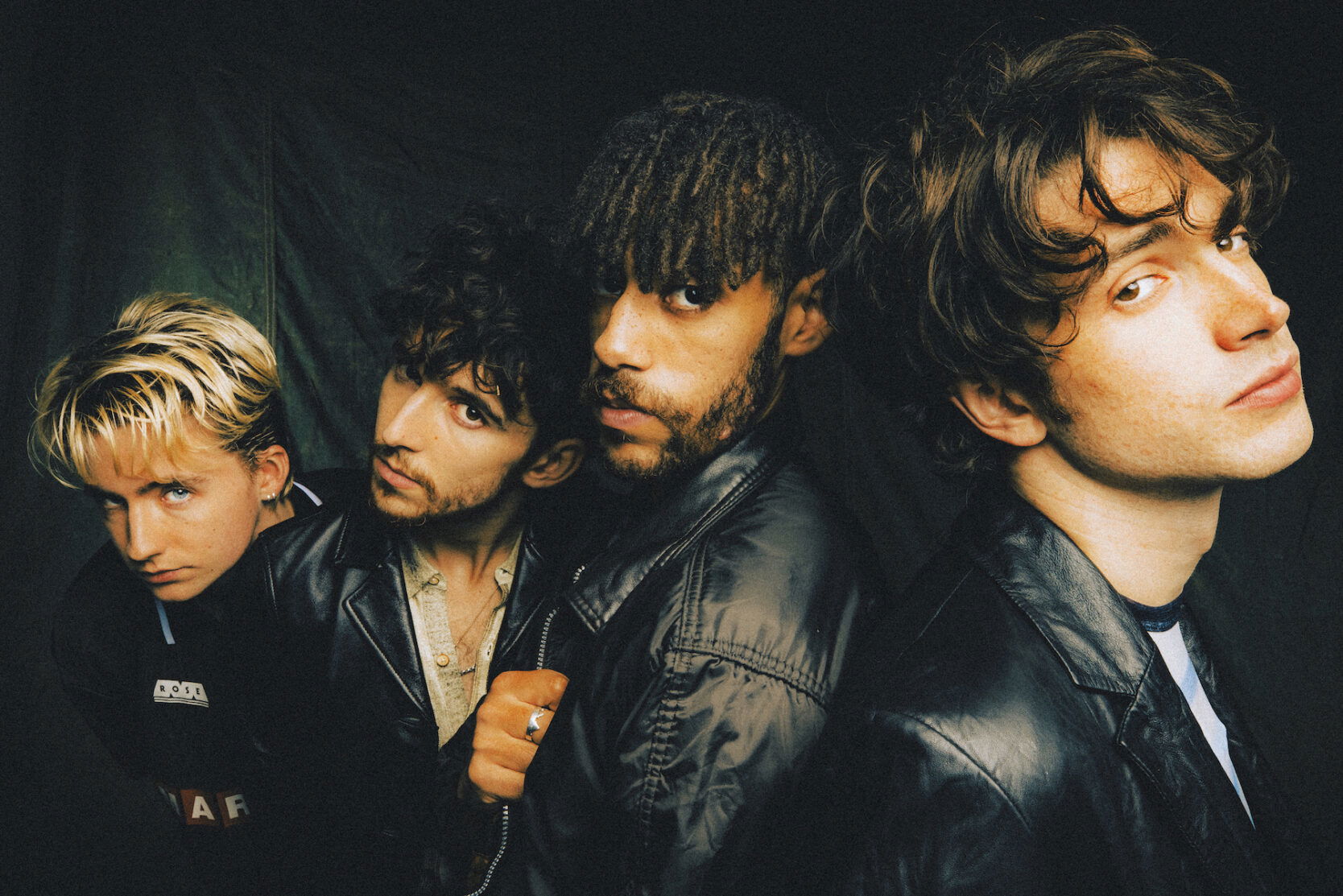
This evolution culminated in a massive world tour throughout the autumn, which saw the band play their biggest headline shows to date. While the tour reached a prestigious peak on October 31, 2025, with a debut performance at London's Royal Albert Hall, it was the Liverpool M&S Bank Arena show on October 11 that provided the tour's most poetic moment.
The Liverpool date featured a support slot from local legends The Bandits, marking their first performance in 21 years. The reunion was the fulfilment of a long-standing promise by the band’s tour manager, Gary Murphy (a founding member of The Bandits), who had famously vowed to reform the group if Inhaler ever headlined Liverpool’s arena. With members of Inhaler even joining them on stage for a few chaotic moments with a tambourine and harmonica, it was a celebratory bridge between the "Bandwagon" scene of the early 2000s and the new kings of alternative pop.
The tour finale at the Royal Albert Hall on Halloween, affectionately dubbed "Inhalerween" by the fans, was more than just a concert; it was a high-concept spectacle. The band leaned fully into the holiday spirit, emerging on stage dressed as characters from 'The Phantom of the Opera', with the iconic theme music serving as their dramatic walk-on track. The stage was transformed into a gothic tavern filled with flickering candles and draped sheets, creating a striking visual backdrop for their new, atmospheric sound.
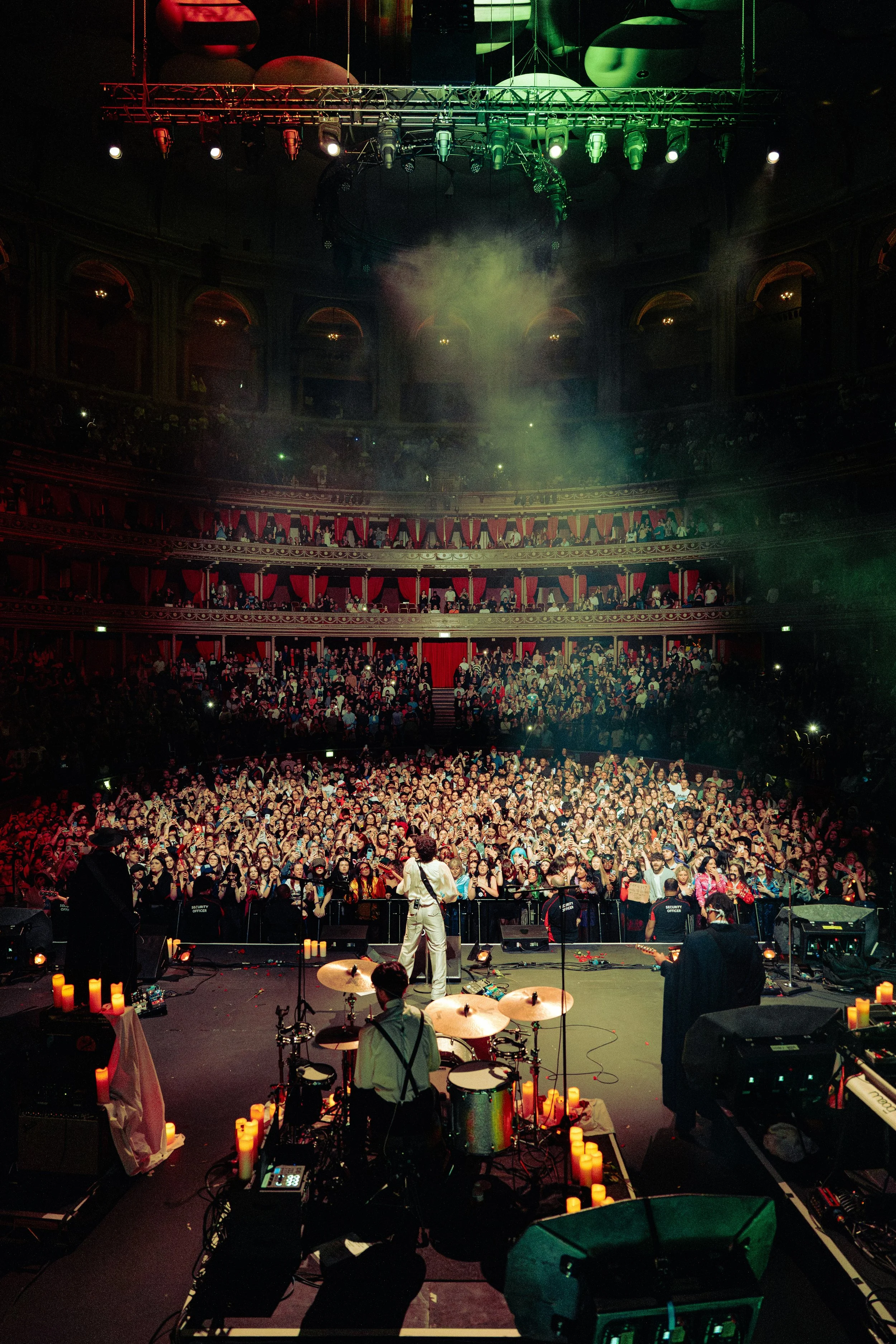
The night was packed with highlights, including a cathartic mass-singalong to 'My King Will Be Kind' and a high-energy performance of their surprise late-October single, 'Hole in the Ground'. In true Inhaler fashion, the show balanced professional polish with rock-and-roll chaos; at one point, Elijah Hewson accidentally dropped his microphone mid-song, an endearing moment that only made the sold-out crowd cheer louder. By the time the final notes of 'My Honest Face' echoed through the dome, it was clear that Inhaler hadn't just mastered "alternative pop", they had officially ascended to the rank of arena-ready icons.
Pulp: The Year of More and the Red Arrow Finale
In April 2025, after some cryptic teases, the Sheffield legends officially declared a "Pulp Summer." They announced 'More', the band’s first studio album in 24 years and confirmed that while the wait felt like a lifetime, the recording was a burst of renewed energy completed in just three weeks. Jarvis Cocker noted that their recent live shows "brought the songs back to life," leading to an album that felt urgent rather than nostalgic.
The lead single, ‘Spike Island’, acted as a bridge between Pulp’s past and present. The title is a direct nod to The Stone Roses’ legendary 1990 Widnes gig, a cultural flashpoint that Pulp have referenced before in ‘Sorted for E’s & Wizz’. But this comeback carried a heavy emotional core: 'More' is the first Pulp record since 1987 created without their beloved bassist Steve Mackey, who passed away in 2023. The entire project is dedicated to his memory, with the band describing it simply as "the best that we can do."
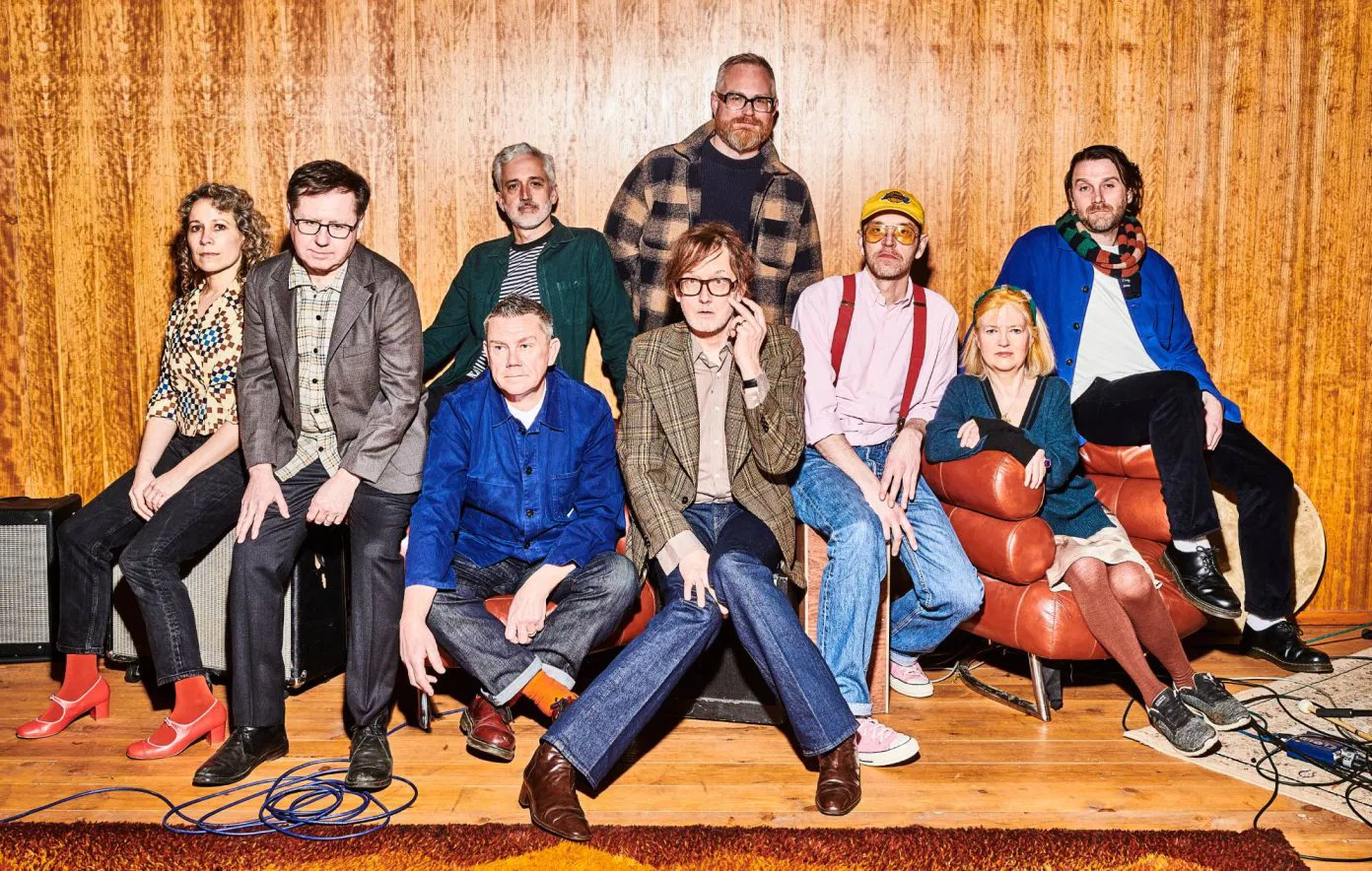
The peak of "Pulp Summer" arrived at Glastonbury 2025. In what was the worst-kept secret in the festival's history, a mysterious act named "Patchwork" was revealed to be Jarvis and co. Taking the Pyramid Stage on Saturday evening. They opened with a one-two punch of ‘Sorted for E’s & Wizz’ and ‘Disco 2000’, instantly reminding 100,000 people why they are the definitive chroniclers of British life.
Jarvis was in vintage form, playfully asking the crowd, “Did you know we were going to play?” before reflecting on Pulp’s 1995 headline slot, a moment they only got because The Stone Roses were forced to pull out. The set moved through the tender nostalgia of ‘Something Changed’ and the biting wit of ‘Babies’, with Jarvis sharing tales of his disastrous first trips to Worthy Farm, where he lost his tent and his mind. “You have to submit to it,” he told the crowd. “It’s bigger than all of us.”
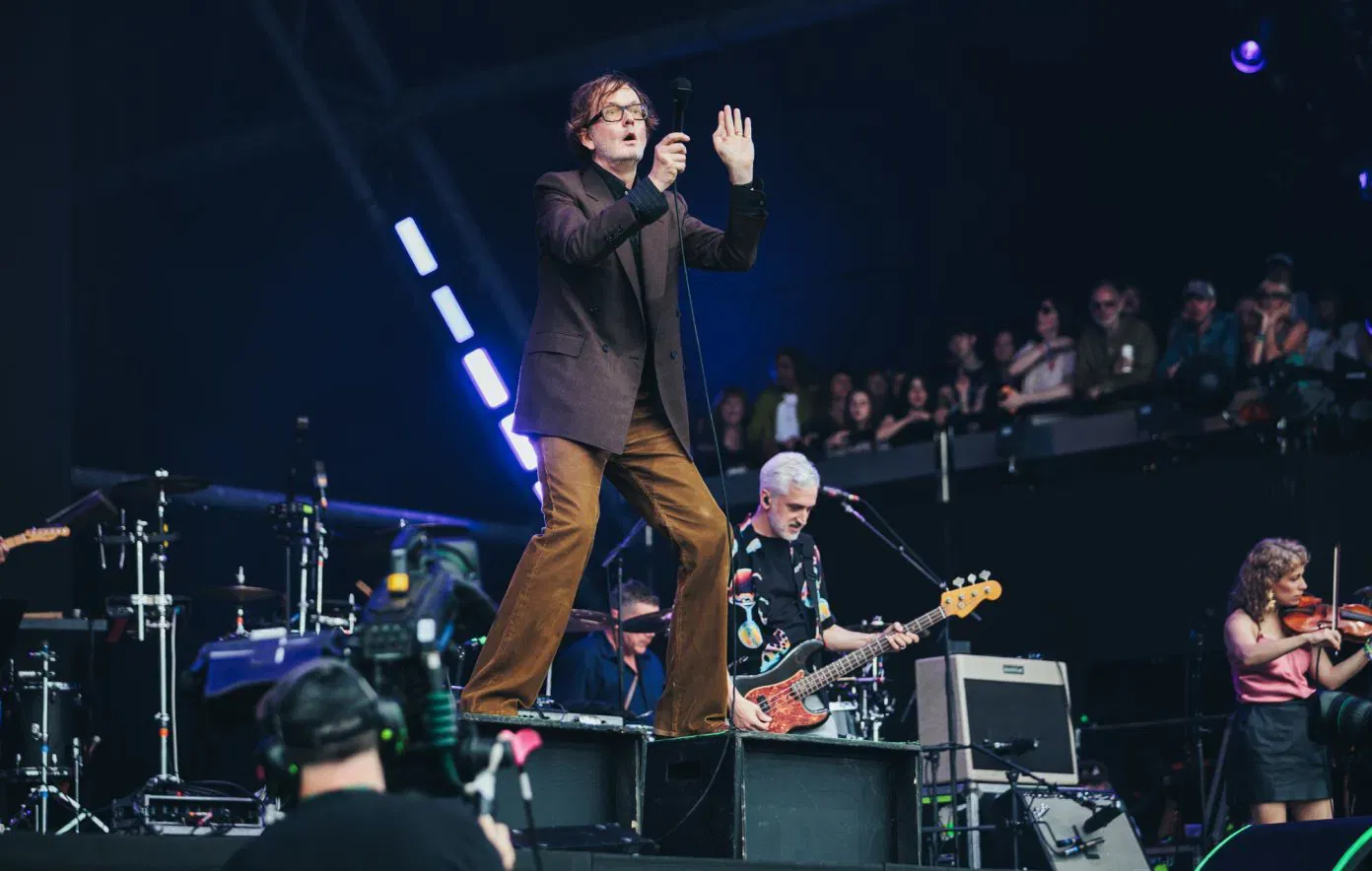
The finale provided what many are calling the most iconic image of the festival. As the band launched into ‘Common People’, the definitive anthem of the class-tourist and the supermarket aisle, the Red Arrows streaked across the sky in a surprise flypast. The timing was pinpoint; as the song reached its euphoric, chaotic climax, the jets roared over the Pyramid Stage, punctuating a set that proved Pulp aren't just a legacy act, they are a national treasure.
If 2025 was the year Pulp reclaimed their crown, 2026 is the year they take the "Pulp Summer" global. With the critical and commercial success of 'More' still ringing in their ears, the band has already mapped out a heavy start to the new year.
In February and March 2026, the band will embark on a long-awaited tour of Australia and New Zealand, marking their first visit to the region in 15 years. From headlining Spark Arena in Auckland to a historic, sunset performance at the Sydney Opera House Forecourt, the tour is being billed as a "career-spanning celebration" that will blend their 90s anthems with the refined, wiser sounds of their new record.
But for those closer to home, the real date circled in red is Friday, August 28, 2026. Pulp will headline a massive outdoor show at Wythenshawe Park in Manchester, joined by special guest Self Esteem. This has been confirmed as their only outdoor performance in the North of England for 2026.
Beyond the stage, Jarvis Cocker has hinted that the creative tap hasn't been turned off just yet. Following the positive response to More, he teased in a recent interview that the band might start writing again after their tour dates conclude. As drummer Nick Banks put it: "The first half of next year is mapped out, and I’ve had to delay my retirement a bit." It seems the world isn't quite finished with Pulp, and more importantly, Pulp isn't finished with us.
Anthology 2025: A Full Circle for the Fab Four
Thirty years after its original 1995 broadcast, The Beatles Anthology returned in November 2025 as the definitive celebration of the band’s enduring story. This wasn't just a simple reissue; it was a total digital resurrection overseen by Apple Corps and Peter Jackson’s Park Road Post teams. By utilising the same meticulous restoration processes that made the 'Get Back' documentary a reality, the series has been transformed into a breathtaking 4K experience.
Crucially, this 2025 release has introduced the Beatles to an entirely new generation of fans, young listeners who weren't even born when the project first aired in 1995. For them, this isn't a dusty history lesson; it's a vivid, immersive journey into the greatest story in music, now scrubbed of its nineties grain and presented with a clarity that makes the past feel like the present.
The visual details are staggering. In Episode One, the footage of the Casbah Coffee Club and the Star-Club in Hamburg no longer looks like a murky relic; you can see the condensation on the walls and the genuine exhaustion on the faces of John, Paul, George, and Pete Best. This clarity brings a new weight to the early chapters curated by the late Neil Aspinall. As the band’s former road manager and the executive producer who originally spent twenty years assembling this footage. His deep, personal archive of the band's "inner circle" moments is now visible in high-definition, vindicating his lifelong mission to protect the Beatles' visual legacy.
In Episode Three, the Ed Sullivan Show appearance is so crisp you can count the threads on their sharp grey suits, and the Shea Stadium footage has been transformed from a chaotic blur into a vivid, terrifyingly loud document of the height of Beatlemania. This episode also highlights the invaluable perspective of Sir George Martin.
The restoration allows us to appreciate his role as the "Fifth Beatle" more clearly than ever; his interview segments, now grain-free and intimate, act as the steady, sophisticated counterpoint to the band's youthful chaos. Whether he is describing the shock of Ringo first joining the group or the technical hurdles of early four-track recording, Martin's refined presence makes it feel as though he is personally guiding you through the Abbey Road vaults.
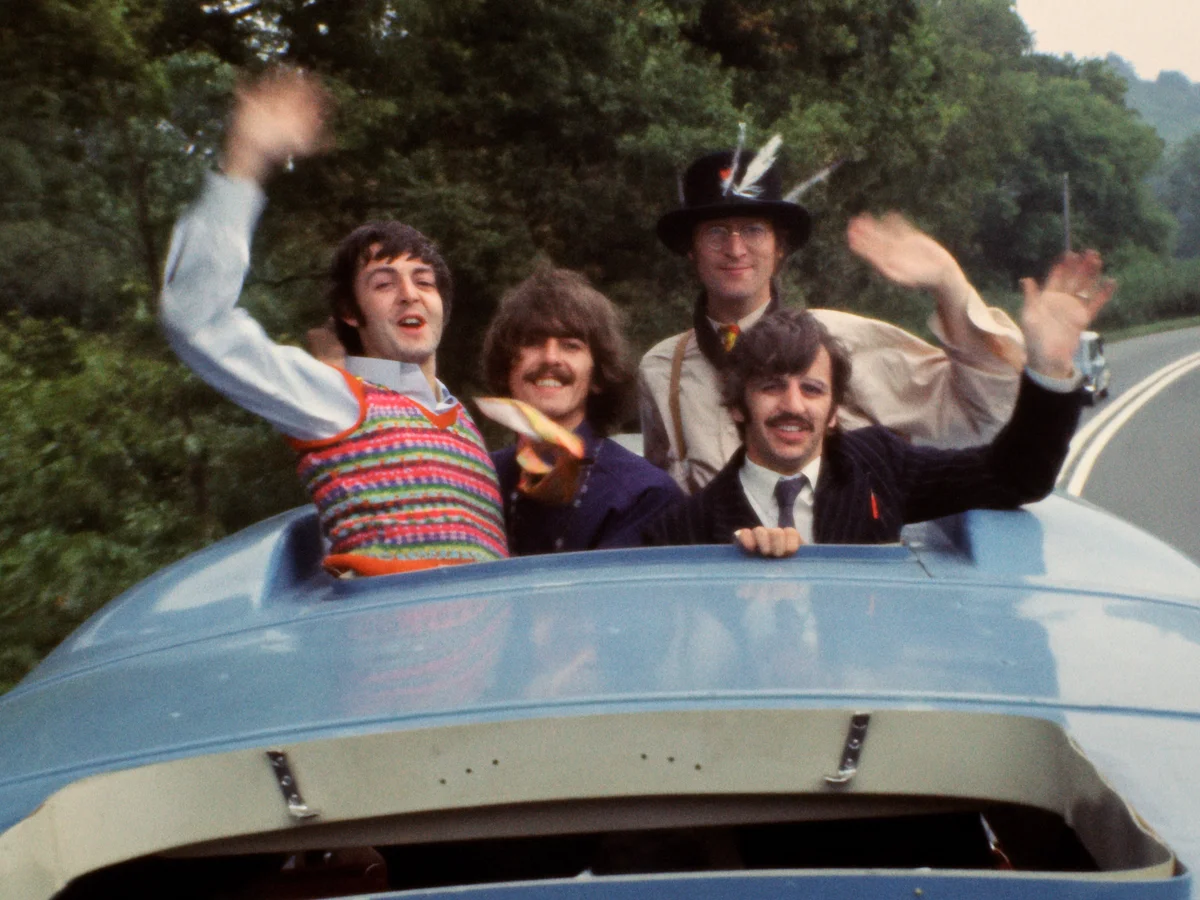
Even the psychedelic "inter-period" of Episodes Five and Six has been revitalised. The colours of the Sgt. Pepper outfits pop with a neon intensity that was lost in the 90s master tapes. The original nineties interviews with Paul, George, and Ringo have also been restored; the grain is gone, and the intimacy is back, making it feel like they are sitting in your living room. Stripping away decades of digital dust has revealed the sweat on their brows and the sheer, chaotic energy of the crowds in a way that feels contemporary rather than historical.
While the original eight episodes remain the backbone, now featuring superior pacing and immersive sound, the real "event" is the brand-new Episode Nine on Disney+. Directed by Oliver Murray, this final chapter serves as a poignant, meta-coda to the whole saga. It acts as a 90s time capsule, featuring high-definition footage of Paul, George, and Ringo reunited in 1994 at Abbey Road and George’s Friar Park estate.
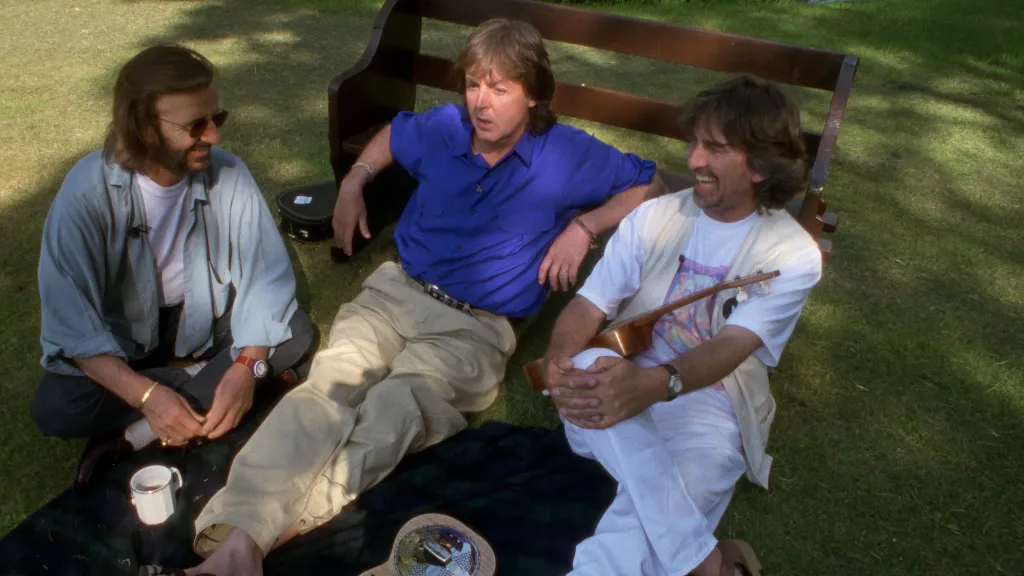
Seeing them sitting on a blanket on the lawn playing ukuleles, or joking in Studio 2 while listening to the multi-tracks of 'Tomorrow Never Knows', offers a beautiful, heartbreaking bridge between their youth and their final years together. Episode Nine also captures the early, "terrified" attempts at finishing ‘Now and Then’ back in the 90s.
Watching George suggest they "leave the other one" for another time hits incredibly hard, knowing it would take three decades to finally prove him right. It’s a raw look at their dynamic, Paul the architect, George the sceptic, and Ringo the heartbeat, proving that even in middle age, the Fab Four chemistry was still a force of nature.
On the musical side, the project reached its final form with the release of Anthology 4. This volume acts as the missing piece of the puzzle, finally bringing the 2023 "final" single ‘, Now and Then’, into the Anthology fold where it was always meant to live. Curated by Giles Martin, the set also includes stunning 2025 remixes of ‘Free As A Bird’ and ‘Real Love’. By cleaning the original 1970s cassettes with modern precision, Giles Martin and Jeff Lynne were finally able to lift John Lennon’s vocals with crystal-clear fidelity. The "underwater" warble that characterised the nineties versions is gone; John sounds like he’s standing in the room, his voice finally freed from the hiss of an old tape deck.
By weaving these discoveries into the original 1995 framework, the Anthology 2025 project serves as a majestic "full stop." It’s a reminder that while the Beatles officially ended in 1970, their ability to reach out through the static of time remains as fearless and emotionally resonant as ever.
The Echo of Eras: A Year of Defining Anniversaries
While the current charts were dominated by new icons, 2025 functioned as a profound bridge to the past, marking milestones that spanned half a century of musical evolution. These anniversaries weren't just dates on a calendar; they were celebrated through massive vinyl reissues, stadium tours, and a renewed appreciation for the records that built the foundation of modern music.
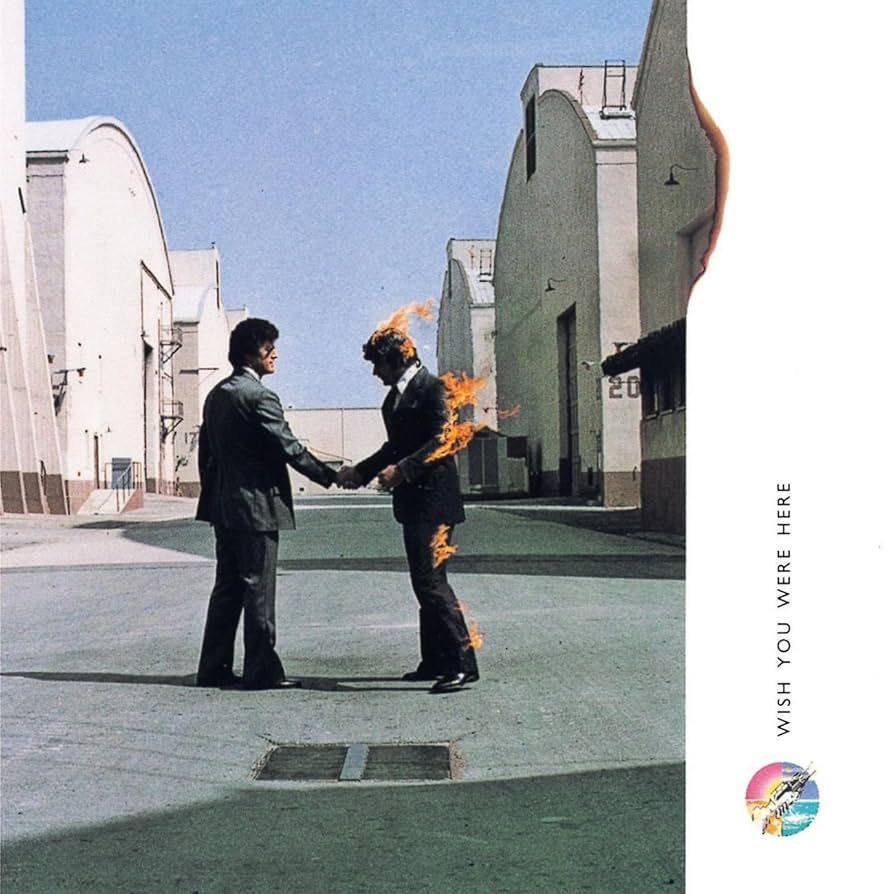
The year was anchored by the "Golden Jubilees" of 1975, a pinnacle for rock’s creative power. National Album Day 2025 placed a special spotlight on these 50-year landmarks, led by the half-century celebration of Queen’s 'A Night at the Opera'. The anniversary saw a staggering surge in sales for its deluxe reissue, reminding the world of the sheer audacity of 'Bohemian Rhapsody'. Similarly, Pink Floyd’s 'Wish You Were Here' and David Bowie’s 'Young Americans' reached the 50-year mark, their influence still palpable in the sprawling textures of today’s progressive and soul-inflected acts.
We also looked back 40 years to the summer of 1985, an era where music moved beyond the charts to impact global politics. The 40th anniversary of 'Live Aid' was the emotional heartbeat of the year, honoured by the West End success of the musical 'Just For One Day' and major exhibitions celebrating the "global jukebox" moment.
On the turntable, we celebrated four decades of The Smiths’ 'Meat Is Murder', Tears for Fears’ 'Songs from the Big Chair', Dire Straits 'Brothers in Arms' and Kate Bush 'Hounds of Love'.
The 30th anniversary of 1995 felt especially electric, coinciding with the massive cultural wave of the Oasis reunion. The 'Live 25' world tour became the hottest ticket of the decade, seeing Liam and Noel Gallagher share a stage for the first time in 16 years and proving that the public's appetite for their "wall-to-wall classics" is essentially limitless.
We marked three decades of '(What’s the Story) Morning Glory?' and Blur’s 'The Great Escape', reigniting the "Battle of Britpop" debates for a new generation. While Blur had already set the stage with their own emotional reunion in 2023, headlining Wembley Stadium and releasing the critically acclaimed 'The Ballad of Darren, ' the milestone of 2025 felt like a victory lap for the entire era.
Meanwhile, the alternative corner of the 90s also demanded its flowers. Pulp returned to the road for a 2025 UK arena tour to celebrate 30 years of 'Different Class', including a massive homecoming at Sheffield's Tramlines Festival and the release of a "Super Deluxe" box set that finally made their legendary 1995 Glastonbury headline set available on vinyl.
Radiohead also sent shockwaves through the industry by ending a seven-year hiatus for a series of arena shows in November and December. Their return, which included four nights at London's O2 Arena, coincided with the 30th anniversary of 'The Bends'. Both records were revisited as the high-water marks of 90s alternative songwriting, proving that the wit of Jarvis Cocker and the bruised grandeur of Thom Yorke haven't aged a day.
Two decades on from the "Indie Sleaze" explosion of 2005, we celebrated the 20th anniversary of the Arctic Monkeys and their era-defining debut single 'I Bet You Look Good on the Dancefloor'. More than just a hit, this was the moment the music industry changed forever. Long before an official record was even on the shelves, the Sheffield four-piece had become a grassroots phenomenon by bypassing traditional gatekeepers entirely.
By handing out free demo CDs at their shows, they allowed a burgeoning online community to do the marketing for them. Fans ripped the tracks, shared them on file-sharing sites, and built a massive MySpace following that the band, famously technologically indifferent, didn't even know existed.
By the time they walked onto the stage at Reading & Leeds 2005, thousands of fans were singing along to every word of unreleased songs, proving that the "hype" they told us not to believe was actually a revolution in how music is discovered and consumed.
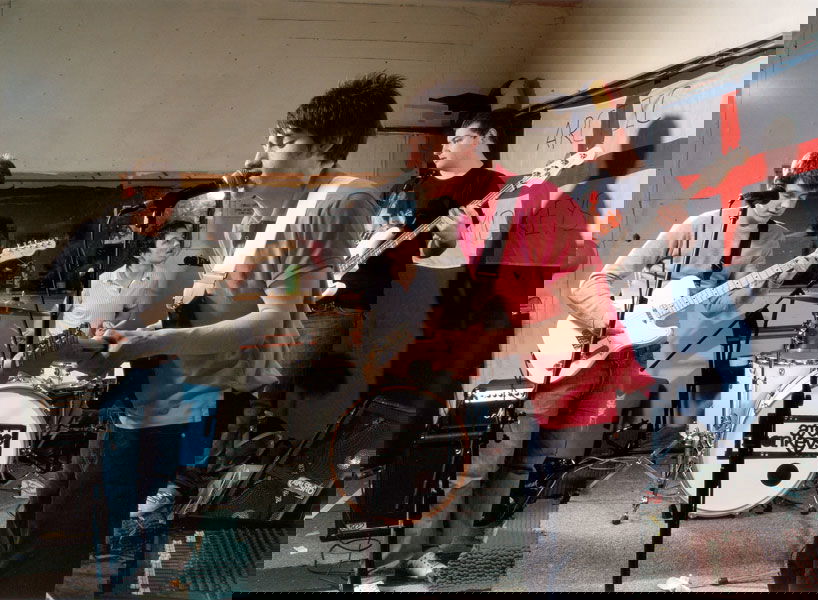
This 20-year milestone was also shared by Kaiser Chiefs, who marked two decades of their seminal debut 'Employment' with a massive, riotous homecoming at Temple Newsam Park in Leeds. Taking place on May 31st, 2025, the show was a full-circle moment for the band, who assembled a "love letter" to mid-noughties indie with a support bill that included Razorlight, The Cribs, and The Coral.
The performance saw 25,000 fans transform the park into a sea of Leeds pride, proving that hits like 'Oh My God' and 'Everyday I Love You Less and Less' remain the definitive anthems of the city.
Bloc Party also shared the spotlight, embarking on a triumphant world tour to perform 'Silent Alarm' in its entirety. This included a headline slot for Brighton’s 'On The Beach' festival in July 2025, where the jagged riffs of 'Helicopter' echoed across the pebbles, and a standout performance at Manchester’s Castlefield Bowl for the 'Sounds of the City' series.
These shows, bolstered by the release of a massive 20th-anniversary deluxe box set featuring rare demos and the legendary 2004 John Peel sessions, proved that the nervous, propulsive energy of their debut remains as vital today as it was in 2005.
Finally, 2025 saw the 10th anniversary of the albums that defined the "streaming era" and the mid-2010s sound. Tame Impala’s 'Currents' reached the decade mark, but its legacy is measured in more than just streaming numbers; it fundamentally rewrote the DNA of modern guitar music.
Before 2015, the "indie rock" blueprint was still largely built on the overdriven grit of the 2000s revival. Kevin Parker changed that by treating the guitar not as a lead instrument, but as a texture. On tracks like 'Let It Happen' and 'The Less I Know The Better', he famously ran his guitars through a gauntlet of phasers, vibratos, and heavy compression to make them sound like synthesisers. This "synth-guitar" approach gave birth to a whole new generation of "bedroom producers" who realised they didn't need a four-piece band to create a wall of sound; they just needed a few pedals and a laptop.
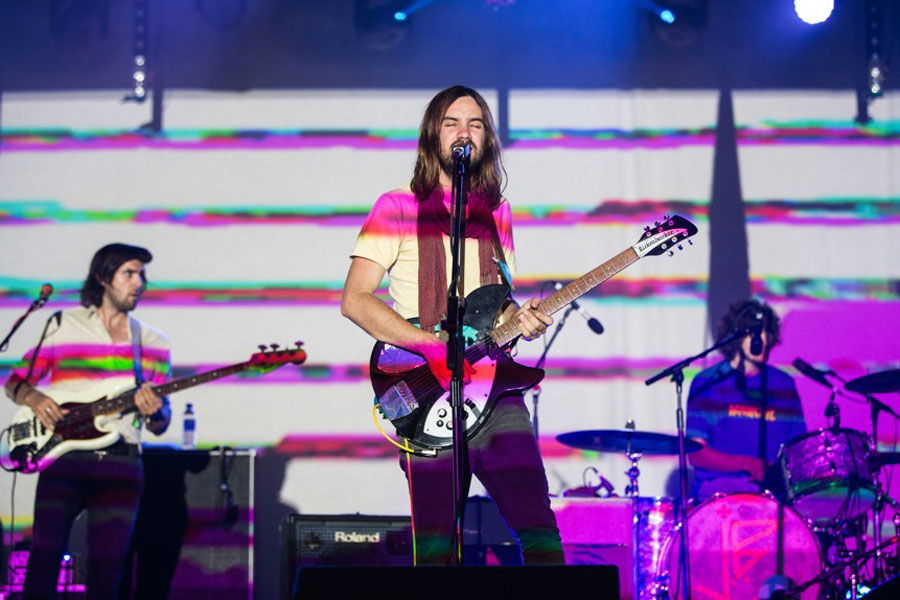
The influence of 'Currents' acted like a "Big Bang" for the current psychedelic pop scene. It bridged the gap between the rock world and the A-list pop sphere, leading to Rihanna’s cover of 'New Person, Same Old Mistakes' and Parker's later collaborations with everyone from Lady Gaga to Travis Scott. Ten years on, you can hear its "liquid" production style in the retro-futurism of artists like Djo (Joe Keery), The Weeknd, and even Taylor Swift’s more synth-heavy ventures.
We also celebrated 10 years of Wolf Alice’s debut 'My Love Is Cool', a record that has since become the "Rosetta Stone" for the modern British indie scene. In 2015, it offered a defiant alternative to the polished pop of the time, blending 90s grunge with ethereal folk in a way that gave permission for bands like The Last Dinner Party and Pale Waves to embrace their own sonic contradictions. By winning the hearts of both the NME crowd and mainstream radio, it proved that a guitar band led by a female voice could still be the most exciting thing in the country.
From the 50-year veterans to the 10-year modern classics, 2025 proved that great music doesn't age; it simply finds more listeners.
Similarly, Florence + The Machine’s 'How Big, How Blue, How Beautiful' reached the decade mark, remembered as the moment Florence Welch traded the "cosmic" metaphors of her early work for something raw, brassy, and grounded. Its influence on the world of guitar music was subtle but massive; it brought a cinematic, " Laurel Canyon" rock sensibility back to the UK charts.
The album’s legacy was cemented by Florence’s 2015 Glastonbury headline set, where she stepped in at the last minute for Foo Fighters, following Dave Grohl breaking his leg. Proving that orchestral rock could command the Pyramid Stage.
Late Bloomers: Wolf Alice Finally Take the Arena Throne
In a year of explosive reunions and viral sensations, Wolf Alice returned with something perhaps even more profound: a masterpiece of self-assured maturity. Their fourth album, The Clearing, arrived in 2025 not as a bid for relevance, but as a stake in the ground. Leading the charge was the confident, ambitious ‘Bloom Baby Bloom’, the sound of a band finally operating at the peak of its powers.
Gone was the brittle punk of their youth or the sludgy shoegaze of 'Visions of a Life'. In its place was a 1970s palette of harvest gold and russet-hued warmth. On ‘Bloom Baby Bloom’, Ellie Rowsell delivers a raspy, serenely self-assured vocal over Joff Oddie’s intricate guitar flourishes and Theo Ellis’s piercing basslines. “I bloom, baby bloom / Watch me, and you’ll see just what I’m worth,” Rowsell declares. It is the anthem of a band that has survived the madness of their twenties. The Mercury Prize win, the Brit Awards, the gruelling tour,s and they emerged not just unscathed, but certain of who they are.
The record is a masterclass in nuance. ‘Thorns’ serves as a spiritual successor to ‘The Last Man on the Earth’, turning the gaze inward to question our obsession with public vulnerability. Elsewhere, the album shuffles through styles with effortless grace: the Americana-tinged ‘Passenger Seat’ feels like Joni Mitchell meeting Haim, while ‘Just Two Girls’ experiments with a folk-disco fusion that shouldn't work, yet somehow sparkles.
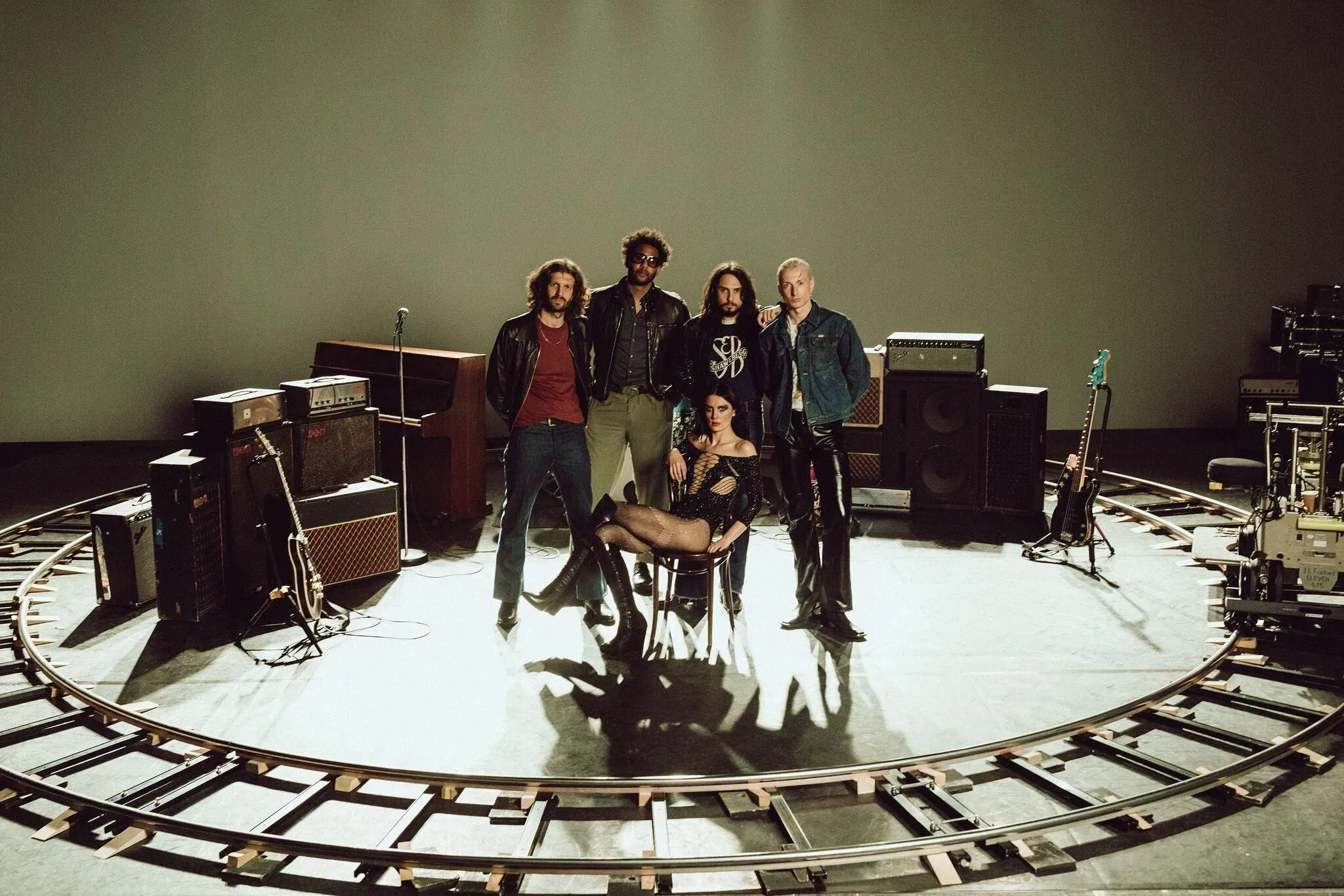
One of the album’s most poignant moments arrives with ‘White Horses’, which sees drummer Joel Amey take lead vocals for the first time in a decade. It’s a rustic, heartfelt reflection on heritage and identity that has quickly become a fan favourite. However, the emotional anchor is the closing track, ‘The Sofa’. A delicate piano ballad, it grapples with the quiet reality of coming home after a global tour. “Feels a little like I’m stuck in Seven Sisters / North London, oh England / And maybe that’s okay,” Rowsell sings, finding beauty in the mundane act of rewatching Peep Show for the thirteenth time. It’s a metaphor for the band itself: the dust has settled, and they are finally comfortable in their own skin.
This sense of arrival was confirmed by their 2025 Arena Tour, a graduation that felt both inevitable and long overdue. While their performance at the Utilita Arena in Birmingham was a hometown-adjacent triumph, it was their two-night residency at London’s O2 Arena that truly signalled a change in the guard. Seeing 40,000 people across two nights screaming back the lyrics to The Clearing proved that Wolf Alice are no longer just a "heavyweight indie band"; they are a definitive headline attraction.

These larger rooms finally provide the oxygen their sprawling sound requires, allowing the 90s shoegaze of their early EPs to breathe alongside the 70s glam and cinematic folk of their new material. The show was a masterclass in balance. Despite playing almost the entirety of the new record, the band expertly wove in the "old bangers" that built their foundation. ‘You’re a Germ’ appeared like a lightning bolt just before the hushed, fragile beauty of ‘Safe From Heartbreak (if you never fall in love)’, showcasing the dualistic nature that makes them so unique.
They possess a rare ability to pivot from a mosh-pit-inducing punk scream to a delicate, tear-stained acoustic moment without ever losing the audience's focus. The finale was nothing short of transcendent. An encore of ‘The Last Man on the Earth’, now firmly established as a modern hymn, led into quite possibly the greatest indie love song of the 21st century: ‘Don’t Delete The Kisses’. As the final synths echoed through the O2, the message was clear. After four albums, a Mercury Prize, and a decade of relentless growth, Wolf Alice haven't just avoided making a bad record; they have defined a new gold standard for what a British guitar band can be.
If 2025 was the year Wolf Alice conquered the arenas of the UK, 2026 is the year they take The Clearing to the rest of the world. Fresh off the back of their massive December residency at the O2, the band isn't showing any signs of slowing down.
The summer of 2026 is already shaping up to be a festival "clean sweep." They have been confirmed as major actsfor TRNSMT in Glasgow and Kendal Calling in the Lake District, where they’ll share the bill with the likes of Biffy Clyro and Two Door Cinema Club.
A huge show in Sheffield is also planned, with the band headlining Tramlines, sharing the bill with Wet Leg, Courteeners, The Vaccines, Blossoms, Kaiser Chiefs, Reverend & the Makers, The Royston Club and Fat Boy Slim
Before the summer mud hits, however, the band will perform one of their most prestigious shows to date: a sold-out headline set for the Teenage Cancer Trust at the Royal Albert Hall in March. It’s a fitting venue for a band that has traded "sludge" for "cinematic," and it promises to be the definitive showcase for the orchestral ambitions of 'The Clearing'.
As Ellie Rowsell recently noted, they are finally leaning into the "performance" of being a frontwoman, leaving the guitar shields behind to let the voice and the songs do the talking. 2026 isn't just a continuation for Wolf Alice; it's a victory lap for the new gold standard of British rock.
A Backbone Built on Midas: The Royston Club and Wunderhorse
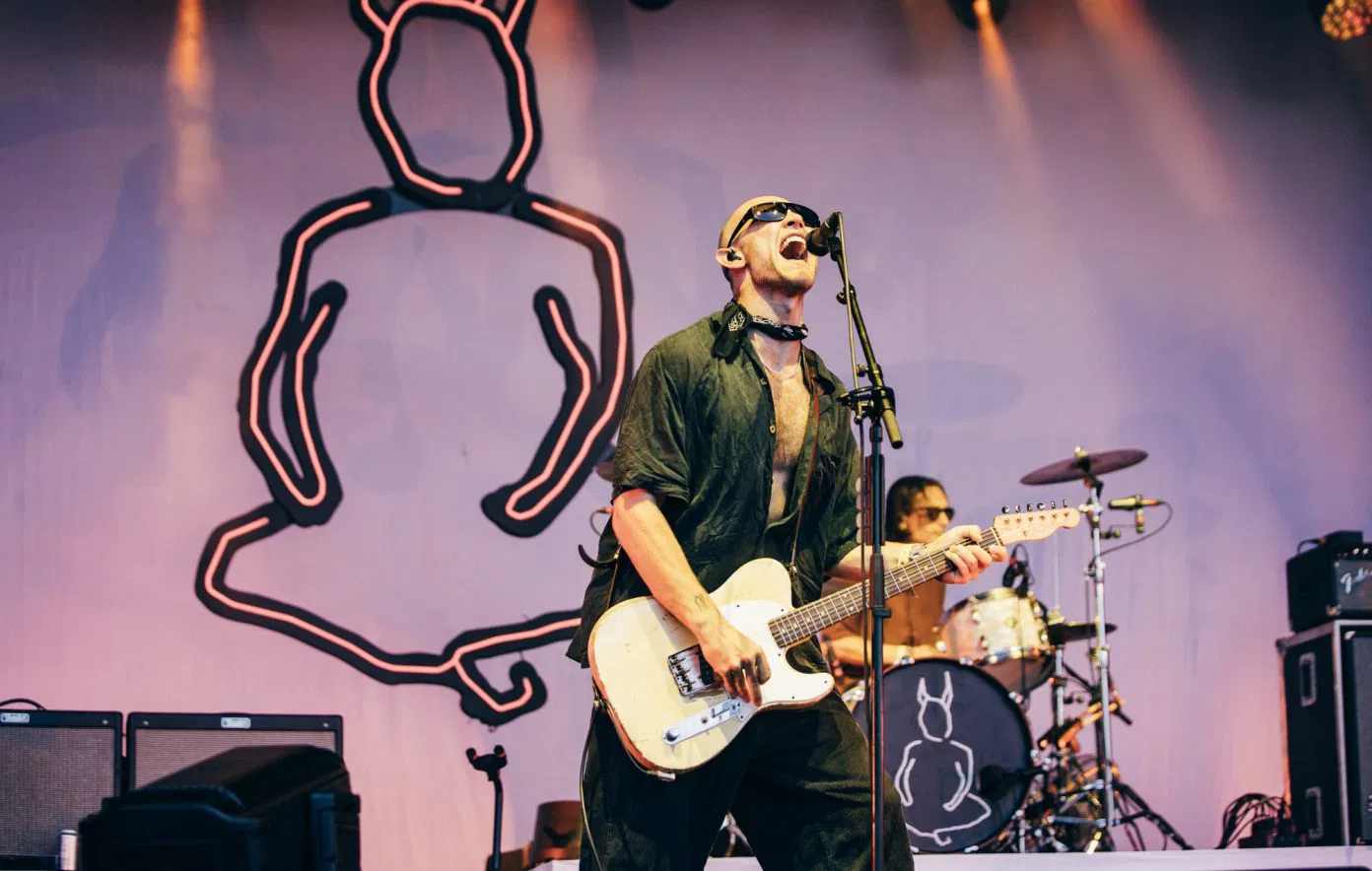
Following the release of 'Midas', the only way has been up for Wunderhorse. Recorded live at the legendary Pachyderm Studio in Minnesota, the birthplace of Nirvana’s In Utero, the record captures a band with a telepathic, unfiltered energy. Although it was their second album, it felt like a rebirth. Jacob Slater evolved from a solo endeavour into a "strange, dysfunctional family" alongside Harry Fowler, Jamie Staples, and Pete Woodin. As Slater told the NME: “I feel stronger being part of a family... rather than that dynamic of: ‘Oh, here I am and here’s the session guys.’ That always felt wrong.”
That chemistry propelled them to new heights in 2025. After selling out Brixton Academy, they conquered Alexandra Palace, selling 10,000 tickets like it was a pub gig. They’ve become the voice of a young audience that has turned away from commercial pop and American Hip-Hop in favour of snarling guitars and stunning storytelling. Their standalone single 'The Rope' even topped the UK Physical and Vinyl charts in June, setting the stage for a summer of total domination.
However, Wunderhorse weren't the only ones carrying the torch. The Royston Club solidified their place as the melodic backbone of the scene with their sophomore triumph, 'Songs For The Spine'. If Wunderhorse provided the grit, the Wrexham four-piece provided the anthemic soul. Debuting in the UK Top 5, the record marked a significant shift in maturity from their brilliant 2023 debut, 'Shaking Hips & Crashing Cars'.
The album’s opener, 'Shivers', acts as a darker, more desperate answer to their earlier work, while the third single, 'Cariad', is a majestic display of their ambition. A vulnerable, introspective ballad using the Welsh term of endearment, it features Tom singing over the "hallways of his mind" a softer shade to a band known for punchy riffs. Then there is 'The Ballad of Glen Campbell', a six-minute emotional masterpiece packed with passion, pain, and joy. It is nothing short of a triumph and a genuine contender for album of the year.
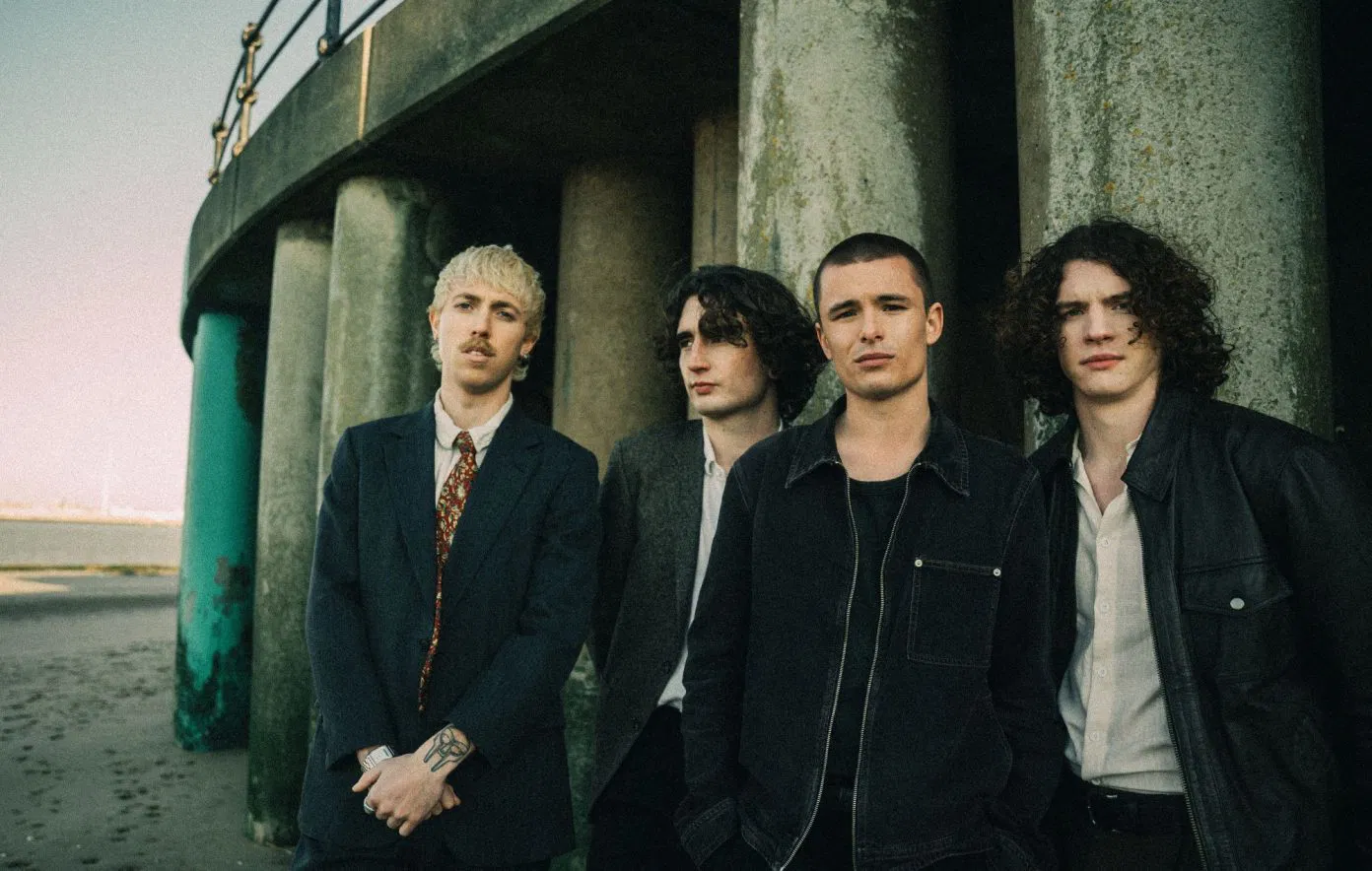
Both bands proved their mettle on the biggest stages. The Royston Club earned a career-defining slot on the Reading & Leeds Main Stage, opening with the brilliantly catchy 'The Patch Where Nothing Grows'. Their set moved from the ready-made festival anthem 'Glued to the Bed' to a rapturous response for the now-classic '52', before ending on the melancholic 'Cariad', a moment that felt like acoustic Arctic Monkeys or Oasis at their peak.
Meanwhile, Wunderhorse pulled one of the largest crowds in the history of the Glastonbury Park Stage. Their set was a masterclass in tension and release, from the opening note of 'Midas' to the hauntingly beautiful 'Butterflies' and the breakneck ferocity of 'Leader of the Pack'. 'Purple' garnered one of the best sing-alongs of the entire weekend, setting the tone for their later appearance on the Chevron Stage at Reading & Leeds.
These two acts have cemented themselves as the most important bands in Britain today. In recent years, we've seen Fontaines D.C. and Blossoms emerge as torchbearers; now, it is the turn of Wunderhorse and The Royston Club. Whether they push further into heavy, grungy territory or lean into delicate introspection, they are doing it on their own terms. They aren't just bands of the moment; they are bands for the ages.
Brat Burns
While the Pyramid Stage offered traditional headline grandeur, the Other Stage on Saturday night hosted a cultural coronation. Charli XCX delivered one of the most significant festival performances of the decade, played out in front of 70,000 people in the field and millions more watching the lime-green "Brat" glow through their screens.
After a decade of bubbling under the surface, 2025 was the year Charli didn't just join the pop establishment; she dismantled it. Following her fiancé George Daniel’s triumph with The 1975 the previous night, this was Charli’s moment to claim the throne. The production was stark and minimal, mirroring the "low-fidelity" aesthetic of her Brat era, but the energy was nuclear. Usually known for her icy, party-girl exterior, Charli let the mask slip for a rare, sincere moment: “I’m known to have a heart of stone, but this is very fucking emotional.”
The setlist was a masterclass in tension and release. She opened with a 100mph remix of ‘365’ that transformed Worthy Farm into a warehouse rave. From there, the hits from 'Brat', now global cultural behemoths, rolled out like an all-encompassing experience. ‘Sympathy is a Knife’ and ‘Club Classics’ hit with industrial force, while ‘Apple’ brought the "Apple Girl" herself, Gracie Abrams, onto the stage for the dance that launched a thousand TikToks.
‘Von Dutch’ provided the definitive image of the night. Fuelled by charisma and clutching an enormous glass of white wine, Charli commanded the BBC cameras with the precision of a director, forcing the audience into a state of collective delirium. It wasn't just the new material, either; the "classic" Charli era received its flowers, too. ‘Vroom Vroom’, ‘Unlock It’, and a volcanic rendition of ‘I Love It’ saw flares paint the sky orange as 70,000 people collectively lost their minds.
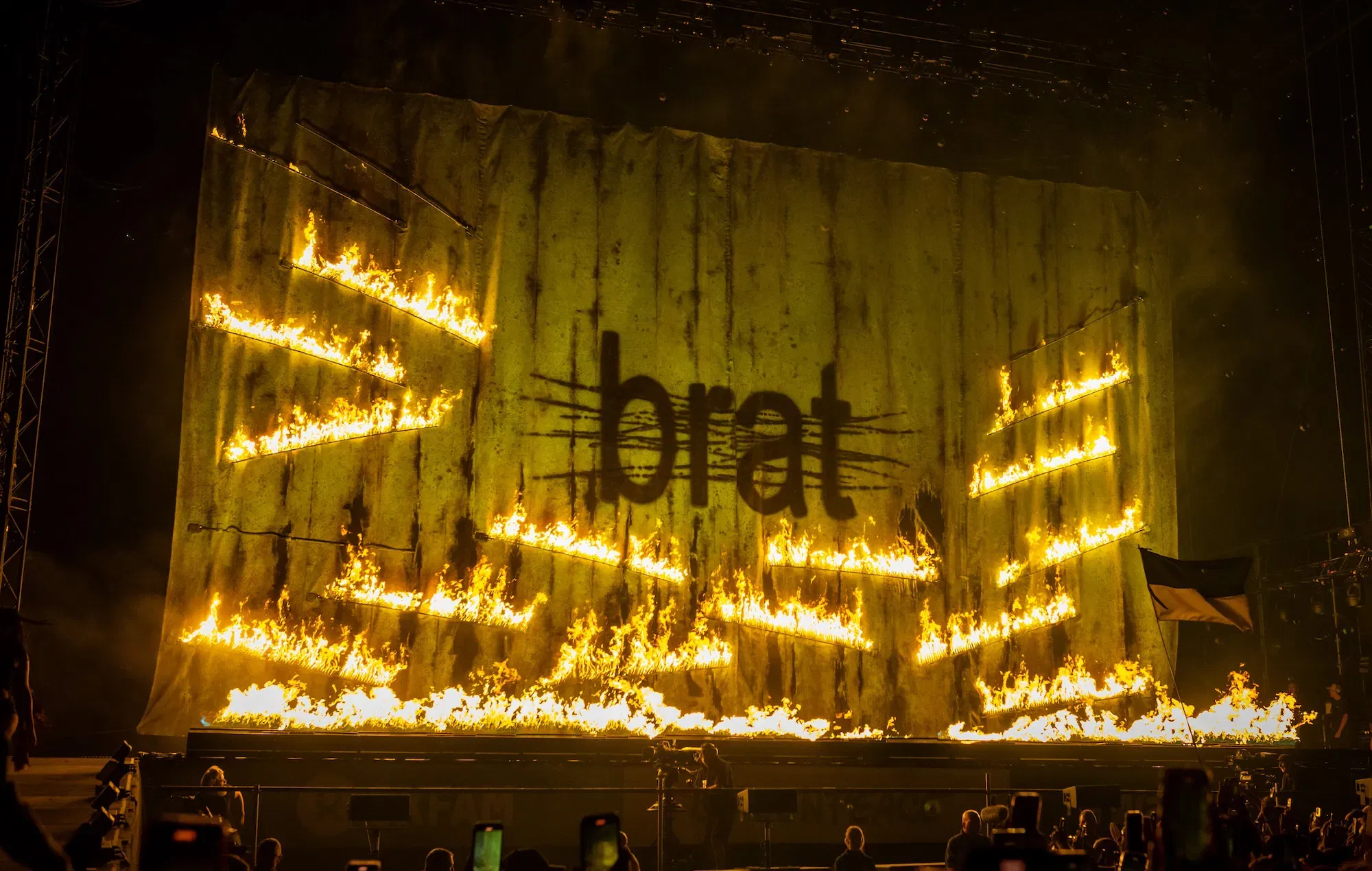
The climax of the show was pure performance art. For months, the iconic lime-green banner had toured the world with her, becoming increasingly tattered and scrawled upon. After a blistering one-two of the ‘365’ remix and ‘360’, the backdrop was literally set ablaze. As the Brat banner went up in flames, the crowd gasped. Was this the end of the era?
Charli’s departing message on the screen provided the answer:
“So we burnt it down, does that mean Brat is finally over?? Maybe it is. But probably NOT. But we had to do it. And it looked cool. I think you all have proven to me that Brat is forever <3. I don’t know who I am if it’s over. It wasn’t just a summer thing… it’s a forever thing xx”
It was a bold, stark victory lap for a pioneer who has always been five steps ahead of the curve. At Glastonbury 2025, Charli XCX proved that she no longer has a point to prove. She isn't just a pop star; she's the blueprint.
The Hip Shaking, Headline Making, The 1975
Friday night at Glastonbury 2025 belonged to The 1975. It was a headline set that felt a decade in the making, nine years since their last trip to Worthy Farm and, crucially, the band’s only scheduled show of the year. The air was thick with rumours of a multi-million-pound stage budget, but when the lights went up, the focus was surprisingly human.
Matty Healy arrived not as a shaven-headed provocateur, but as a classic indie frontman: bootcut jeans, a leather jacket, a roll-up, and a pint of Guinness (complete with a pre-split ‘G’). While the budget clearly hadn't gone on outfits, the precision of the production was staggering. Despite the bravado, the nerves were real; George Daniel had reportedly been so anxious he’d been sick backstage. Healy himself seemed caught between ego and awe, at one point muttering a faint “Oh Jesus” as the house lights revealed the sheer scale of the Pyramid Stage crowd.
Opening with the disco-inflected ‘Happiness’, the band immediately signalled they weren't there to make up the numbers. They moved with a fluidity that only comes from twenty years of friendship, segreueing into a run of "unfiltered pop brilliance" that had been largely absent from their recent tours. ‘Love Me’ and ‘She’s American’ sounded massive, cutting through the Glastonbury night with a polished, 80s-sheen that defied the "all their songs sound the same" armchair critics.
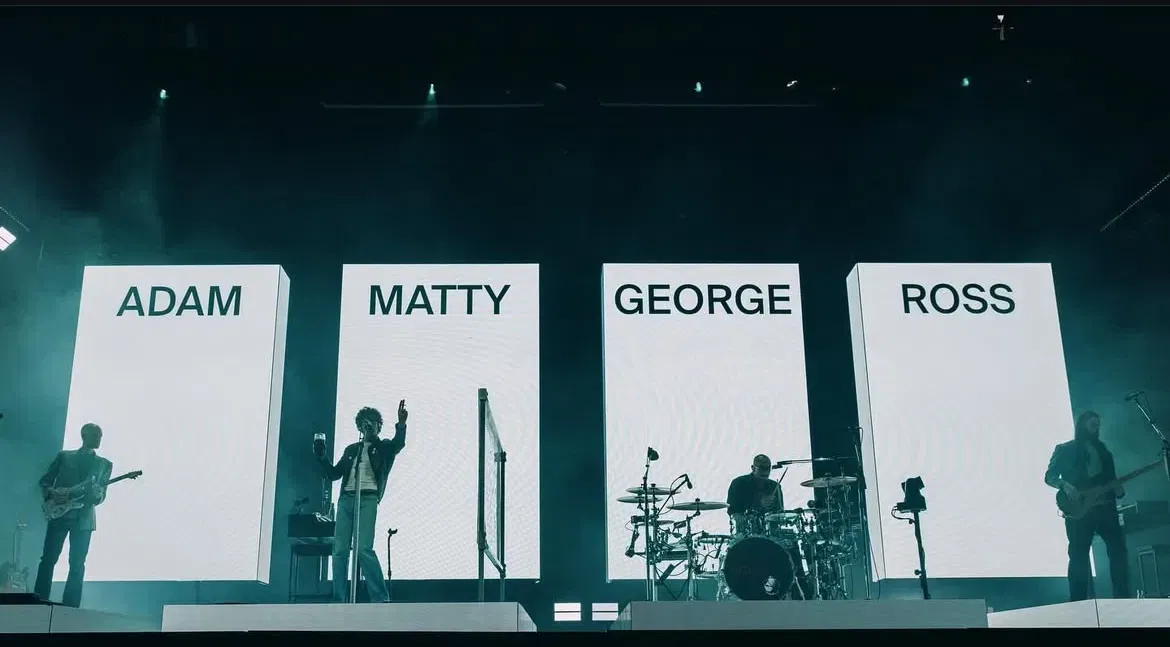
Healy played with the audience’s expectations throughout. During ‘Part of the Band’, his most self-aware lyrics flashed across the screen in real-time, while ‘Chocolate’ featured playful, nonsensical gibberish on the monitors, a nod to the fans who have spent a decade trying to decipher his delivery. Just before the track started, he jokingly declared, “I am the greatest songwriter of my generation… a poet.” It was a classic Healy move: a line designed to be clipped and misunderstood by those who don't speak the language of 1975 irony.
The set leaned into their "heavy hitters" with surgical precision. ‘Love It If We Made It’ acted as a searing critique of the modern world, followed by the jagged, Joy Division-esque energy of ‘Give Yourself a Try’. The band managed to balance the punk vitriol of ‘People’ with the devastating, Britpop-infused ‘I Always Wanna Die (Sometimes)’, proving that their range is far wider than their detractors care to admit.
For a band that once claimed ‘Sincerity is Scary’, the ending was remarkably honest. Closing with the sweeping balladry of ‘About You’, Healy offered a poignant parting message: “It’s cool to be mysterious, but it’s cooler to be honest. We’re not going anywhere. Everything will be alright.”
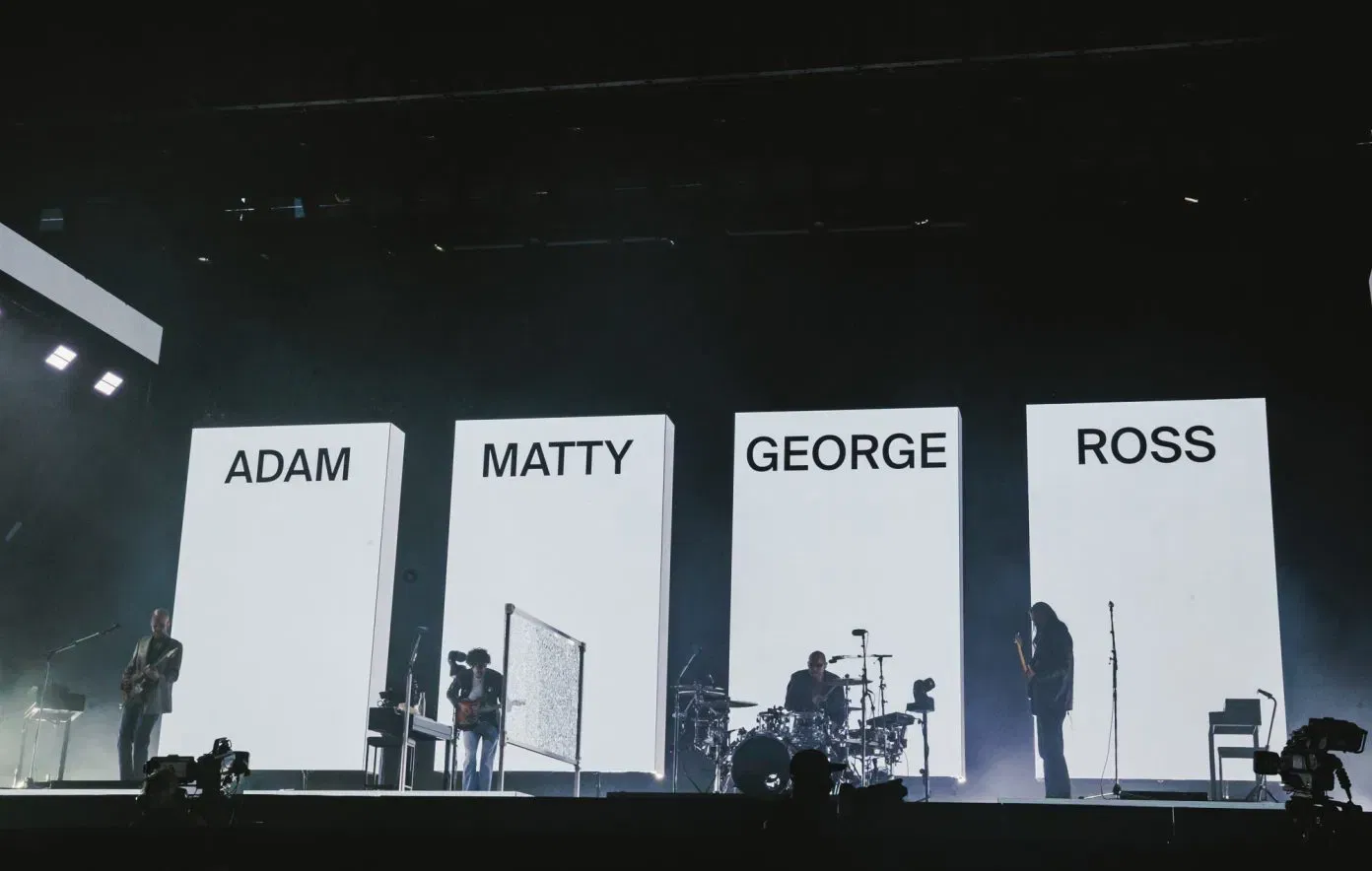
Just before the opening notes of the finale kicked in, he delivered a speech that felt like a definitive statement on their legacy: “We’re The 1975 from the internet, we love you guys. This song’s ‘About You’.” Delivered with heavy emotion, it was a rare moment where the music did all the talking. For a band so often surrounded by noise and controversy, seeing all four of them standing together on that stage, finally getting their moment, felt like a long-overdue victory.
As they left the stage quietly, a single word remained on the screens, the same word that had been emblazoned on George Daniel’s kick drum all night: 'DOGS'. It was the perfect ending, enigmatic, playful, and unmistakably The 1975. Whether it’s a cryptic hint at a new era or just one last bit of mischief, they left the Pyramid Stage having finally conquered it on their own terms.
Flags, Flares, and Field Closures: Kneecap’s Feral Victory at Worthy Farm
Kneecap have had one of the most chaotic years in recent memory. Still riding the wave of 2024’s Fine Art, the trio spent 2025 doing exactly what they promised: taking on the world and the establishment simultaneously.
The firestorm began at Coachella in April. The group used their massive platform to project uncompromising messages condemning US involvement in Gaza, sparking an immediate media backlash. In the wake of the festival, an old video from a 2024 London gig resurfaced, appearing to show Mo Chara (Liam Óg Ó hAnnaidh) shouting support for proscribed organisations.
By May, the Metropolitan Police had charged him with terrorism offences, a move the band slammed as a "coordinated smear campaign" designed to silence their pro-Palestine activism.
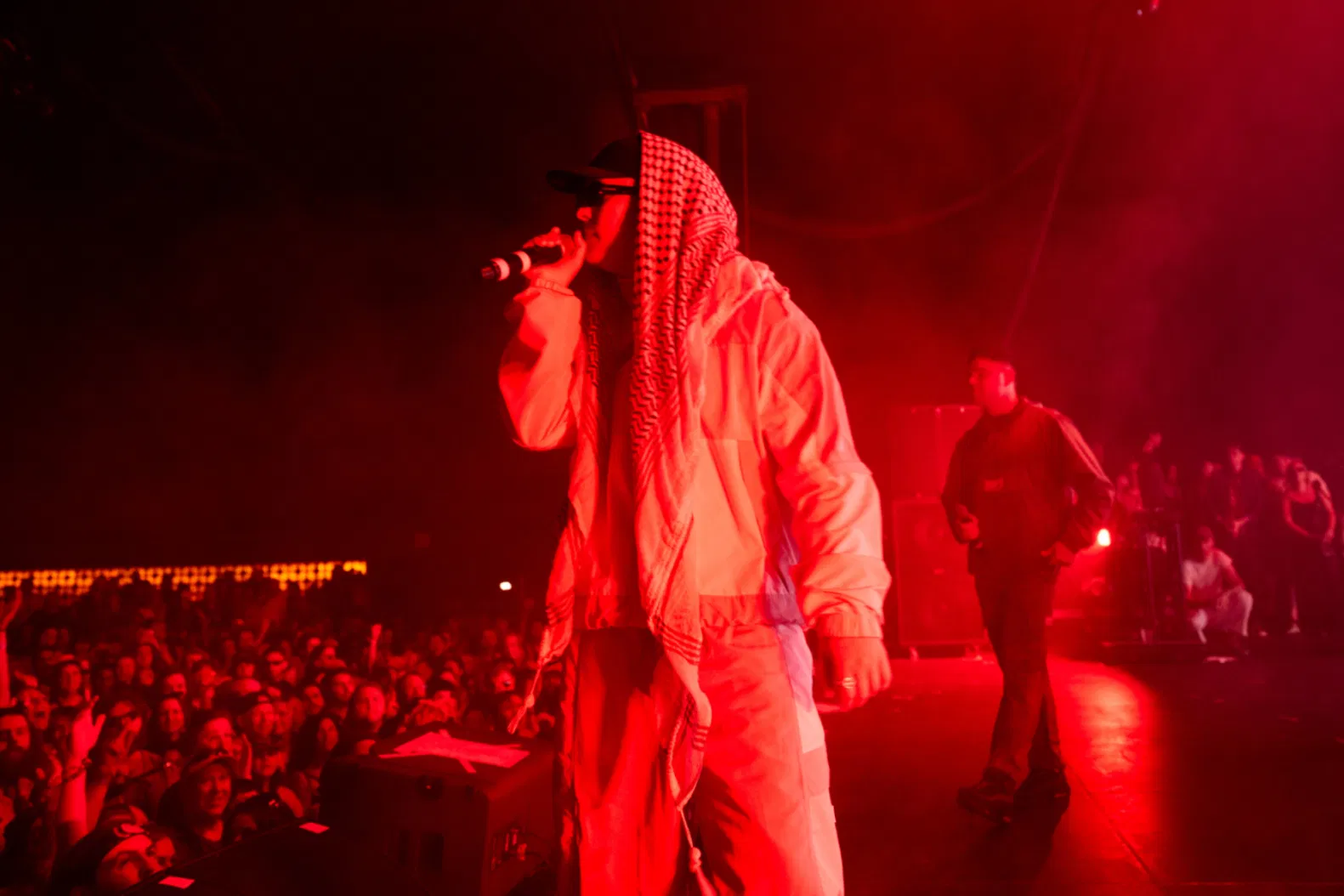
The legal drama loomed over the summer, culminating in a September court appearance where the case was sensationally thrown out. The judge ruled the proceedings "unlawful and null" due to a technical failure by the CPS. Outside the court, Mo Chara remained defiant: “This was never about terrorism... it was always about Gaza. About what happens if you dare to speak up.”
In the middle of this legal whirlwind, however, was the small matter of the band's biggest show to date: Glastonbury 2025. Just a year after playing a secret set attended by Noel Gallagher, Kneecap returned to headline a Saturday afternoon slot at West Holts. The demand was so great that the field had to be closed an hour before they even took the stage; 30,000 people were crammed in, waving a sea of Palestinian flags that made the BBC’s decision not to broadcast the set look increasingly out of touch.
However, the "deliberate act of silence" from the national broadcaster backfired spectacularly. A fan, now immortalised as "Helen from Wales," took matters into her own hands by live-streaming the entire hour-long set on TikTok. Over two million people tuned in to her grainy, sweltering phone feed, bypassing the censors to witness a moment of genuine cultural history. The band later hailed Helen as a "legend," offering her free tickets for life.
Leaning into the controversy, they opened with a montage of news clips branding them "terrorist sympathisers" and "inappropriate," ending with a clip of Sharon Osbourne telling Piers Morgan that the band had "destroyed" Glastonbury. The response from the crowd was a deafening roar of defiance.
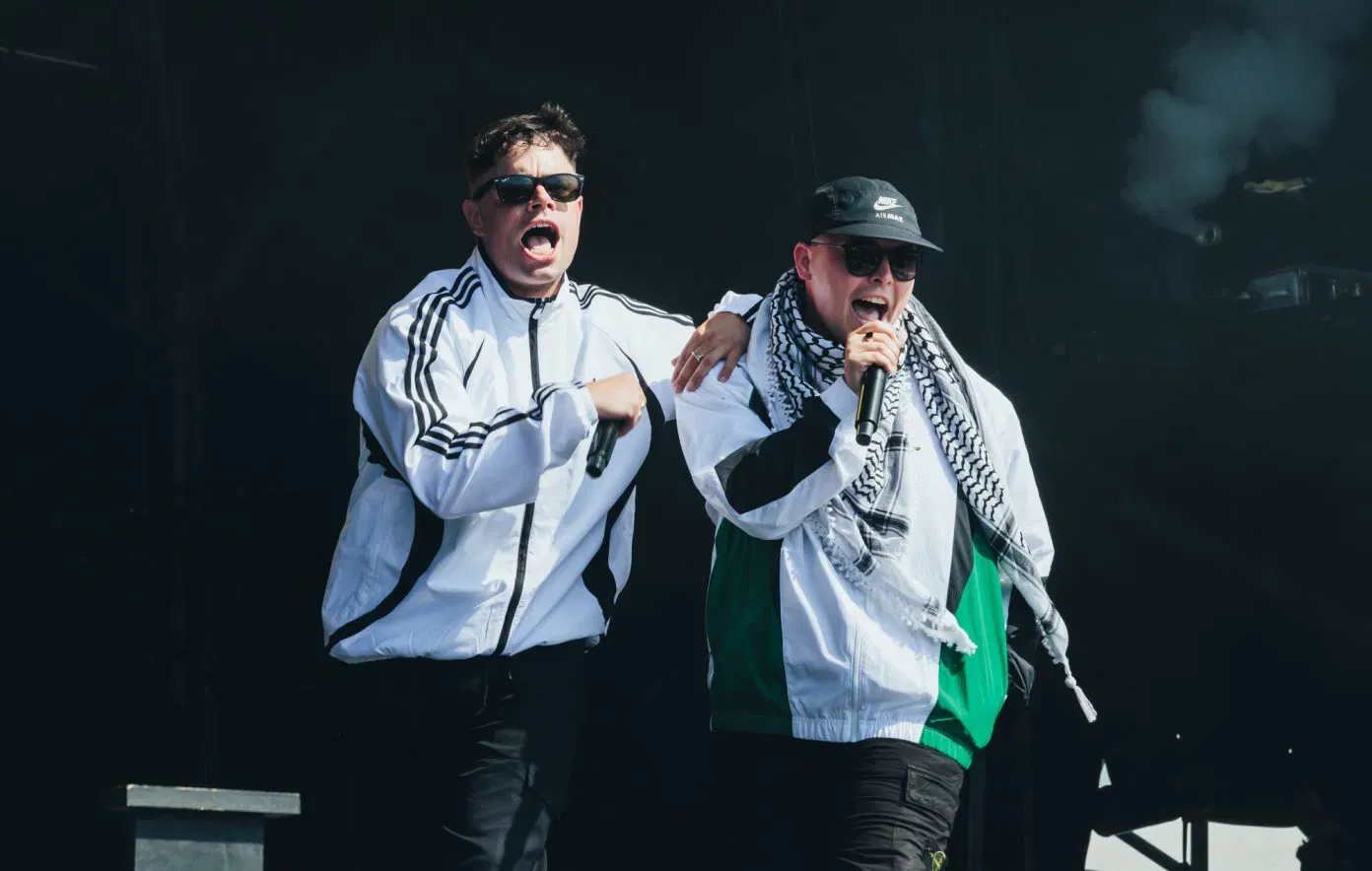
Musically, they were untouchable. Mo Chara and Móglaí Bap are dextrous, raw-throated rappers, far funnier and more skilled than the tabloid headlines suggest. Opening with the spiritual tones of ‘3CAG’ before exploding into ‘Better Way to Live’, the energy was impossible to suppress.
‘Your Sniffer Dogs are Shite’ turned the field into a multi-generational mosh pit, while the rapturous response to ‘Fine Art’ and ‘Rhino Ket’ proved that their "public enemy" status had only made them more beloved. There was a delicious, dark irony in the air: while the British government and press were busy condemning them as a threat to national security, 30,000 people were screaming along to a song about taking enough ketamine to put a rhinoceros to sleep.
By the time they tore through ‘Get Your Brits Out’, ‘H.O.O.D’, and their latest punch-back single ‘The Recap’, the set had transformed from a festival show into a victory lap. Hip-hop has always been a symbol of counterculture, but this was something more of a feral, feel-good rave against all odds. Kneecap didn't just survive the establishment’s attempt to bury them; they used the dirt to build a bigger stage.
However, the band’s most significant victory happened away from the mud of Worthy Farm. In September 2025, the "trumped-up" terrorism case against Mo Chara (Liam Óg Ó hAnnaidh) was sensationally thrown out at Woolwich Crown Court. Chief Magistrate Paul Goldspring ruled the proceedings “unlawful and null,” citing a "logic-defying" technical error where the prosecution failed to secure the necessary consent from the Attorney General within the six-month legal window.

As the case collapsed, cheers erupted from the public gallery. Outside the court, Mo Chara remained as uncompromising as ever, telling supporters: “This was never about terrorism... it was always about Gaza. About what happens if you dare to speak up.” By the end of 2025, Kneecap hadn't just survived the British legal system; they had exposed its cracks, leaving the establishment red-faced and the band more influential than ever.
CMAT- A Bittersweet Symphony
“Modernity has failed us,” Matty Healy famously screamed in 2018, but in 2025, CMAT provided the autopsy report. After a summer that saw her deliver a career-defining Glastonbury Pyramid Stage debut, thousands doing the “Dunboyne two-step” while she sashayed in a blue leotard, Ciara Mary-Alice Thompson struck TikTok gold with the "Woke Macarena" dance challenge for ‘Take A Sexy Picture Of Me’.
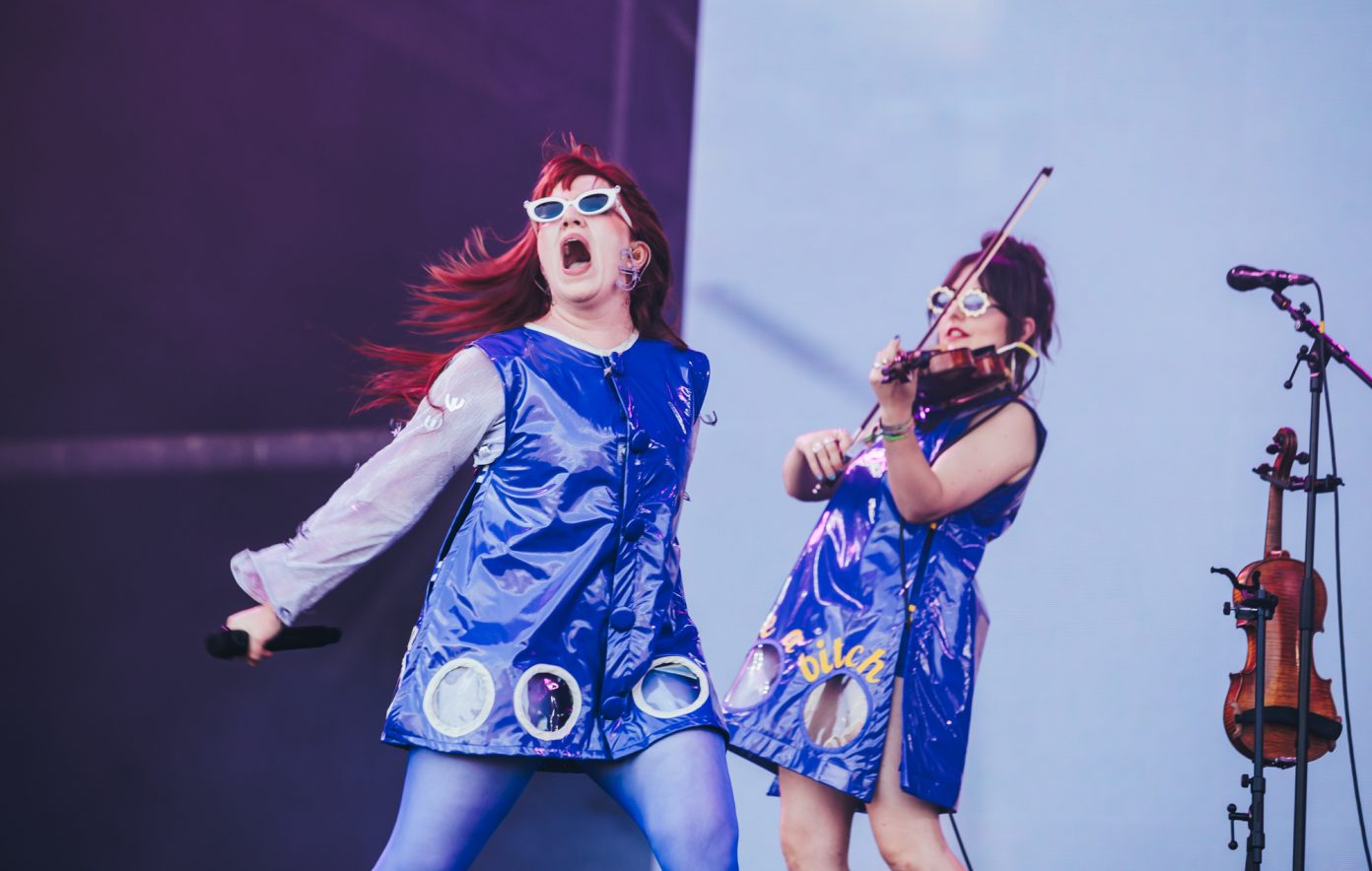
Glastonbury was the moment CMAT truly arrived in the nation’s living rooms. Resplendent in "International Blue" (a nod to the aesthetic of her third album, Euro-Country) and sporting a jacket emblazoned with ‘The Dunboyne Diana’, she was a high-kicking, rootin’-tootin’ force of nature. By her own admission, she is a mix of “middle-child syndrome, an amazing ass, and the best Irish rock’n’roll country band in the world.” From the full-band line-dancing to her effortless crowd control, she became the everywoman people’s champion that 2025 desperately needed.
However, 'Euro-Country' proved to be far more than just viral dances. This record is profound; it’s a collection where conviction and catharsis finally sit as equals alongside the chuckles. The title track is an astonishing piece of social commentary, coining a term for her continental take on the genre while reflecting on Ireland’s place in the EU. “I was 12 when the das started killing themselves all around me,” she sings, a devastating line that anchors her kitsch aesthetic in the harsh reality of the post-Celtic Tiger financial crash.
The album balances this weight with flashes of brilliant, surrealist humour. ‘The Jamie Oliver Petrol Station’ is a five-minute psych-country therapy session regarding her irrational hatred for the celebrity chef. With a chorus that screams, “OK, don’t be a bitch / The man’s got kids, and they wouldn’t like this,” it’s a hilarious exploration of how we project our own frustrations onto the mundane.
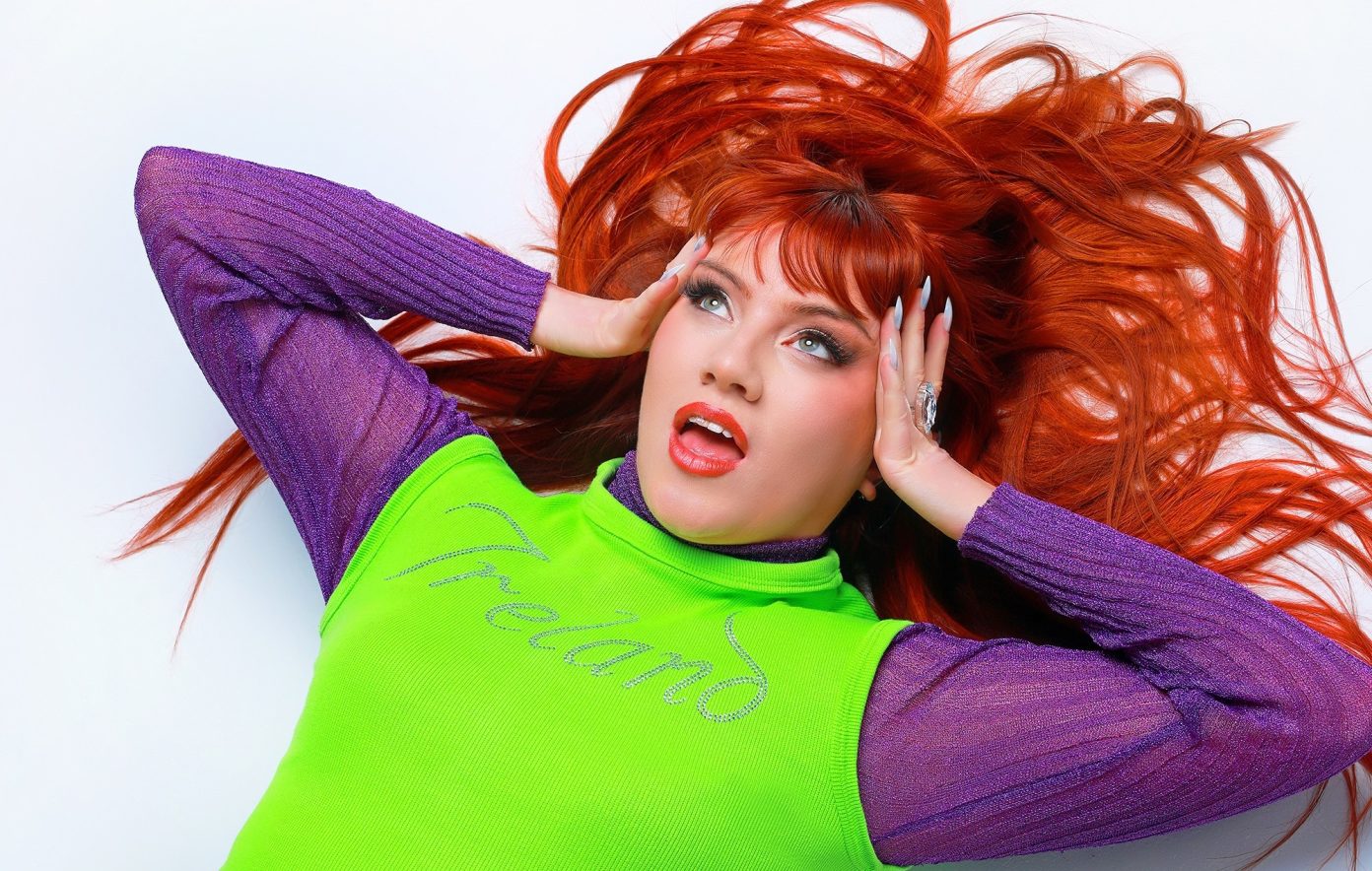
Meanwhile, ‘Take A Sexy Picture Of Me’ is the perfect pop song for a toxic era. Written in response to fat-shaming comments on her BBC performances, it subverts the male gaze with razor-sharp wit: “I did schoolgirl fantasies / I did leg things and hand stuff... Now tell me what was in it for me?” Yet, the album’s true soul lies in its quietest moments. ‘Lord, Let That Tesla Crash’ is a heartbreakingly personal tribute to her late friend and collaborator, Jo Rose. Using a gentrified Tesla parked outside an old house-share as a symbol of loss, she reckons with the messy reality of grief: “I’d kill myself to find out if you think this song is good.”
CMAT has entered a new era with Euro-Country. It is a roiling sea of charm, chaos, and piercing insight. Ciara Mary-Alice Thompson has never sounded more like herself: a superstar who can make you line-dance through the ruins of late-stage capitalism.
It’s no wonder she has become the industry’s favorite collaborator; before the album even dropped, she had already lent her "powerhouse" songwriting and distinctive vocals to Blossoms, co-writing tracks like ‘Why Do I Give You The Worst Of Me?’ and providing the standout backing vocals on ‘I Like Your Look’ for their chart-topping album 'Gary'.
By the time summer truly hit, she was no longer just a cult hero but a stadium-level force. Serving as the special guest for Sam Fender across his massive UK and European run, including a wild, end-of-tour encore appearance for ‘Something Heavy’ she proved she could command tens of thousands with a single high-kick. If CMAT’s supporting slots across the summer proved she is ready for the world's biggest stages, the man she was opening for provided the blueprint for how to command them.
People Watching from the Nosebleeds: Fender’s Stadium Takeover
After a decade of steady growth, 2025 was the year Sam Fender didn't just join the pantheon of British greats, he rewrote the record books. Following a run of sold-out European dates, Fender headed out on a massive stadium tour that included a gargantuan night at London Stadium and a historic homecoming. By playing three more nights at Newcastle’s St. James’ Park in June, Sam brought his career total to five shows in front of the Gallowgate End, drawing a staggering 150,000 fans across the weekend.
While stadiums are the logical next step for an artist of his magnitude, Fender has conquered them on his own terms. His show remains a relatively stripped-back affair; there are no light-up wristbands or a dozen costume changes here. Instead, he relies on a smattering of fireworks and songs that are undeniably timeless. The tracks on his third record, People Watching, might not be traditional "stadium rock" on paper, but their emotional weight fills every corner of a 50,000-capacity room.
The album as a whole is a masterclass in observational songwriting, a fact cemented in October when Sam Fender won the 2025 Mercury Prize. In a historic move, the ceremony was held outside of London for the first time, taking place at Newcastle’s Utilita Arena. Fender edged out a formidable shortlist that included the likes of Pulp, Wolf Alice, CMAT, and Fontaines D.C. to take home the trophy.
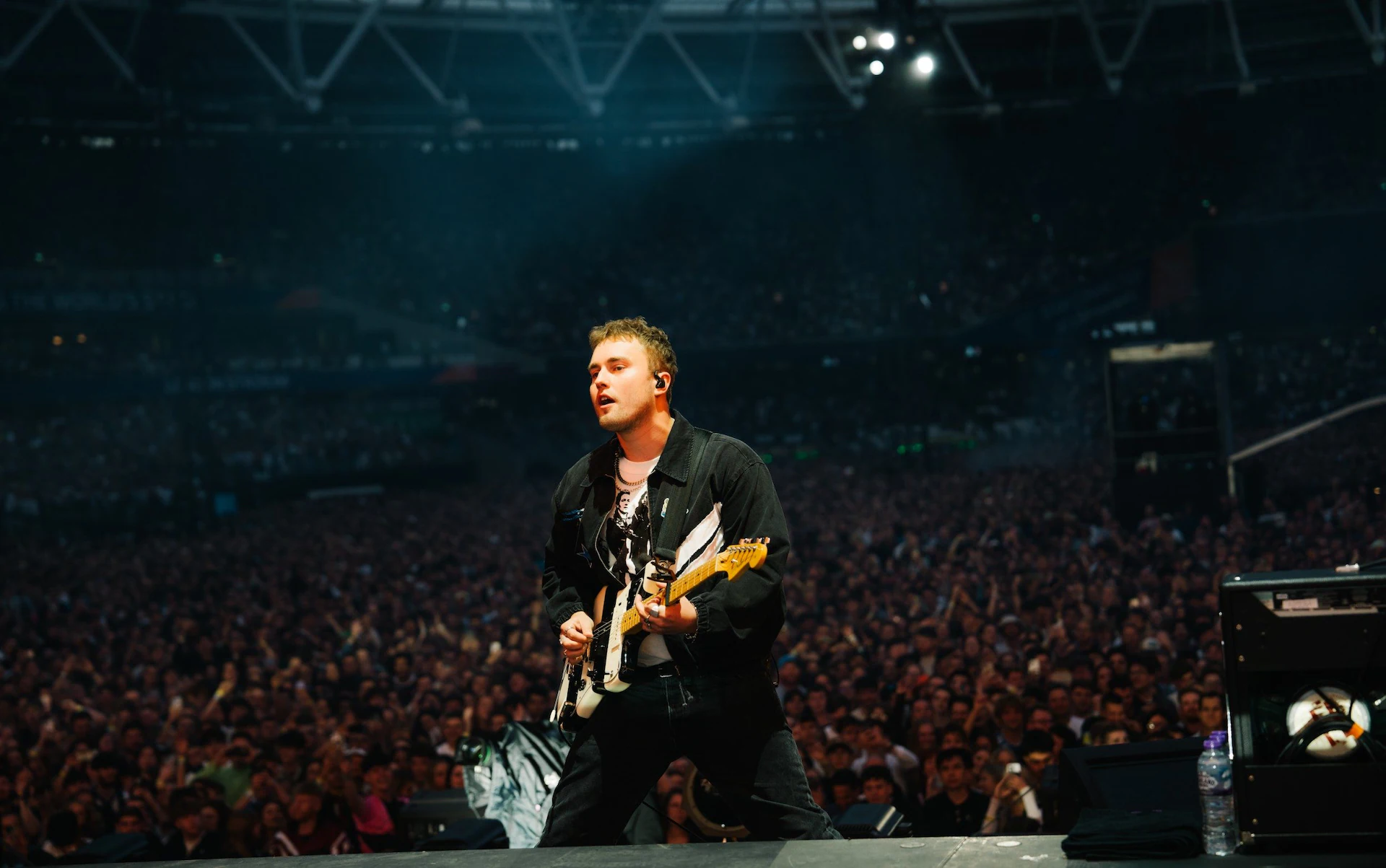
The record itself balances the personal with the political, from the soaring title track to the 80s heartland-rock of ‘Crumbling Empire’, which captures a sense of national decay with "The Boss" levels of urgency. The sprawling, six-minute ‘Wild Long Lie’ offers a more intimate narrative of hometown escapism, while the devastating ‘Remember My Name’, performed on tour with the Easington Colliery brass band, details his grandfather’s journey caring for his grandmother through dementia.
The Deluxe Edition of the album, released in December, has only added to this legacy. It offers a raw, skeletal look into his process with acoustic versions of tracks like ‘The Treadmill’ and ‘Me and The Dog’, while introducing massive new collaborations. The duet with Olivia Dean on ‘Rein Me In’ (which she performed live at the London Stadium show) and the star-studded single ‘Talk To You’ featuring Elton John highlight Sam’s arrival as a global force.
Yet, amidst the superstardom, he remains a cornerstone of the UK scene’s conscience. Linking back to the vital message heard at this year’s Brit Awards, Fender hasn't forgotten the grassroots. By donating £1 from every ticket sold to the Music Venue Trust, his stadium tour directly helped save 38 small venues from closure this year. Furthermore, he used his platform to join Fontaines D.C. and Kneecap in speaking out against the conflict in Palestine, dedicating a soaring rendition of ‘Hypersonic Missiles’ to the "real heroes" of Doctors Without Borders.
As the tour moved through Belfast, Manchester, and Edinburgh, the message was clear: Sam Fender is no longer just a "moments" artist. He is building a career that will last forever. He’s already conquered the stadiums and the Mercury Prize; now, all roads lead to a Glastonbury headline slot in 2027.
The Ritual Ascendant: Sleep Token’s Arcadian Reign.
If 2025 belonged to anyone in the world of heavy music, it was the enigmatic collective Sleep Token. The year was marked by their absolute refusal to be categorised, a sentiment that culminated in their crowning as headliners for Download Festival 2025. On the hallowed grounds of Donington Park, Vessel and his cohorts transformed the stage into a weathered, Arcadian temple. The performance was a high-production "consecration," featuring a choir and a stage set that felt like a mountain ruin, proving that Sleep Token are the metal sensation of the century.
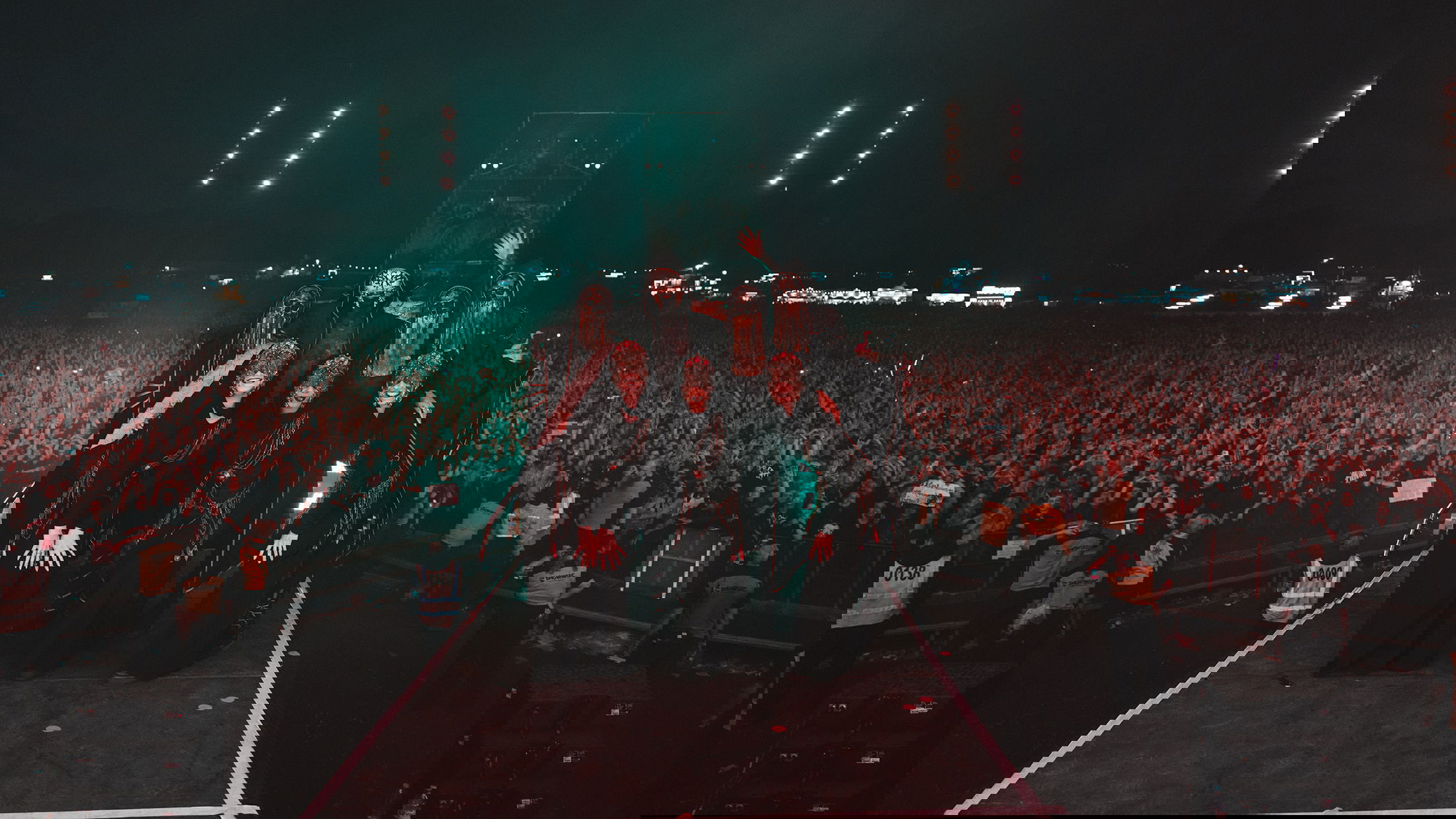
This live triumph was fueled by their fourth studio album, 'Even in Arcadia', released in May. The record saw the band break new ground, with the sultry, jazz-inflected lead single ‘Caramel’ successfully breaching the UK Top Ten. The album showcased a far more vulnerable side to the collective, particularly on tracks like ‘Damocles’, where Vessel’s vocals strip back the masks to reveal raw, emotional intimacy.
Musically, the record is their most ambitious to date, fully embracing Jazz, R&B, and even the progressive grandeur of Pink Floyd. Nowhere is this influence more apparent than on ‘Infinite Baths’, which features sprawling, atmospheric guitar work that serves as a deliberate and beautiful nod to the legendary ‘Shine On You Crazy Diamond’. It was a record that balanced brutal riffs with soulful textures, proving that "even in paradise," there is a haunting, skeletal beauty to be found.
The Woman We Need: Olivia Dean
If 2025 had a signature sound, it was the warm, soulful brass and crystalline vocals of Olivia Dean. This was the year she stopped being a "rising star" and became a definitive voice in British music. The momentum she built culminated in September with the release of her sophomore album, 'The Art of Loving, ' a record she described as a "tender, intentional deep dive" into love in all its forms.
The impact was immediate. The album debuted at Number 1 on the UK Charts, making Olivia the first British female artist since Adele to secure a chart double (Number 1 album and a concurrent Top 10 single) with such historic impact. That single, ‘Man I Need’, became a bolt of pure positivity for the summer. A fearless anthem about self-worth and independence, it was "made for dancing" and dominated the airwaves, eventually peaking in the Top 5.
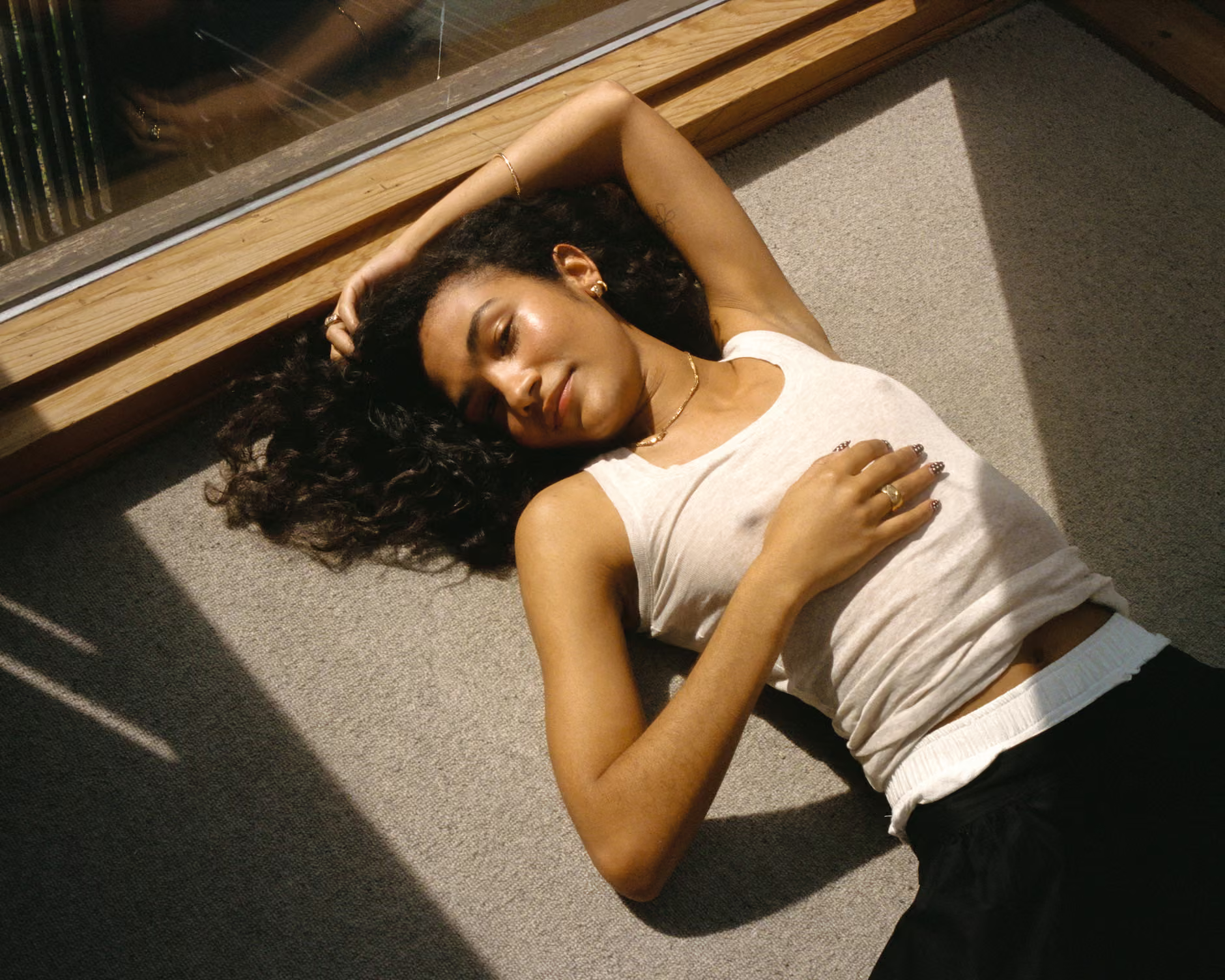
She followed it with the bossa-nova-tinged ‘So Easy (To Fall in Love)’, which brought a much-needed sense of hopeful elation to the charts. With its vintage-soul production and lyrics that felt like a modern classic from the first play, it proved that Olivia is a songwriter who values the "craft" of a song above all else.
Beyond her solo success, Olivia was responsible for one of the most poignant musical moments of the year. During her support slots on Sam Fender’s massive stadium run, she joined him on stage at a sold-out London Stadium to debut a new version of his track ‘Rein Me In’.
Olivia didn't just sing a guest vocal; she wrote an entirely new verse from a female perspective, adding a lived-in, emotional depth that transformed the song. The performance went viral instantly, leading to a studio release that reached Number 5 on the UK Singles Chart. Whether she was sharing a stage with 80,000 people or delivering intimate portraits of vulnerability like ‘Loud’, 2025 belonged to Olivia Dean.
The Altar of Sound: Florence + The Machine and the Catharsis of 'Everybody Scream'
If 2025 was a year of indie-rock reinvention, it was also the year that Florence Welch reclaimed her crown as the high priestess of British music. Arriving on October 31, 2025, her sixth studio album, 'Everybody Scream', felt like a deliberate choice; a Halloween release that wasn't about the supernatural, but about the terrifying and transformative power of survival. Deeply informed by her near-fatal health scares during her previous tour, the record is a visceral, guttural exploration of the body, femininity, and the cost of immortality.
The album marks a sonic shift toward "folk horror" and baroque rock, trading some of the dance-floor energy of her previous work for something far more primordial. The title track, 'Everybody Scream', serves as a frantic opening statement, featuring pulsing drums and a chorus that questions the trade-off between a performer's physical health and the audience's demand for spectacle.
Meanwhile, the second single 'One of the Greats' has already been anointed a career-best. Recorded with a raw, industrial edge, the song is a simmering ballad where Florence ruminates on her own mortality and the industry's double standards, biting back with the tongue-in-cheek line: "It must be nice to be a man and make boring music just because you can."
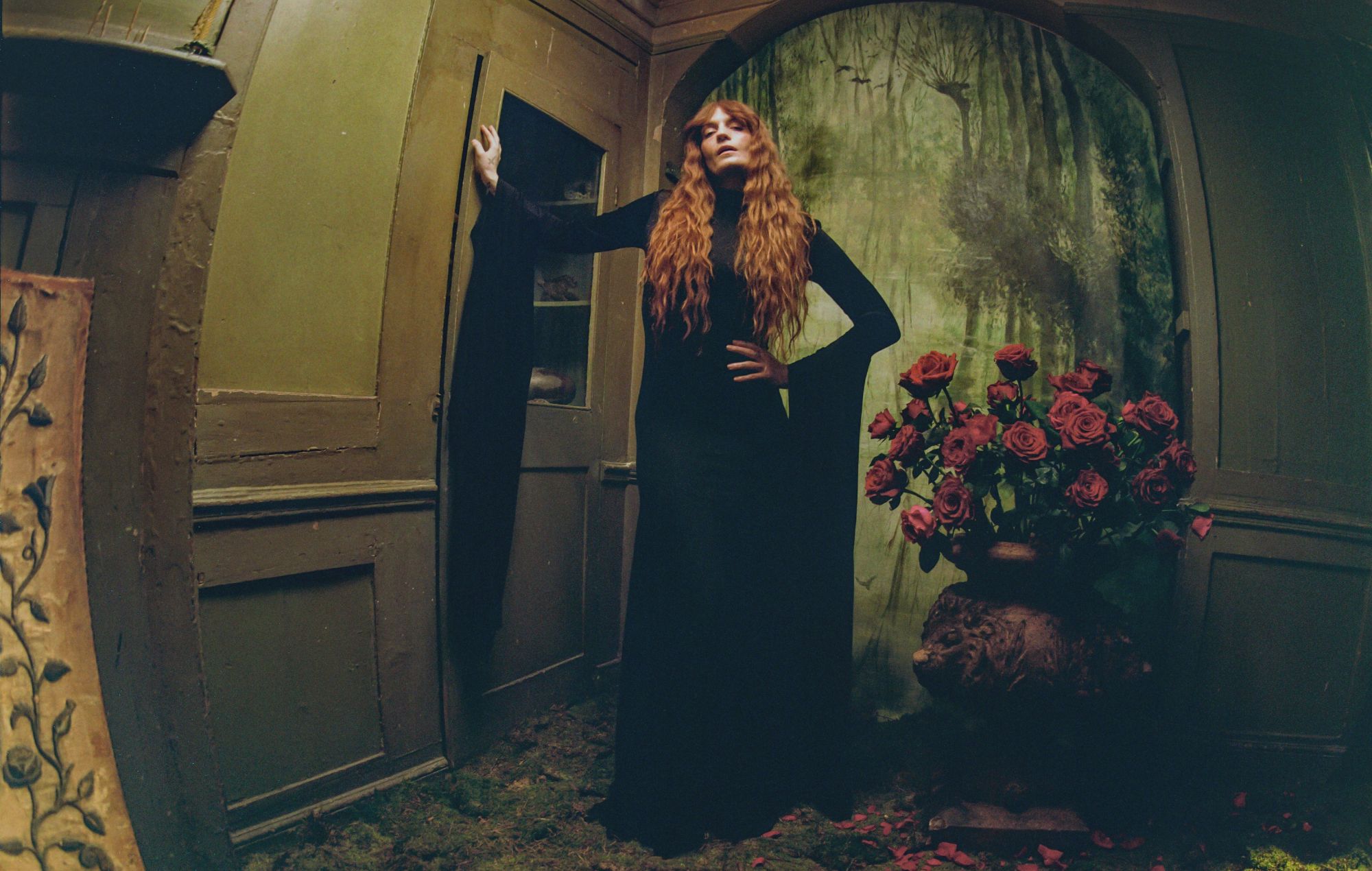
The 'Scream' era is set to move from the speakers to the stage with a massive UK & EU Arena Tour kicking off in February 2026. This tour features a highly anticipated return to London’s O2 Arena, where the stage design is rumoured to incorporate the same starship-silver and "theatrical ruin" aesthetic seen in her recent visualisers. However, the true victory lap for this era will take place in the summer. It has been officially confirmed that Florence + The Machine will return to headline Reading & Leeds Festival in August 2026. Marking her first appearance at the festivals since 2012, this will be her only UK festival performance of the year, a headline slot that promises to be a biblical homecoming for one of the country's most commanding live forces.
The Great 'HAIM-atus' Ends: Sisterly Solidarity and the 90s Time Capsule
Five years after their last record, the Haim sisters returned in 2025 with 'I Quit', a record that didn't just break their silence; it shattered their sonic boundaries. If their previous work was a love letter to 70s soft rock, ‘I Quit’ is a sprawling, fifteen-track time capsule of the 1990s, blending genres with a fearless, experimental spirit.
The album opens with ‘Gone’, a track that sets the stage by sampling George Michael’s ‘Freedom! ’90’. The joyous, gospel-inflected piano of the original is repurposed into a soaring anthem of sisterly independence, complete with a choir and a psychedelic Danielle Haim guitar solo that drifts into the distorted, baggy rhythms of The Stone Roses. It’s a staggering start that signals the record's ambitious reach, moving from the Americana roots of ‘All Over Me’, which carries a gritty, Alanis Morissette-esque snarl, to the Björk-inspired glitchy snares of ‘Million Years’.

The "I Quit" era reached its fever pitch during Glastonbury 2025, where the sisters played a chaotic, unannounced secret set at The Park Stage. It was the worst-kept secret of the weekend, with fans crushed together to hear the new material for the first time on UK soil. It acted as the perfect lightning rod for their UK Arena Tour in the winter, which saw them transforming these experimental 90s textures into a stadium-sized spectacle. In a year of massive reunions, HAIM proved that they didn’t need a comeback narrative; they just needed to show everyone why they are the most versatile rockstars of their generation.
The Boy Who Played The Harp: Dave’s Introspective Resurrection
For three years, the silence from Dave was deafening. While the rest of the UK rap scene moved at a breakneck, "content-first" pace, Dave retreated, choosing to become the "Boy Who Played the Harp", a title steeped in biblical metaphor that perfectly captures his 2025 return.
In the Bible, it is David who is summoned to play the harp for King Saul, using the instrument’s purity to soothe a ruler’s troubled spirit and ward off evil. By adopting this mantle, Dave repositioned himself not just as a rapper, but as a modern psalmist, using his music as a weapon against the "demons" of the industry and his own mental exhaustion.
Released in October 2025, the album was a 47-minute masterclass in restraint. It wasn't just a collection of songs; it was a dissection of fame and the weight of being a generational voice. The standout moment of the year wasn't a viral TikTok clip, but the visceral epic ‘Chapter 16’, featuring a back-and-forth masterclass with Kano. The track’s title is a direct nod to the 16th chapter of the Book of Samuel, where David is anointed, marking the beginning of his journey. Seeing these two titans trade advice on success and life’s regrets felt like a coronation.
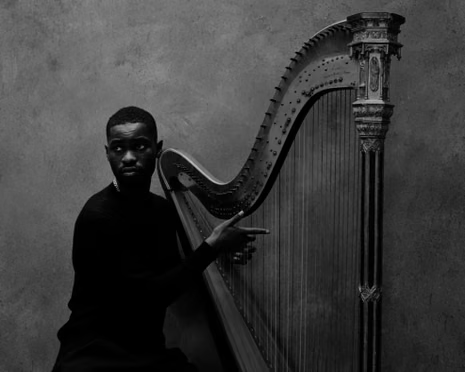
By the time he announced his 2026 World Tour, which sold out in a matter of minutes, it was clear that Dave hadn’t just returned; he had evolved into a global phenomenon. The tour is a massive, high-concept undertaking that begins with an 8-date European arena run in February, hitting cultural hubs like Paris (Accor Arena), Amsterdam (Ziggo Dome), and Berlin (Uber Arena).
The momentum then carries into a legacy-defining UK and Ireland leg in March, including a four-night residency at London’s O2 Arena, alongside massive shows at Manchester’s Co-op Live, Birmingham’s Utilita Arena, and Glasgow’s OVO Hydro. But Dave’s reach in 2026 extends far beyond the British Isles; the "Harp" will be heard across North America in April, with major stops at the Hollywood Palladium in LA, The Anthem in D.C., and two final nights at Brooklyn Paramount in New York. He even rounds out the summer with a first-ever Australian arena tour in June, playing Sydney’s Qudos Bank Arena and Melbourne’s Rod Laver Arena, before returning to headline Reading & Leeds Festival for a second time in August.
In a year of "Brat" energy and fast-paced pop, Dave reminded us that there is still a massive, hungry audience for slow-burning, high-stakes storytelling. He is no longer just a "rapper from Streatham"; he is the boy who played the harp, and the whole world is finally quiet enough to listen.
Thirteen Albums, Stadiums & Arenas: The Relentless Year of Stereophonics
In April, Stereophonics released their thirteenth studio album, ‘Make ’Em Laugh, Make ’Em Cry, Make ’Em Wait’. It is a short, snappy, eight-track record that feels like a curated gallery of the band’s various eras. There are heavy doses of nostalgia ‘Backroom Boys’ in particular sees Kelly Jones looking back at his teenage years spent in the dim light of pubs and bars, while tracks like ‘There’s Always Gonna Be Something’ grapple with the modern struggle of finding a "clear table" and a moment of peace in a frantic world.
I will be honest: I was not the biggest fan of the new record. To me, it felt a little "tagged on" to coincide with the tour rather than a fully realised statement. However, I was never going to turn down an opportunity to see them live. I have seen Stereophonics eight times now, and they have never put on a bad show.
The summer saw the band embark on their ‘Stadium Anthems’ tour. I headed to the John Smith’s Stadium in Huddersfield, a rare treat for the town, as big-name concerts are few and far between there. With support from Blossoms, the gig had the feeling of a massive community event; it felt like the entire town had turned out to stand on the pitch and join in. Stereophonics stormed the stage at 8:20 pm, opening with the gritty groove of ‘Vegas Two Times’ from ‘Just Enough Education to Perform’.
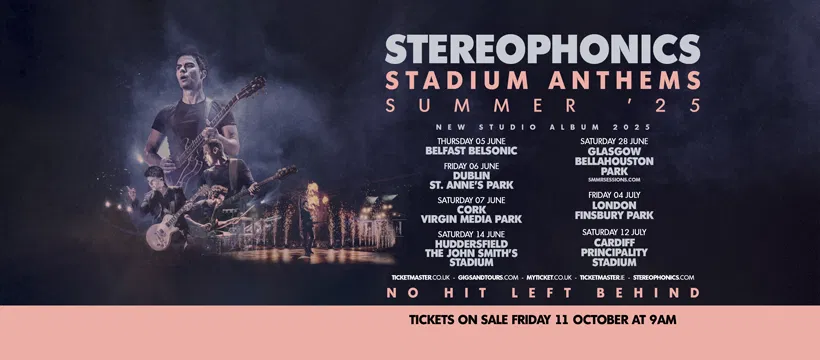
Kelly Jones, with that unmistakable gravelly voice and effortless cool, led the band through a 23-song masterclass. The setlist was a perfectly balanced journey, moving from early gems like ‘Just Looking’ and ‘Pick a Part That’s New’ from ‘Performance and Cocktails’ to the timeless, stadium-sized singalong of ‘Have a Nice Day’. A major highlight was a delicate, ukulele-led version of ‘I Wouldn't Believe Your Radio’. Kelly revealed the instrument was a gift from bassist Richard Jones before launching into a brilliant story about David Bowie.
During their 2003 U.S. tour supporting the legend, the band would play 45-second snippets of songs during soundcheck, terrified of wasting Bowie’s time. Kelly recounted how Bowie eventually put an arm around his shoulder and told him: “You know, if you extended a few of those songs, you might be fucking onto something.”
The band’s energy never dipped, from the raw rock intensity of ‘Superman’ to the defiant sneer of ‘Mr. Writer’. By the time the encore of ‘The Bartender and the Thief’ and ‘Dakota’ rolled around, the stadium was in a state of pure magic.
But the "year of the 'Phonics" didn't end with the summer sun. As the nights drew in, the band returned for a massive winter arena tour, proving that their music works just as well in the intimate heat of a packed indoor crowd as it does under the open sky. While the stadiums were about the "anthems," the winter dates allowed the more nuanced tracks from the new record, like ‘Make It on Your Own’, to really breathe. Stereophonics remain comfortably one of Britain’s best live outfits, a band that doesn't just play to a crowd, but unites them across every season.
The New Royalty: Rodrigo’s Pyramid and Roan’s Kingdom
In 2025, the UK’s biggest festivals took a gamble on the next generation of pop, and the payoff was historic. At just 22, Olivia Rodrigo was handed the keys to the Pyramid Stage, closing out the Sunday night of Glastonbury the final headline slot before the festival’s 2026 fallow year. It was a daunting task, but Olivia made it look effortless, proving she is far more than an "adopted Brit"; she is a future legend.
She commanded probably the largest crowd of the weekend, navigating from the snarky punk energy of ‘Brutal’ and ‘All American Bitch’ to ‘Drivers License’, one of the most heartfelt and tender break-up anthems ever written. Olivia has always worn her alt-rock influences on her sleeve; just days before Glastonbury, she performed a stripped-back, emotional cover of ‘I Love You’ by Fontaines D.C. in their hometown of Dublin. But for the Pyramid Stage, she wasn't doing things by halves. Introducing him as “probably the greatest songwriter to come out of England,” she was joined by Robert Smith of The Cure for unforgettable duets of ‘Friday I’m In Love’ and ‘Just Like Heaven’.
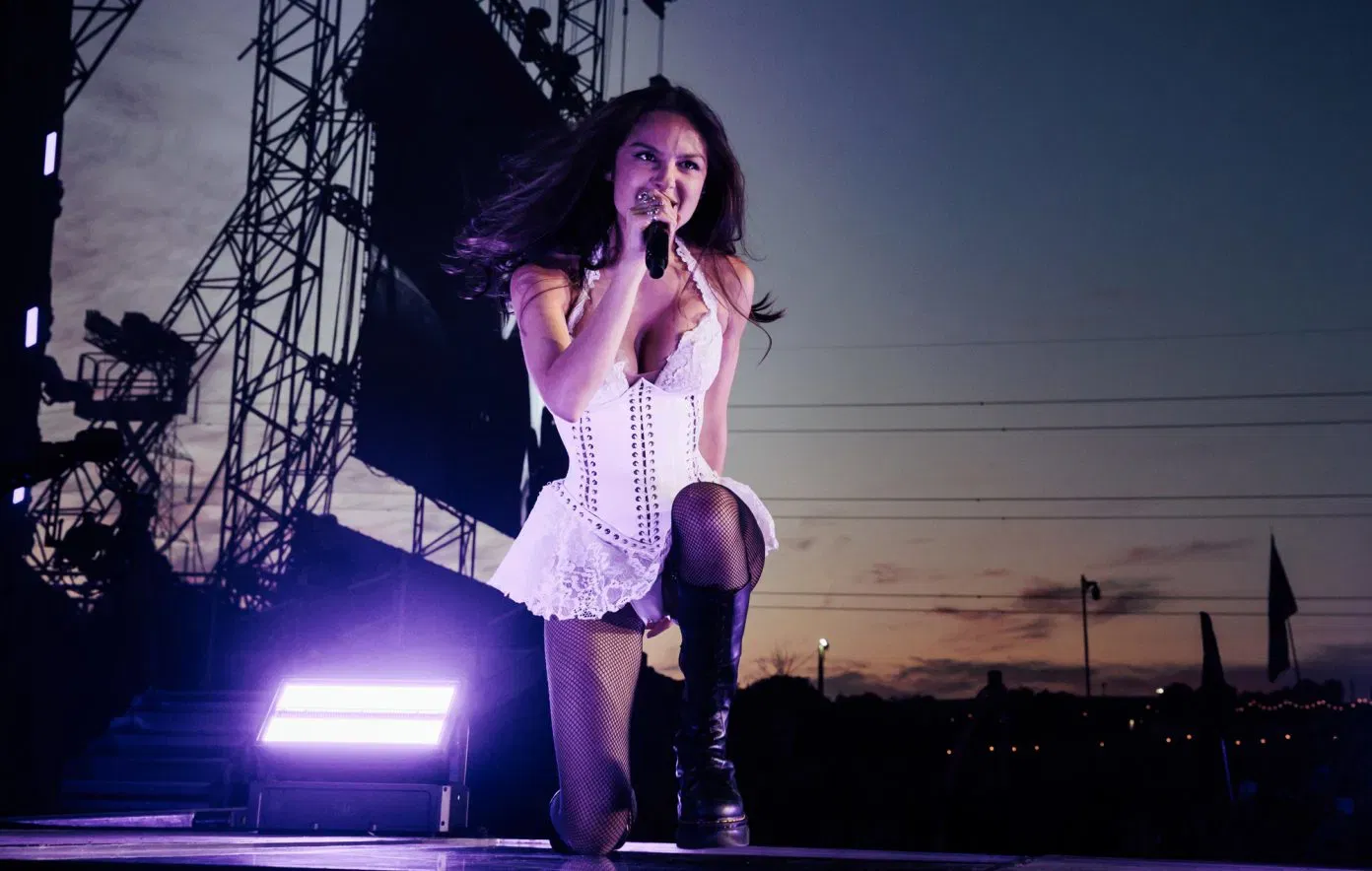
The whole show was loud, brash, and brilliant. Between the heavy riffs and her stellar backing band, she found time to charm the crowd with her love for British culture, specifically “no-judgment” lunchtime pints and M&S legend Colin the Caterpillar. Those of us watching at home were just as gripped as the thousands in the field.
A few months later, the "Pop Renaissance" moved to Reading & Leeds, where Chappell Roan delivered one of the most anticipated headline sets in the festival’s history. Her stage was a sight to behold: a gothic fairytale castle that looked like it had been pulled from a dark reimagining of ‘Beauty and the Beast’. Appearing in black and deep purple lace, a look that was equal parts Prince and Maleficent.
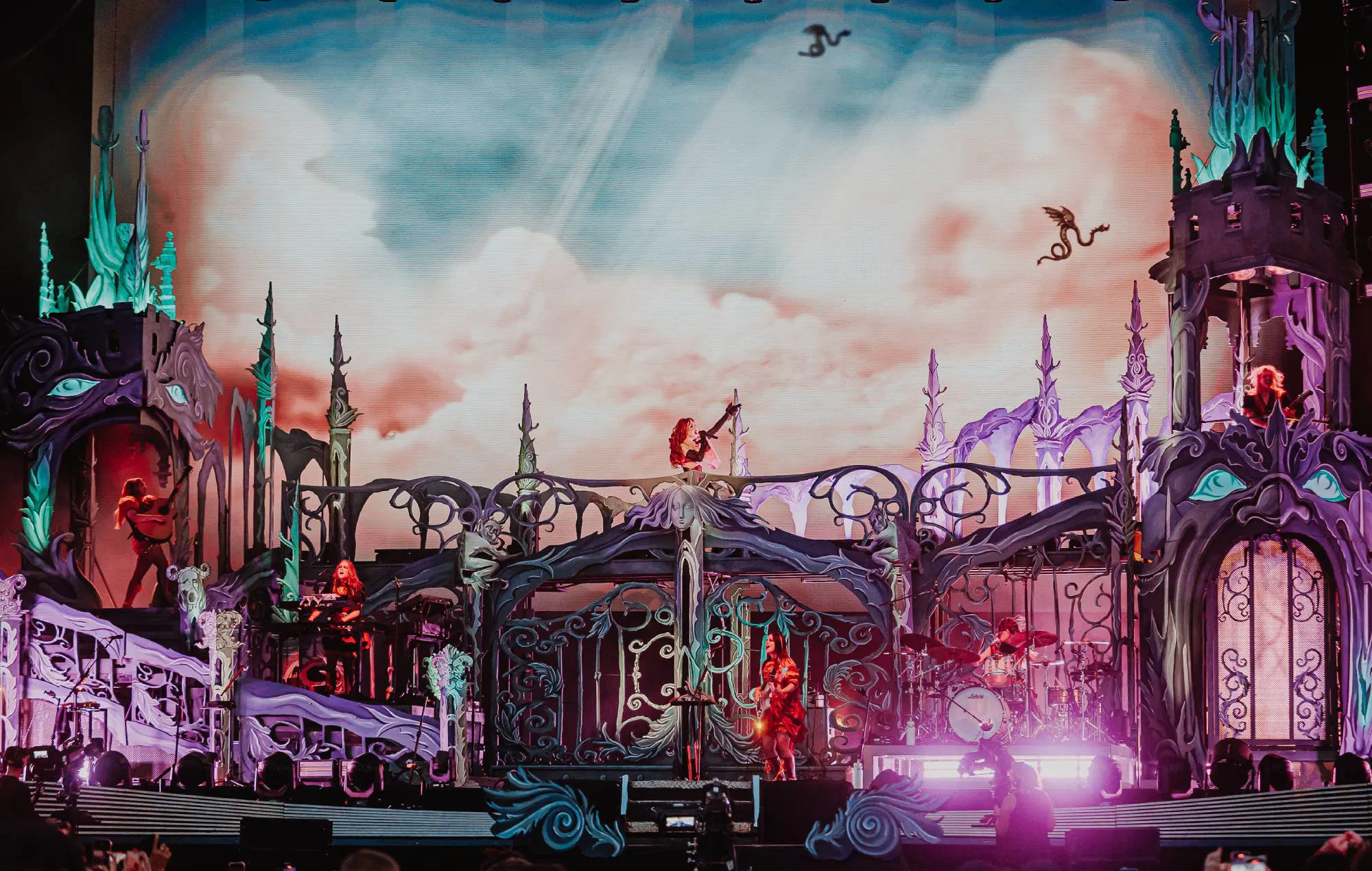
Though she only has one album, ‘The Rise and Fall of a Midwest Princess’, and a handful of singles to her name, her setlist felt like an embarrassment of riches. The camaraderie in the crowd was palpable; a sea of pink cowboy hats and bandanas moving in unison to the ‘HOT TO GO!’ dance. By the time she reached the euphoric trifecta of ‘Good Luck, Babe!’, ‘My Kink Is Karma’ and ‘Pink Pony Club’, the scale of her impact was undeniable. “Thank you for loving me and standing with me,” she told the emotional crowd, “I’m truly so grateful.”
Both Glastonbury and Reading & Leeds took risks by elevating these young women to the top of the bill, and in doing so, they gave us two of the best headline performances in recent memory.
'Something Like Happiness': The Reunion We Didn't Know We Needed
Glastonbury’s Sunday night hosted one of the most emotional performances of the 2025 festival season. For nearly a decade, the idea of The Maccabees playing together seemed like a distant memory; their 2017 farewell at Alexandra Palace felt final. All five bandmates had immersed themselves in new projects, but the weight of their personal friendships brought them back.
After a charity gig and a series of intimate European warm-up dates, they were given the task of headlining The Park Stage. A heaving crowd gathered on the hillside, ready to welcome them back with open arms. The band wasted no time, kicking things off with the frantic ‘Latchmere’, followed by the punky rush of ‘Lego’. “Hey, Glastonbury, guess what? We’re The Maccabees!” guitarist Felix White announced an obvious fact, but one that felt electrifying to hear in 2025. “It’s a long time to hold your nerve, to believe in a band, and then climb a hill to find out if you were right,” the band reflected after a blistering ‘No Kind Words’.
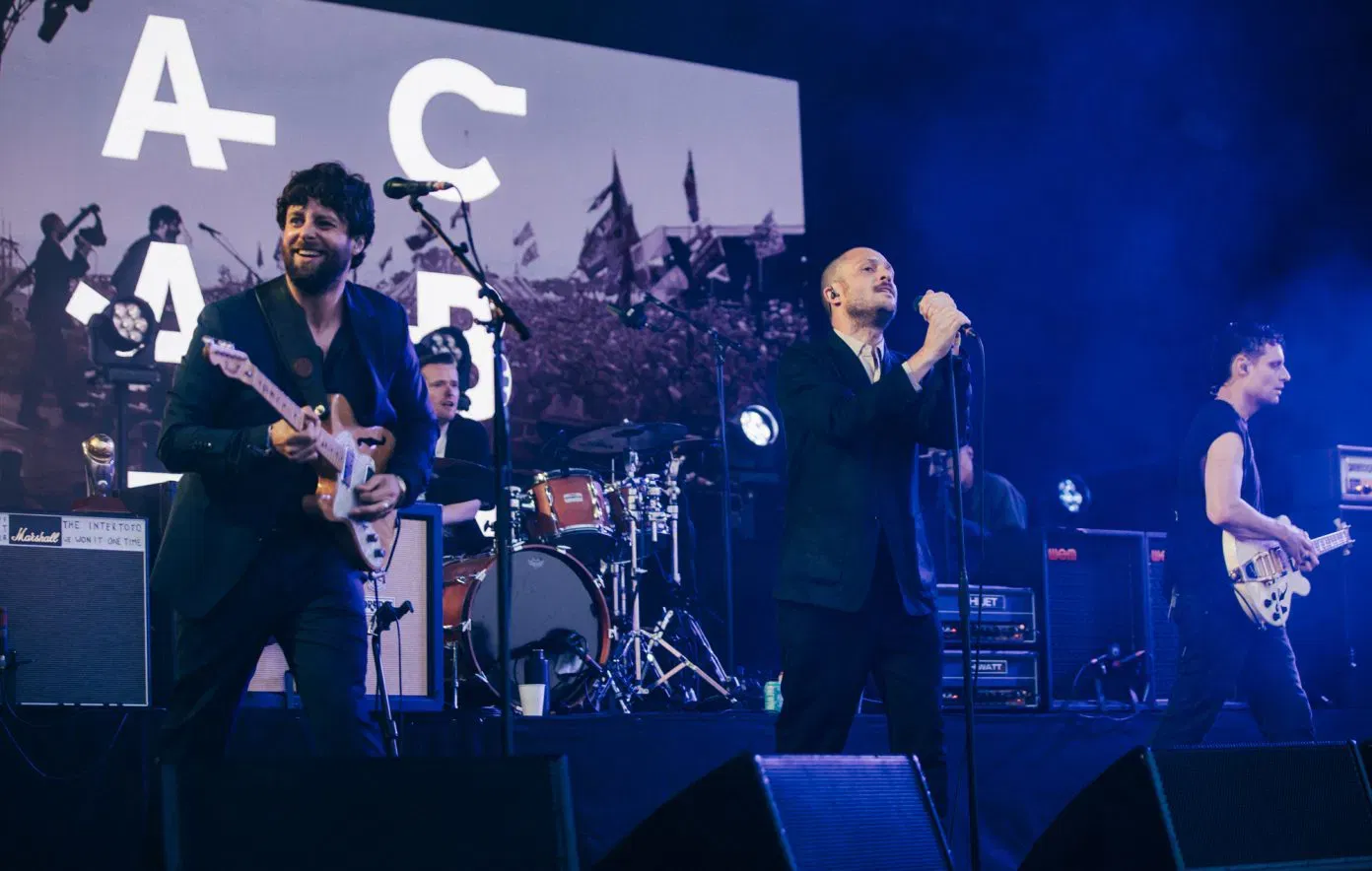
This will go down as one of their most euphoric shows. Orlando Weeks looked happier than ever, joining Felix in rare moments of geeing up the crowd. The setlist was perfectly tailored for a golden-hour slot: ‘Marks To Prove It’ crackled with raw energy, while ‘Toothpaste Kisses’ sounded sweeter and more tender than ever.
The band even had a surprise up their sleeves, inviting their long-time friend Florence Welch to the stage for ‘Love You Better’, followed by a rowdy cover of Florence & The Machine’s ‘Dog Days Are Over’.
However, All Points East was the true "homecoming." The Maccabees headed to a dust-filled Victoria Park in August with an army of friends. The lineup was a curated celebration of British guitar music, featuring noughties heroes like The Cribs, The Futureheads, and Bombay Bicycle Club alongside the next generation. Divorce brought their country-tinged sounds to a rapturous tent, while Westside Cowboy and Man/Woman/Chainsaw provided exciting glimpses into the future of the scene.
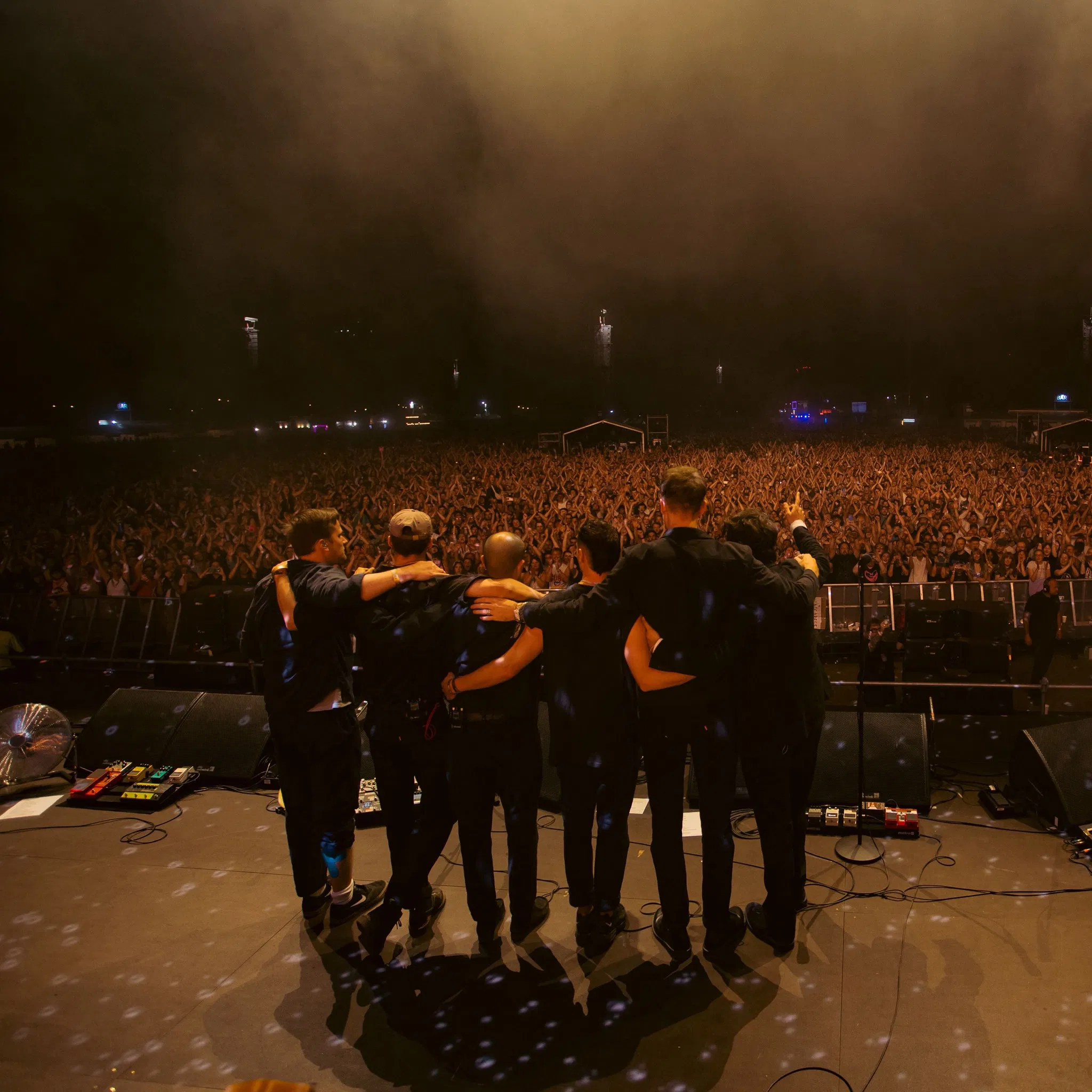
The 50,000-strong crowd in East London witnessed a band that hadn't missed a beat. Early cuts like ‘X-Ray’ transported fans back to 2007, while ‘First Love’ and ‘Wall of Arms’ received the biggest receptions of the night. Even when the sound briefly cut out during ‘Love You Better’ due to the swirling dust, the "army of backing vocalists" in the crowd rose to the occasion, singing every word until the power returned.
The night’s biggest surprise came when Jamie T stormed the stage, joining the band for a frantic two-song collaboration of ‘Marks To Prove It’ and his own anthem ‘Sticks ’n’ Stones’.
‘Something Like Happiness’ brought the main set to a close, before an encore featuring the criminally underrated ‘Grew Up at Midnight’ and the inevitable, biblical finale of ‘Pelican’. As the band left the stage, the thousands in attendance were left with one question: what’s next? Whether this signals a permanent return or just a perfect goodbye to the goodbye, The Maccabees proved they are still one of Britain’s most vital and beloved bands.
Momentary Blissness: Fontaines D.C. Go Stratospheric
With the sheer volume of massive shows we’ve witnessed this summer, it’s easy to forget just how quickly Fontaines D.C. have transitioned from post-punk outsiders to the definitive stadium-rock band of a generation. 2025 was the year they didn't just play the game; they changed the rules.
The foundation for this takeover was their fourth album, 'Romance'. A sonic revolution that traded their grittier roots for dystopian, neon-soaked textures, it has arguably become the most influential record of the decade. The band doubled down on this creative streak in April with a surprise deluxe edition, introducing two industrial-flecked anthems: the heaving, hypnotic ‘Before You I Just Forget’ and the jangly, hopeful ‘It’s Amazing to be Young’. These tracks didn't just feel like B-sides; they felt like a band so overflowing with ideas they couldn't help but let them spill out.
Nowhere was this evolution more evident than at Finsbury Park. Returning to the site where they supported Sam Fender in 2022, they finally took the top spot for a 45,000-capacity sell-out. It was a poetic full-circle moment; their first London gig was just yards away at the tiny Finsbury Pub. Opening with the high-octane ‘Here’s the Thing’ and the sneering charm of ‘Jackie Down the Line’, they proved they are destined for these stages.
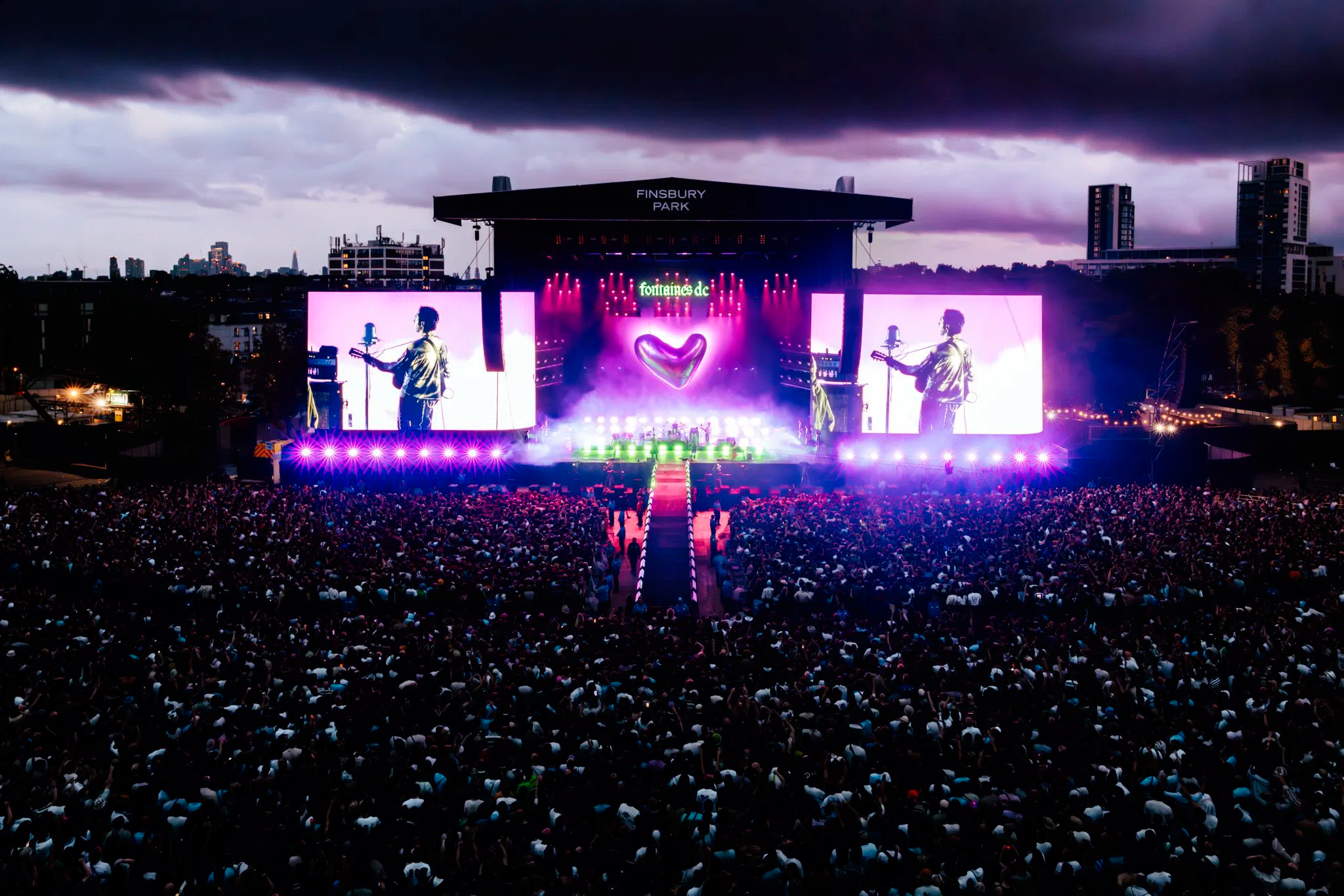
The set was a masterclass in tension. ‘Boys in the Better Land’ appeared early, fueling a field-wide mosh pit, while the "selling genocide" line from ‘I Love You’ landed with sledgehammer force as the screens blazed with the message: “Israel is committing genocide, use your voice.” It was a moment of stark, unfiltered reality that few bands of their stature would dare to project.
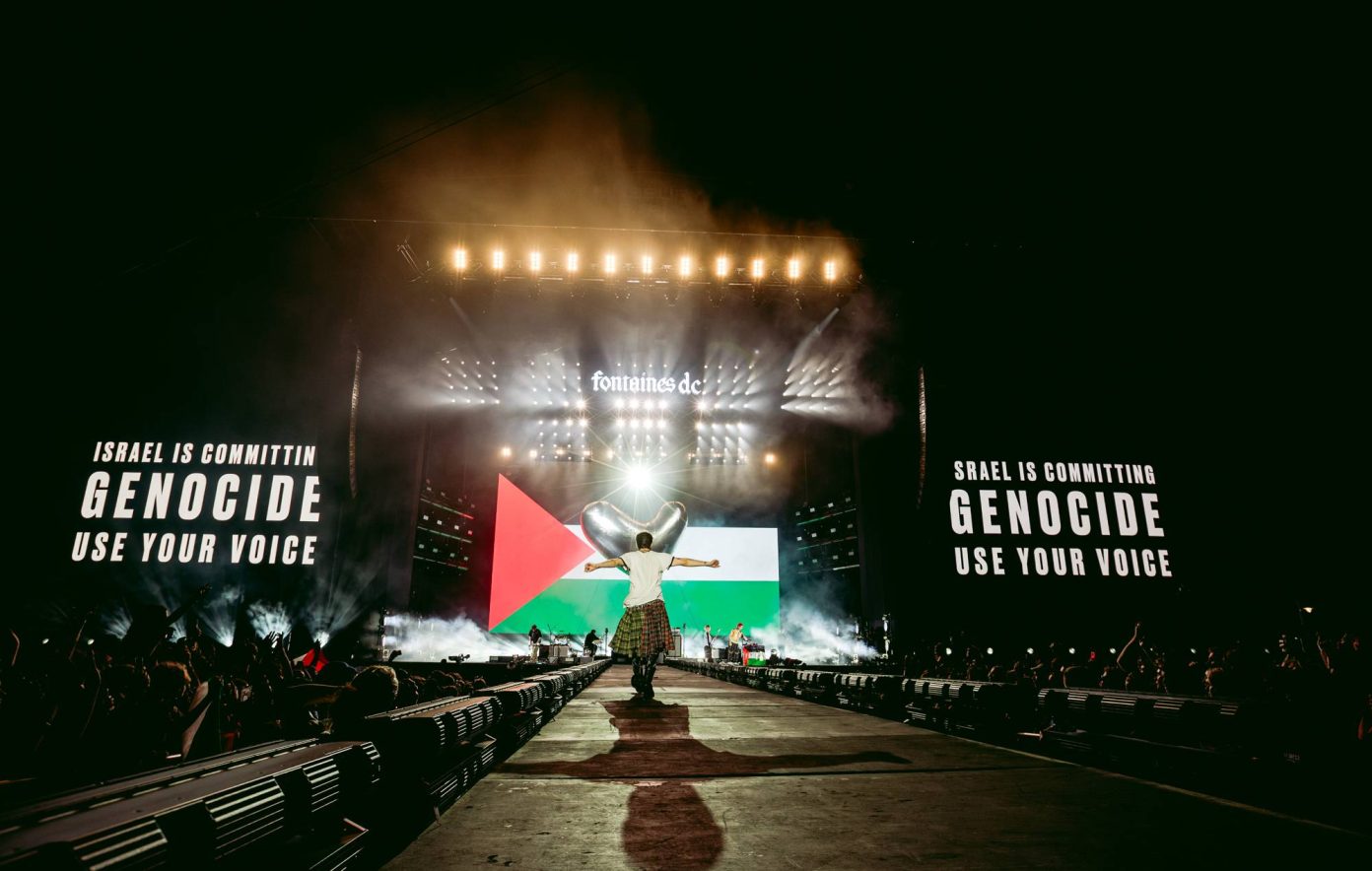
But it wasn't just a London affair. The ‘Romance’ tour swept across the UK with the same intensity, from the 26,000-capacity Wythenshawe Park in Manchester to massive outdoor dates in Newcastle’s Exhibition Park, Cardiff Castle, and a triumphant homecoming in Belfast. They are currently the biggest band in Britain, releasing music that actually matters. A sentiment confirmed by the news that they will officially headline Reading & Leeds in 2026.
As they closed Finsbury Park with the anthemic ‘Starburster’, you could feel the shift in the air. On a weekend that saw Oasis reunite and Black Sabbath’s Ozzy say a final farewell, Fontaines D.C. stood as the proof that guitar music isn't just surviving, it’s thriving. A new generation sat on shoulders in those muddy fields, watching a band that made the impossible feel reachable.
The Phantom of the Principality: Catfish and the Bottlemen’s Silent Stadium Takeover
While the rest of the 2025 landscape was defined by loud announcements and carefully curated social media campaigns, Catfish and the Bottlemen operated in a different dimension, one of total radio silence and staggering scale. In August, they achieved what many critics thought impossible after years of internal fractures and cancelled tours: they conquered the stadium.
Their performances at Cardiff’s Principality Stadium and London’s Tottenham Hotspur Stadium were, in many ways, the ultimate "under-the-radar" success story. Without a heavy press cycle or a string of TV appearances, Van McCann led a band that looked and sounded like a well-oiled machine, proving that their "indie banger" formula still has a massive, loyal heartbeat. From the explosive opening of ‘Longshot’ to the ten-minute, sprawling finale of ‘Tyrants’, the shows felt like a vindication for a band that has often been written off by the industry elite.
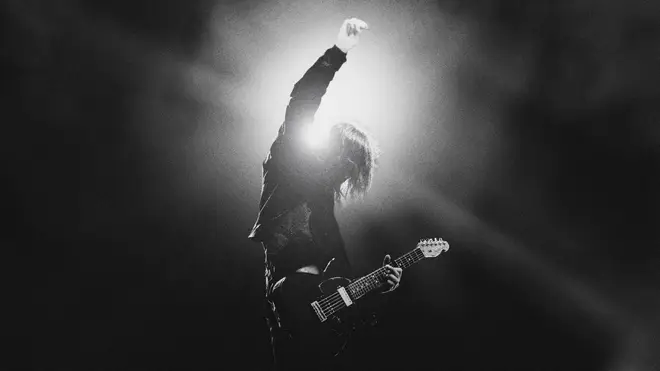
Yet, despite the 60,000-strong crowds belting every word of ‘7’ and ‘Cocoon’, a strange, uncertain fog still hangs over the group. McCann remains a phantom outside of the stage lights; he barely spoke to the crowd beyond a gleeful grin, and his solo acoustic rendition of ‘Hourglass’ felt more like a private "I’ve made it" moment than a public celebration.
The atmosphere in 2025 carries a haunting sense of déjà vu, specifically calling back to the September 2021 headline set at Neighbourhood Weekender. Back then, that show marked a stark, uncomfortable shift for the band; it was the final bow of the "classic" lineup, played amidst a flurry of legal resignations and rumours of "intolerable" behind-the-scenes behaviour. While they fulfilled their 2021 obligations as a shell of themselves, 2025 feels different, more polished, certainly, but no less cryptic.
The rumours have died down, but the band had cancelled shows, including American and Australian dates, without much reasoning.
Most curiously, despite the 2024 comeback single ‘Showtime’ being released to herald this new era, the song was notably absent from the stadium setlists, and the rumoured fourth album remains a mystery. They are the ultimate indie enigma, a band capable of filling the nation’s largest stadiums while seemingly teetering on the edge of another disappearance. As the lights went down at Tottenham, the question wasn't just "how was the gig?", but rather: "Is this a new beginning, or a final, massive goodbye?"
In typical Catfish fashion, they’ve left us with the music, the memories, and absolutely no answers, just more questions.
Dawn of the Deadbeat: Tame Impala Trading Psych for the Dancefloor
In September 2025, Kevin Parker finally ended a five-year silence with the announcement of his fifth studio album, Deadbeat. Released in October, the record marks a seismic shift for Tame Impala, away from the sun-drenched psych-pop of 'The Slow Rush' and into the darker, sweat-streaked world of 90s acid house and Western Australia's "bush doof" rave culture.
The comeback began in July with ‘End of Summer’, a sprawling, seven-minute epic that traded guitar pedals for Roland TB-303 synths. Inspired by the "Second Summer of Love" in 1989, the track builds through a hypnotic, percolating rhythm that culminates in a euphoric rush. It was a bold statement of intent, signalling that Parker was looking to the collective energy of the dancefloor for his next chapter.
The album’s second single, ‘Loser’, felt more familiar to long-term fans. A cross between the high-fidelity funk of 'Currents' and the isolation of 'Lonerism', it saw Parker channelling an "endless bummer", the self-deprecating feeling of being an outsider even when you’re at the centre of the world. With a music video starring Joe Keery (Djo), it quickly became a standout anthem for the disaffected.
However, it was the third single, ‘Dracula’, that provided the album's true "pop-bop" moment. Co-written with Sarah Aarons, the track is a neon-lit earworm that balances disco-tinged production with Parker’s most playful vocals to date. Despite its name, it isn't a supernatural sequel to Thriller; instead, 'Dracula' is a metaphor for the ultimate "night person."
“Run from the sunlight, Dracula,” Parker sings, desperately trying to keep the party alive as the morning light turns blue. It’s a song about the fear of the dawn—when the illusions of the night fade, and the "real world" of responsibility and daylight finally catches up.
But beyond the high-gloss singles, Deadbeat hides some of Parker’s most rewarding work in its deeper cuts. ‘Piece of Heaven’ is a standout, an ethereal, ambient-house track that feels like a spiritual successor to ‘Posthumous Forgiveness.’ It’s a moment of weightless reflection amidst the heavy beats, capturing a rare sense of peace.
Conversely, ‘My Old Ways’ sees Parker wrestling with the pull of the past. It’s a gritty, loop-driven track that sounds like a vintage breakbeat record found in a dusty attic, featuring lyrics that grapple with the fear of falling back into self-destructive habits just as things are going right.
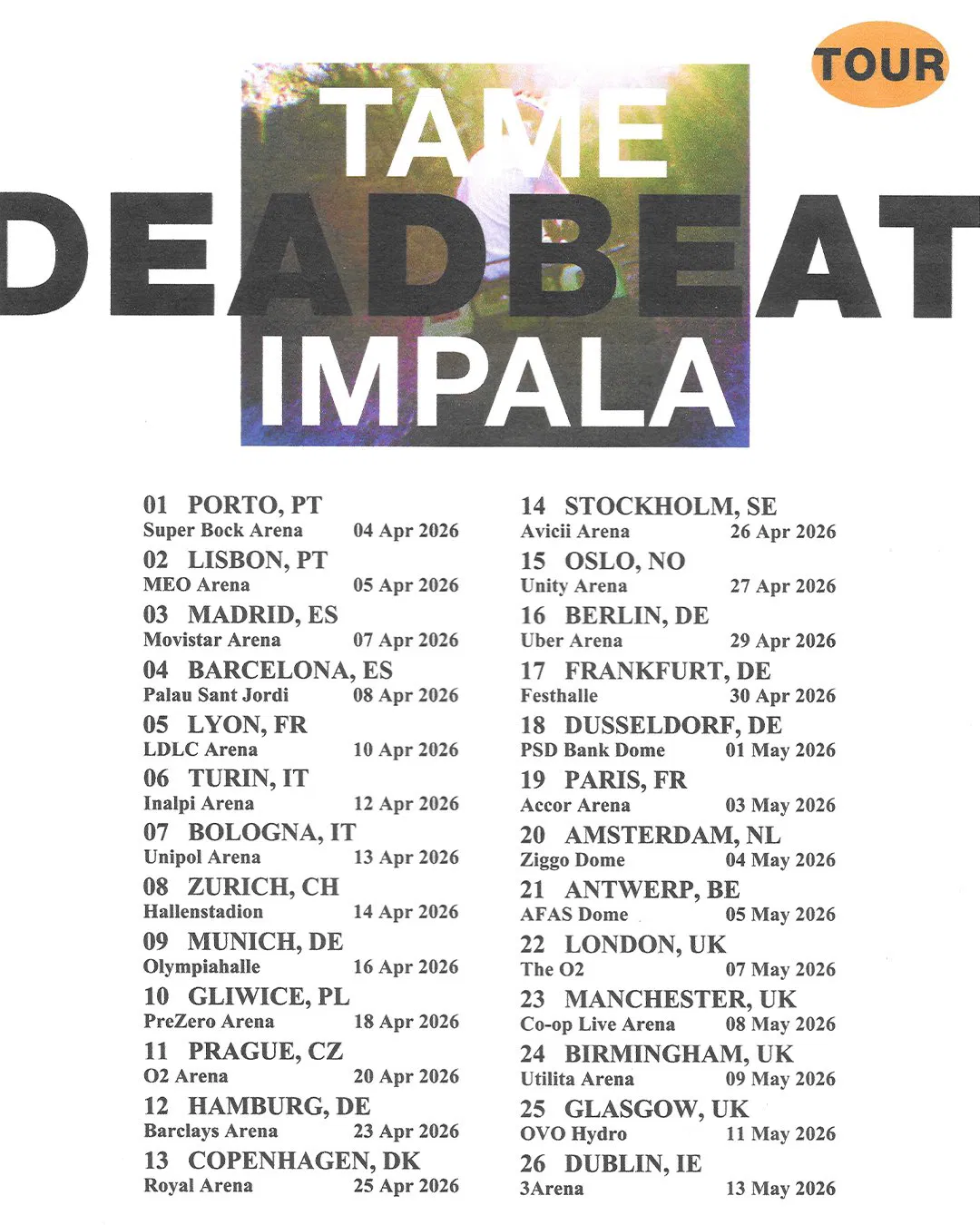
The 'Deadbeat' era is moving from the studio to the stage in a big way. Alongside the album's release, Tame Impala announced their most ambitious UK and European tour to date. In May 2026, Parker will bring his legendary immersive light show back to the arena circuit, with massive dates at London’s O2, Manchester’s Co-op Live, Glasgow's OVO Hydro, and Birmingham’s Utilita Arena.
For a record that pitches "raving as self-enquiry," these 20,000-capacity rooms are the only place big enough to house Parker's new, industrial-strength vision.
Gorillaz: Reaching the Summit of The Mountain
In September 2025, Gorillaz officially announced their return with the release of ‘The Happy Dictator’, a surreal, house-inflected anthem featuring 80s art-pop legends Sparks. The track served as the first glimpse into their ninth studio album, 'The Mountain', which has since been moved forward for a global release on February 27, 2026. Notably, this marks the first project released on the band’s own independent label, KONG, signalling a new era of creative autonomy for the virtual quartet.
Produced by Gorillaz alongside James Ford, Samuel Egglenton, Remi Kabaka Jr., and Argentine hitmaker Bizarrap, the record is an "expansive sonic landscape" that follows 2D, Murdoc, Noodle, and Russel as they navigate Mumbai with four fake passports. While the animated band embarks on a fictional escape, the music is deeply rooted in the real-life travels of Damon Albarn and Jamie Hewlett through India. Recorded in locations ranging from Varanasi and Mumbai to Damascus and Devon, the album is a "gloriously technicolour" tapestry featuring lyrics in five languages: Arabic, English, Hindi, Spanish, and Yoruba.
However, beneath the vibrant production lies a profound meditation on grief. Both Albarn and Hewlett experienced significant personal loss during the album's creation, losing their fathers and a mother-in-law. This tragedy shifted the album's focus toward the afterlife, influenced by the attitudes toward death found in Hinduism, Buddhism, and Sikhism. As Albarn puts it, the goal was to "make death cool" to view it as a party on the border between this world and whatever happens next.
Hewlett urges fans to experience the album as a singular, immersive journey rather than a collection of singles:
“Take the time to sit with your earphones... and look at the artwork, and then just lose yourself in this story. Don’t cherry-pick a song, listen to it all. We’re trying to bring back that idea of taking time to invest in something, instead of this culture of scrolling.”
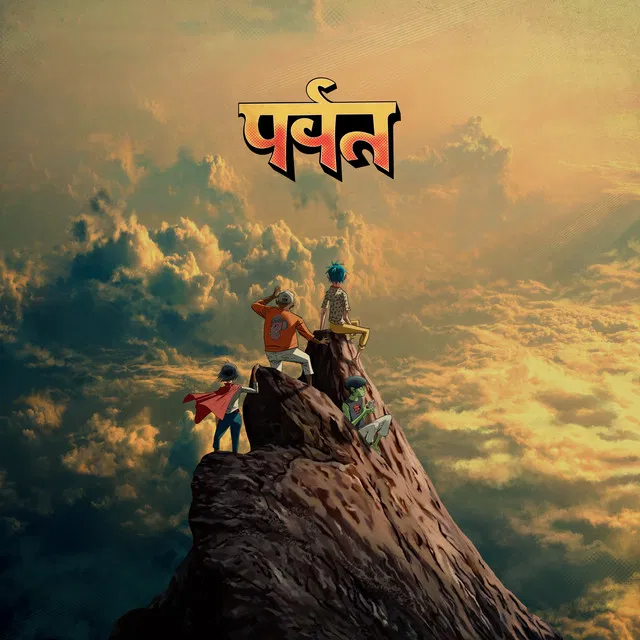
The collaboration list is staggering, featuring Anoushka Shankar, Johnny Marr, IDLES, Omar Souleyman, and Paul Simonon. But perhaps most moving is the inclusion of "voices from the other side." The record weaves in archival contributions from departed legends like Bobby Womack, Tony Allen, Mark E. Smith, Proof, and David Jolicoeur (Trugoy the Dove). For Albarn, it was vital to bring these friends back into the conversation, ensuring the record carries the entire history of the band into the afterlife.
Following a series of intimate warm-up shows and the "House of Kong" exhibition at London’s Copper Box Arena, the band is set for a massive UK and Ireland arena tour in Spring 2026. The journey begins at Manchester’s Co-op Live on March 21st and will reach its peak on June 20th, 2026, with the band’s biggest-ever headline show at the Tottenham Hotspur Stadium, a final, triumphant ascent for the world’s most successful virtual band.
Back to the Beginning: The Prince of Darkness Takes a Final Bow
In February 2025, the world of rock and roll stood still. Black Sabbath announced their absolute final act: 'Back to the Beginning', a monumental one-day festival at Villa Park on Saturday, July 5th. It wasn't just a concert; it was the miracle fans had prayed for, the definitive reunion of the original line-up: Ozzy Osbourne, Tony Iommi, Geezer Butler, and Bill Ward.
For Ozzy, who has faced a gruelling battle with Parkinson’s and spinal injuries, this was a matter of honour. His wife, Sharon, told BBC News that he was determined to find his "full stop."
"Ozzy didn’t have a chance to say goodbye to his friends and his fans," she said. "This is his closure."
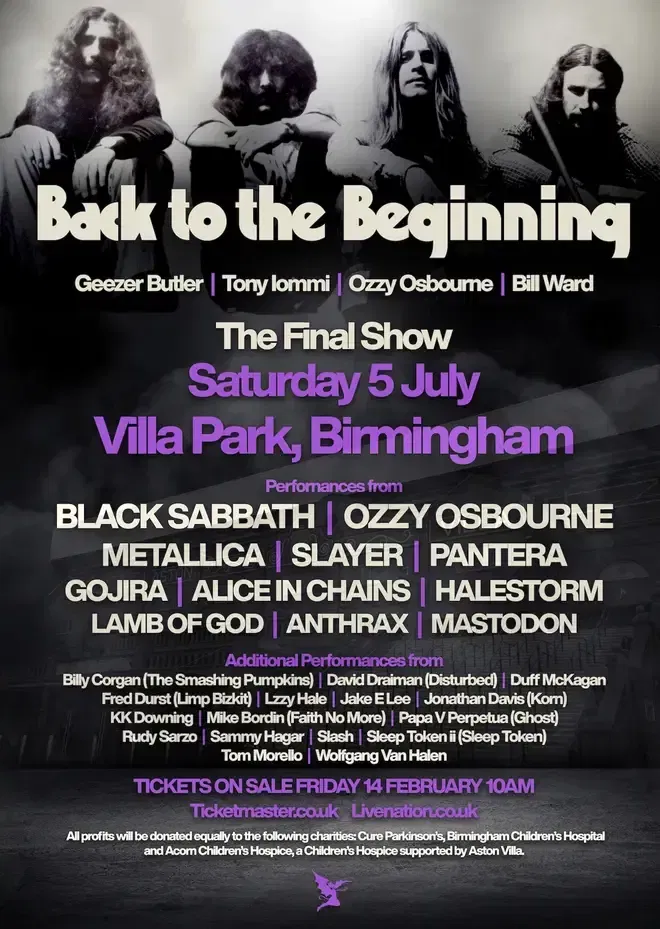
The day served as a global summit of metal royalty. The bill featured Metallica, Slayer, Pantera, and Alice in Chains, alongside a staggering "who's who" of rock history. From Slash and Jonathan Davis to Wolfgang Van Halen and Steven Tyler, the stage was a revolving door of legends paying tribute to the man who started it all. Most importantly, the day was a massive philanthropic success, with proceeds supporting Cure Parkinson’s, the Birmingham Children’s Hospital, and Acorns Children’s Hospice.
As dusk settled over Birmingham, the 40,000-strong crowd witnessed the impossible. Following a moving video tribute to the late Randy Rhoads, Ozzy appeared, seated on a black armchair intricately detailed with skulls. While he was unable to stand, the "Prince of Darkness" was in remarkable voice. His solo set peaked with a heartbreakingly beautiful rendition of ‘Mama, I’m Coming Home’, with tens of thousands of phone torches transforming the stadium into a sea of stars, before he unleashed the frantic energy of ‘Crazy Train’.
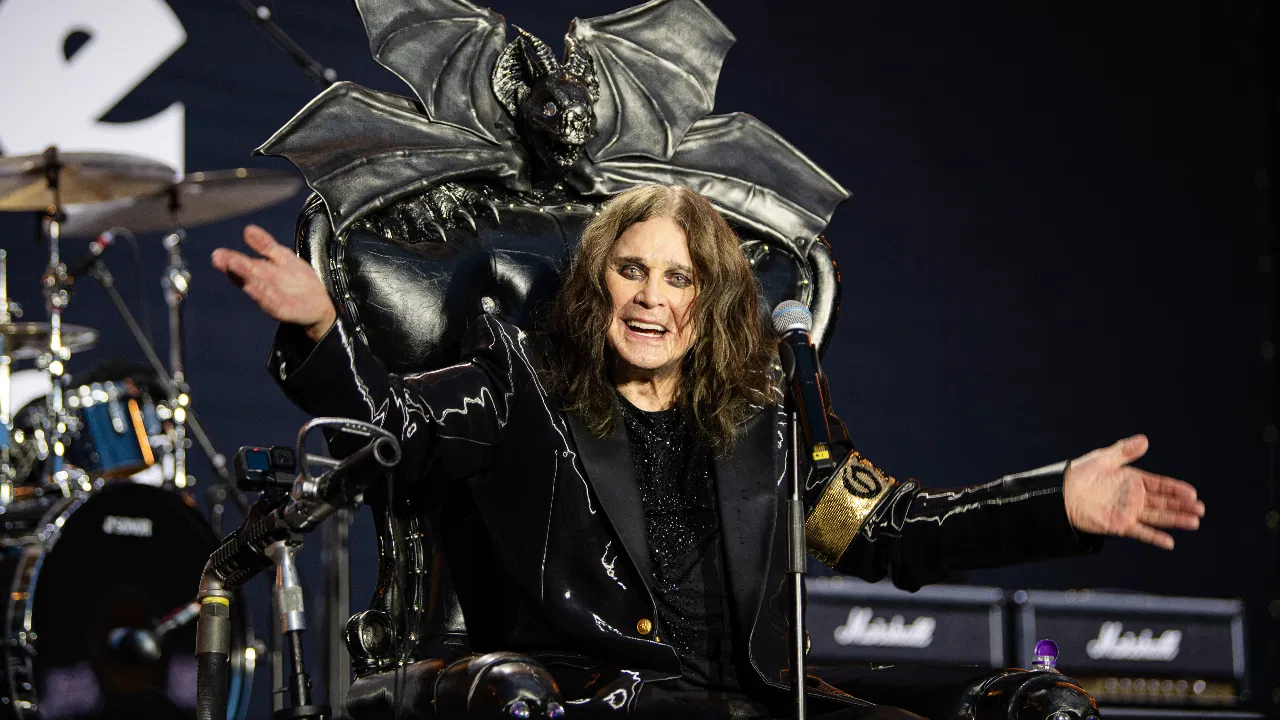
Then, the moment that defined a generation: the air-raid sirens began to wail. After years of speculation and distance, Bill Ward took his place behind the kit, shirtless and defiant, alongside Iommi’s iron-clad riffs and Butler’s thundering bass. It was the first time the four had shared a stage in years, and as Ward’s hi-hat intro to ‘War Pigs’ cut through the night air, the emotion was palpable.
Though the Sabbath set was brief, it was surgical in its power. They saved the ultimate anthem for the end. As the opening chords of ‘Paranoid’ rang out, Villa Park erupted into a frenzy of tears, mosh pits, and raised horns. It was a weary, beautiful, and chaotic farewell. For those in attendance, it wasn't just a gig; it was the moment the genre came home to rest. The Prince of Darkness had found his "full stop," and Birmingham had crowned its kings one last time.
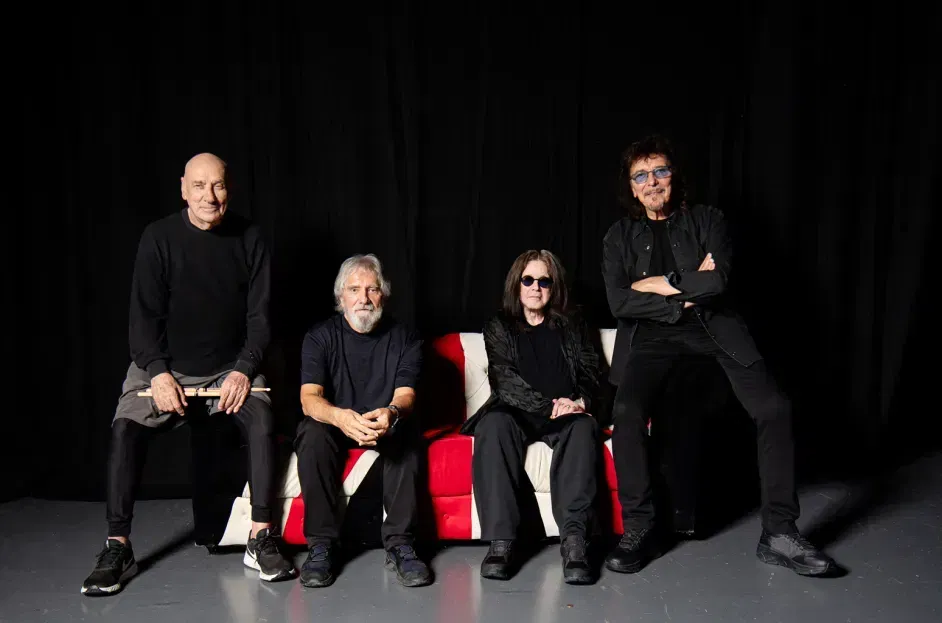
The weight of that performance became even more profound just a few weeks later. In late July, it was announced that Ozzy had passed away peacefully at home, surrounded by his family.
The news sent a shockwave through the global music community, yet there was a collective sense of relief that he had made it to that stage. He had looked death in the eye and demanded one more night with Tony, Geezer, and Bill. To have gone out on his own terms, in the shadow of the Holte End, was the only ending fitting for a man who cheated the odds for so long. Ozzy didn't just fade away; he exited in a blaze of feedback and Brummie pride.
Breaking Into Heaven
As 2025 draws to a close, the silence in the music world feels heavier. We’ve said goodbye to titans who shaped the very foundation of modern sound, the visionary Sly Stone, the genius of Brian Wilson, and the heavy metal patriarch Ozzy Osbourne. But for those of us raised on the gritty, high-octane energy of British independent music, two losses felt particularly personal: The Jam’s Rick Buckler and The Stone Roses’ Gary ‘Mani’ Mounfield.
Buckler was the engine room of The Jam, arguably the most innovative and important British band of the late 70s and early 80s. While Paul Weller provided the fire and Bruce Foxton provided the melody, it was Buckler’s "Ringo Starr approach"—drumming strictly to serve the song that gave tracks like ‘Going Underground’ and ‘Start!’ their indestructible backbone.
Buckler’s style was a masterclass in "Mod precision." He balanced the raw, caffeinated energy of punk with a disciplined, almost military-style snap. On ‘Funeral Pyre’, his drumming took centre stage with an intro so fast and accurate it felt like a machine-gun blast, while on ‘A Town Called Malice’, he provided the Northern Soul-inspired stomp that made a song about social decay sound like a celebration.
Buckler was there from the 1972 pub beginnings to the tear-stained final show in Brighton in 1982. He never quite reconciled with the split, famously noting that while Weller wanted to move on, he and Foxton felt The Jam had at least two more great albums in them. The subsequent decades of silence from Weller were a "bitter pill"; the two had reportedly not spoken since 1982, yet Buckler never stopped championing the band’s legacy through his books and his woodworking, proving that even after the drums stop, the craft remains.
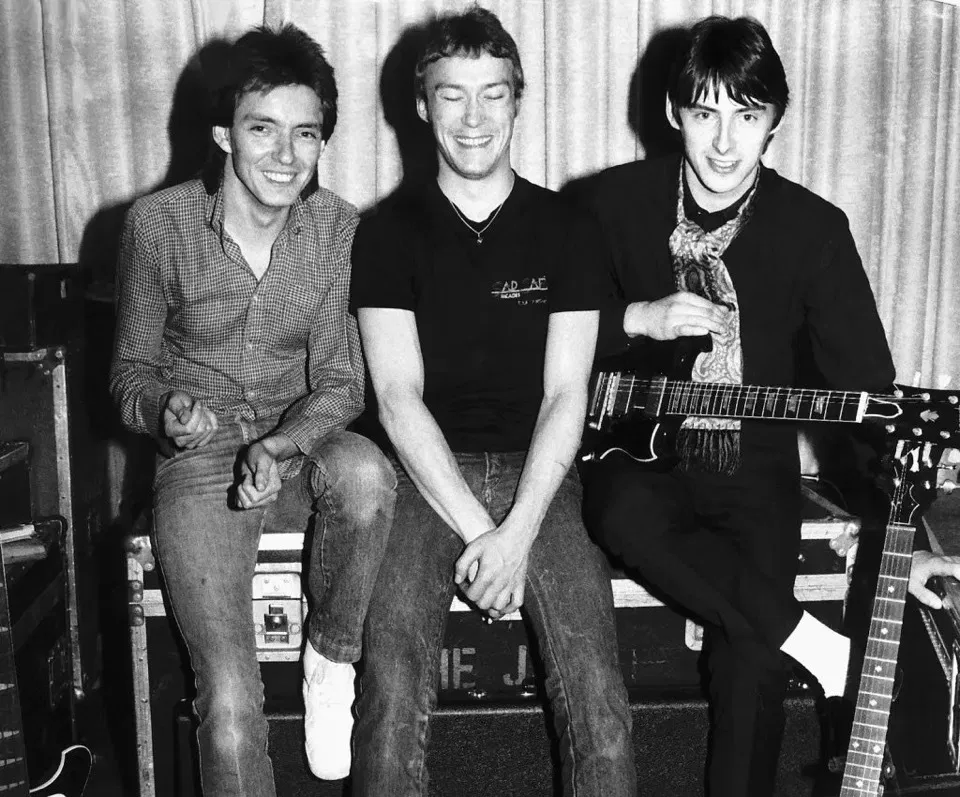
However, the tragedy of his passing brought about a moment many fans thought they would never see. Paul Weller, deeply affected by the news, broke years of silence to pay a public tribute to his former bandmate. Writing on social media, Weller recalled their "rudimentary beginnings" rehearsing in his bedroom on Stanley Road in Woking:
"To all the pubs and clubs we played at as kids, to eventually making a record. What a journey. We went far beyond our dreams, and what we made stands the test of time. Rick's evolution as a drummer was such a vital part of that."
For a band whose ending was defined by such a sharp, cold break, these words offered a final, much-needed warmth. It was a recognition that, despite the rift, the three of them, Weller, Foxton, and Buckler, were a singular, powerful force that could never have existed without each individual piece. Rick Buckler didn't just play the drums; he helped build a blueprint for British guitar music that still sounds as urgent today as it did in 1977.
Then, in November, the news broke that Gary ‘Mani’ Mounfield had passed away peacefully in his sleep at age 63, following a battle with emphysema. To say Mani was just a bass player is like saying a heart is just a muscle. He was the groove that led a generation of indie kids to the dancefloor.
Musician deaths have hit me before; Ozzy Osbourne, for example, was a cultural phenomenon, and I vividly remember the hollow sadness I felt at sixteen when I found out Bowie had passed.
This one felt different, though. The Stone Roses are one of the most important discoveries in my life; those songs mean the world to me. Their debut record remains the cornerstone of my collection. As Clash Magazine put it, the album remains “an overwhelming statement of working-class pride.” It wasn’t music for the elite or the critics; it was for the dreamers, the ravers, and the disillusioned youth looking for meaning and escape. The impact of that band on me cannot be understated. Without The Stone Roses, I'm not writing this post, and Beyond the Grooves simply does not exist.
When he joined The Stone Roses in 1987, the band "changed overnight," as Ian Brown put it. His bassline on ‘I Wanna Be Adored’ is the first thing you hear on their debut, a cosmic, prowling invitation into a new era. Alongside Reni, he formed what many consider the greatest rhythm section in British history, a duo that possessed the rare ability to swing with the fluidity of Northern Soul and the weight of Led Zeppelin.
Nowhere is Mani’s influence more pivotal than on the album's closing masterpiece, ‘I Am the Resurrection’. The song’s legendary status began with a moment of studio playfulness: Mani began playing the bass riff to The Beatles' ‘Taxman’ backwards during a soundcheck. Reni and John Squire joined in for a laugh, but they soon realised they had stumbled onto something monumental. That reversed groove became the foundation for the most famous closer in British indie history.
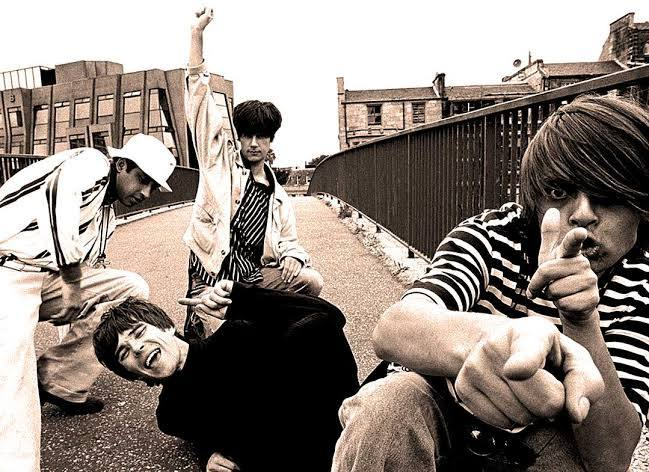
This rhythmic power was the "secret sauce" at Spike Island in 1990, the so-called “baggy Woodstock.” On a reclaimed chemical waste site in Widnes, Mani’s bass held 30,000 people in a trance, bridging the gap between 60s psychedelia and the acid house revolution. It was a moment of cultural coronation, but the years that followed would test the band's resolve like nothing else.
As the Roses became entangled in soul-destroying legal battles and internal friction, Mani remained the band’s emotional anchor. When John Squire departed in early 1996, followed shortly by Reni, the foundations of the group crumbled. Yet, Mani’s loyalty never wavered; he stayed by Ian Brown’s side until the very end. Even as they headed toward that notoriously difficult final headline set at Reading Festival 1996, Mani was the only original member left standing with Brown. He was the bridge between the glory years and the bitter end, refusing to jump ship until the last light went out on the Roses' first chapter.
Even decades later, it was Mani who provided the "silver lining." After years of silence between the members, it was at his own mother's funeral in 2011 that Brown and Squire finally patched up their differences. That personal moment of grief paved the way for the "Gathering of the Clans," allowing the band to reclaim their crown across three legendary nights at Heaton Park and stadium shows around the world. To the very end, Mani was more than just the bassist; he was the soul of the band.
After the Roses’ bitter split in 1996, Mani famously remarked that there were only three bands he would ever consider joining: The Jesus and Mary Chain, Oasis, or Primal Scream. He chose the latter, and in doing so, he saved them.
Mani’s arrival in Primal Scream injected a "laser-eye ability to cut through pretension" into a band that was on the verge of collapse following the drug-heavy haze of the mid-90s. He became the core of their creative rebirth, driving the dark, industrial-flecked masterpieces 'Vanishing Point 'and 'XTRMNTR'.
On tracks like ‘Kowalski’ and the blistering ‘Swastika Eyes’, his bass became heavier, dubbier, and more distorted. He provided the backbone for Bobby Gillespie’s most feral and forward-thinking work, proving that he wasn't just a "baggy" icon, he was a versatile musical powerhouse who could pivot from psychedelic euphoria to caustic sonic rage without breaking a sweat.
On December 22nd, 2025, Manchester stopped to say goodbye. Mani’s funeral at Manchester Cathedral was a gathering of rock royalty: Liam Gallagher, Ian Brown, John Squire, Reni, and Bobby Gillespie stood alongside David Beckham and Gary Neville.
Outside, the streets of the city centre were lined with thousands of fans. Many were dressed in black, but many more wore Stone Roses t-shirts and the band’s trademark bucket hats. The atmosphere was one of profound respect, amplified as a guard of scooter riders led the cortege through the streets of Manchester to the sound of ‘I Wanna Be Adored’ ringing out over the speakers. The hearse itself was a moving tribute, carrying floral arrangements that simply read ‘Mani’ and ‘R Kid’.
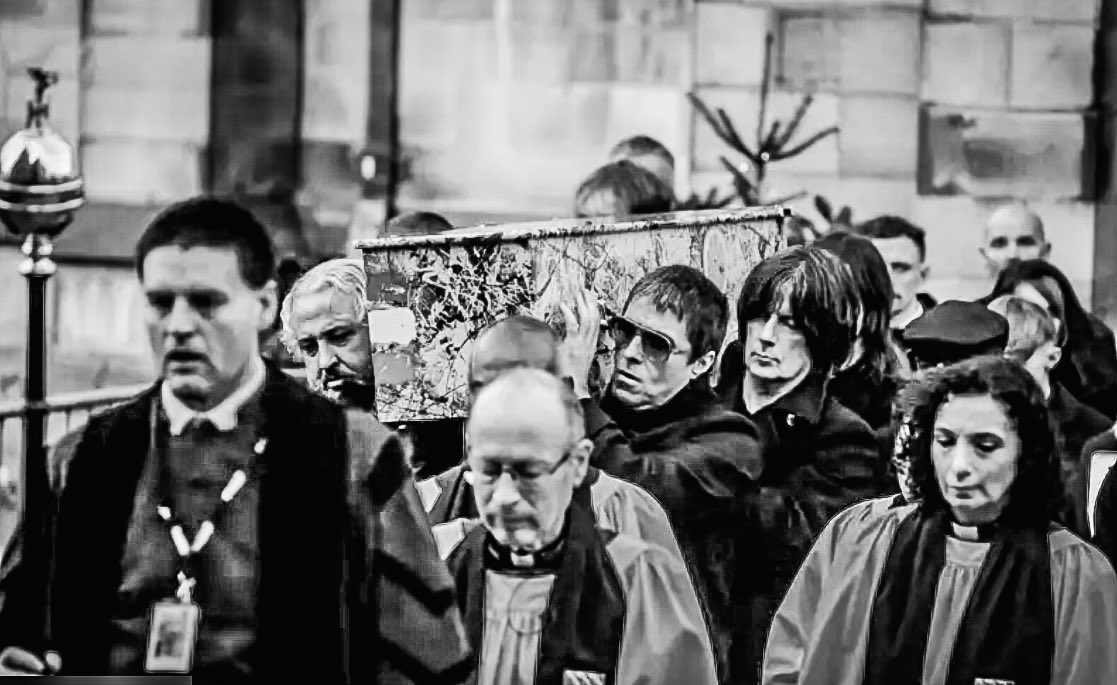
Inside the cathedral, the tributes were deeply personal. Ian Brown spoke of a bond that spanned 45 years:
“Mani was like a brother to me, a musical comrade,” he told the congregation. “A beautiful soul and spirit. Mani was able to laugh his way through any darkness; he was the life and soul of any room he was in.”
Bobby Gillespie also delivered a powerful eulogy, highlighting Mani’s famous lack of pretension:
“Mani’s warm and welcoming manner, treating me like an equal, made me feel like a million dollars, and I’ll never forget that. No one was too important to escape his laser-eye ability to cut the pretentious and self-important down to size, myself included.”
The most poignant image of the year was Mani’s coffin, beautifully adorned with John Squire’s iconic Jackson Pollock-inspired Bye Bye Badman artwork, complete with the famous lemon slices. As he was carried out of the cathedral to the strains of ‘Made Of Stone’ by a brotherhood of his peers: Liam Gallagher, Ian Brown, John Squire, Reni, Andrew Innes and Bobby Gillespie. It wasn't just a funeral; it was a cultural coronation. He’s broken into heaven now, but the records he left behind mean he’ll never truly be gone.
'Sixteen' to Three Thousand: The Rise of The Clause
Birmingham spent the summer paying tribute to a legend. Ozzy Osbourne brought his storied journey to a close with a seismic, sold-out farewell at Villa Park. But as one Birmingham icon bowed out, four lads from the same streets were busy proving that the city’s musical future is in exceptionally safe hands.
Pearce Macca, Liam Deakin, Niall Fennell, and Jonny Fyffe, collectively known as The Clause, finally released their debut album, ‘Victim Of A Casual Thing’, in October 2025. Arriving eight years after their debut single ‘Sixteen’, the record has been described as "the soundtrack of four mates growing up together." It is a nifty sentence that perfectly encapsulates the record’s heart; it’s a 12-track statement of identity and intent.
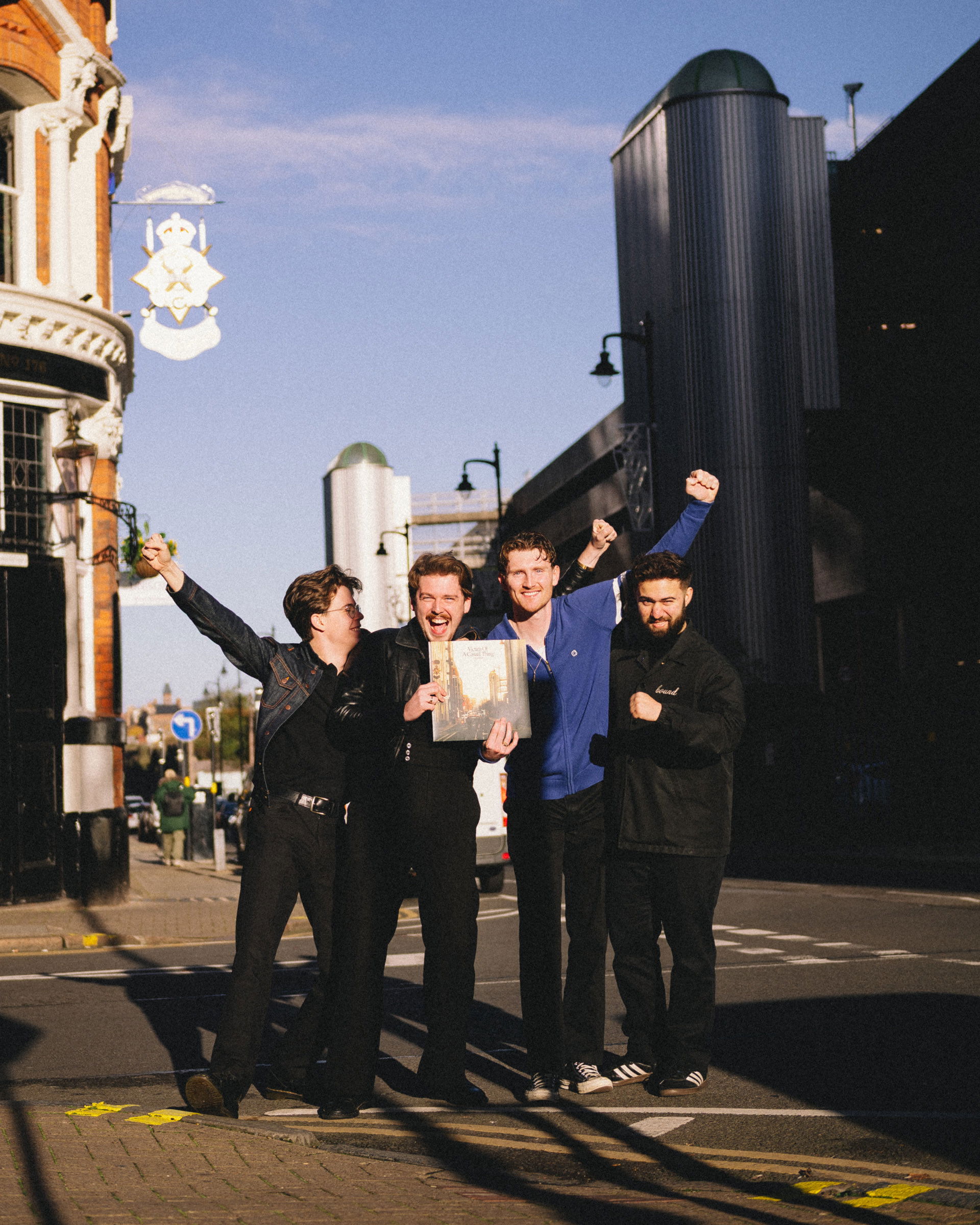
The album kicks the door down with ‘Nothing’s As It Seems’, an arena-ready anthem that balances self-pity with pure bravado. From there, the band shows a staggering range. ‘Tell Me What You Want’ dips into a dancefloor funk before breaking down into a heavy, Royal Blood-style swagger, while ‘White Lifelines’ captures the jagged, restless energy of early Arctic Monkeys. Even the more nostalgic moments hit hard; ‘Elisha’ tells the story of a young romance blooming "behind a Wetherspoons in Leeds," with Pearce admitting his "discography is full of false starts" while clinging to those teenage memories.
The second half of the record is where a good album becomes a great one. ‘Weekend Millionaire’, a love letter to payday Fridays and cheap pints, serves as the album's mission statement: "If life’s fucked up, do not despair / just live your life as a Weekend Millionaire." It leads into ‘I Don’t Care’, a defiant mantra for anyone refusing to grow up, and the moody, confident ‘Fever Dream’. The journey concludes with ‘Don't Blink’, a rallying cry about attempting to grow up while your youth drags you back in.
To end the debut album tour, the band took to the stage at the O2 Academy Birmingham in December to perform to 3,000 people. Being in the room that night, it felt like something special was happening. The setlist was a masterclass in pacing, from the reworked, beefed-up version of ‘Element’ to the poignant phone-light glow of ‘Where Are You Now?’.
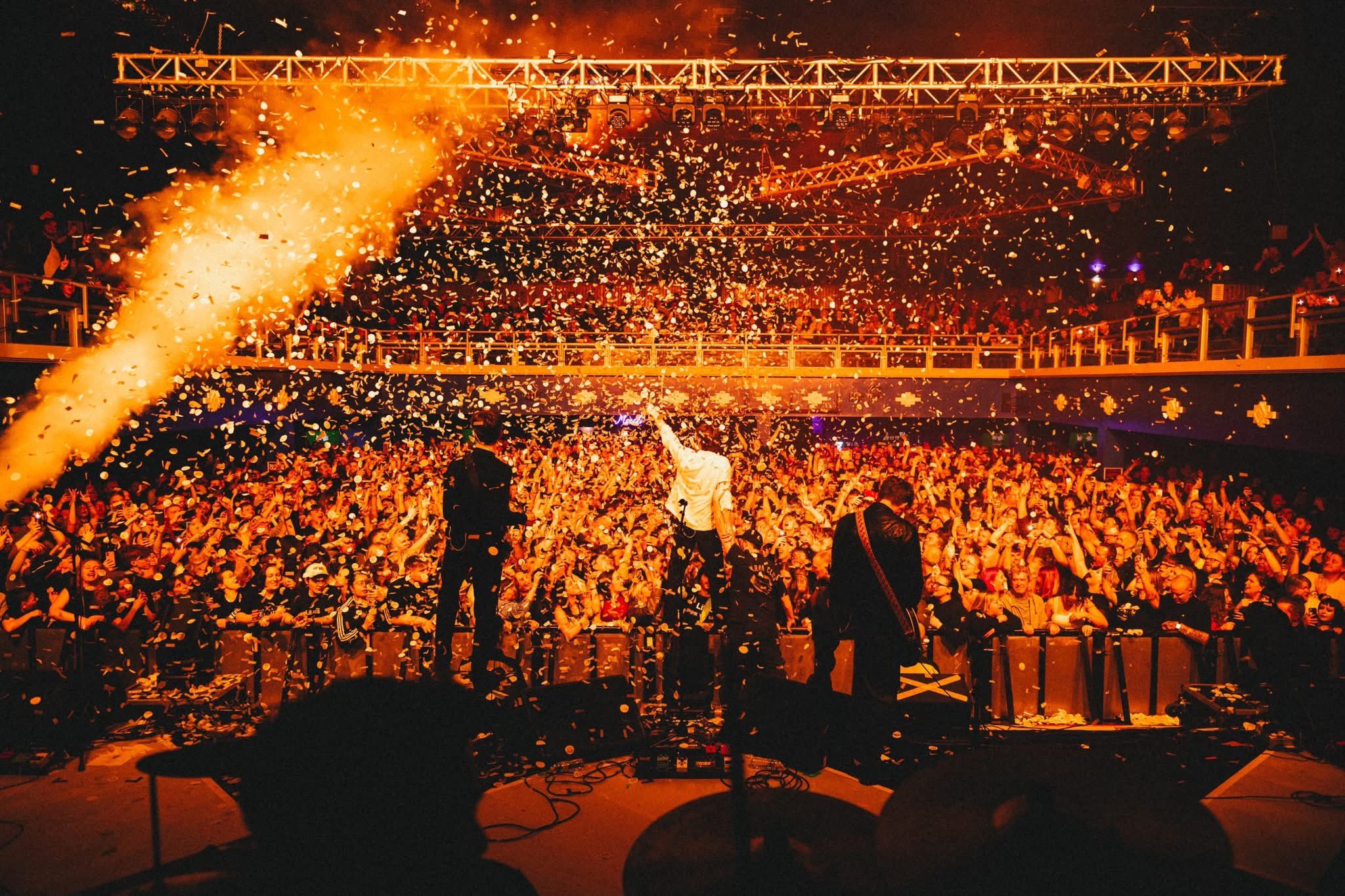
Down at the front, it was absolute carnage; at the back, a communal buzz of a fanbase that has grown up alongside these four mates. With an arsenal of songs this good, the Academy already feels too small. Birmingham has a new band to hang its hat on, and they aren't here to make up the numbers; they are here to take over.
The Great Pivot: Black Country, New Road and the Rebirth of 'Forever Howlong'
If 2022’s 'Ants From Up There' was a towering monument to heart-on-sleeve chamber pop—a record that felt like a final, desperate exhale from former frontman Isaac Wood—then their 2025 studio follow-up, 'Forever Howlong', is the sound of the windows being thrown wide open. The band’s history has always been one of rapid evolution and resilience, beginning in the late 2010s as they emerged from the vibrant Brixton Windmill scene.
Following up 'Ants From Up There' was an almost impossible task, given that the album was instantly anointed a generational masterpiece just as its primary songwriter departed. It is hard to overstate the pressure of stepping back into the studio without the "beating heart" of their previous sound, and while many fans feel this new collection does not quite surpass the mythical heights of its predecessor, it serves as vital proof that the band can do far more than just survive.
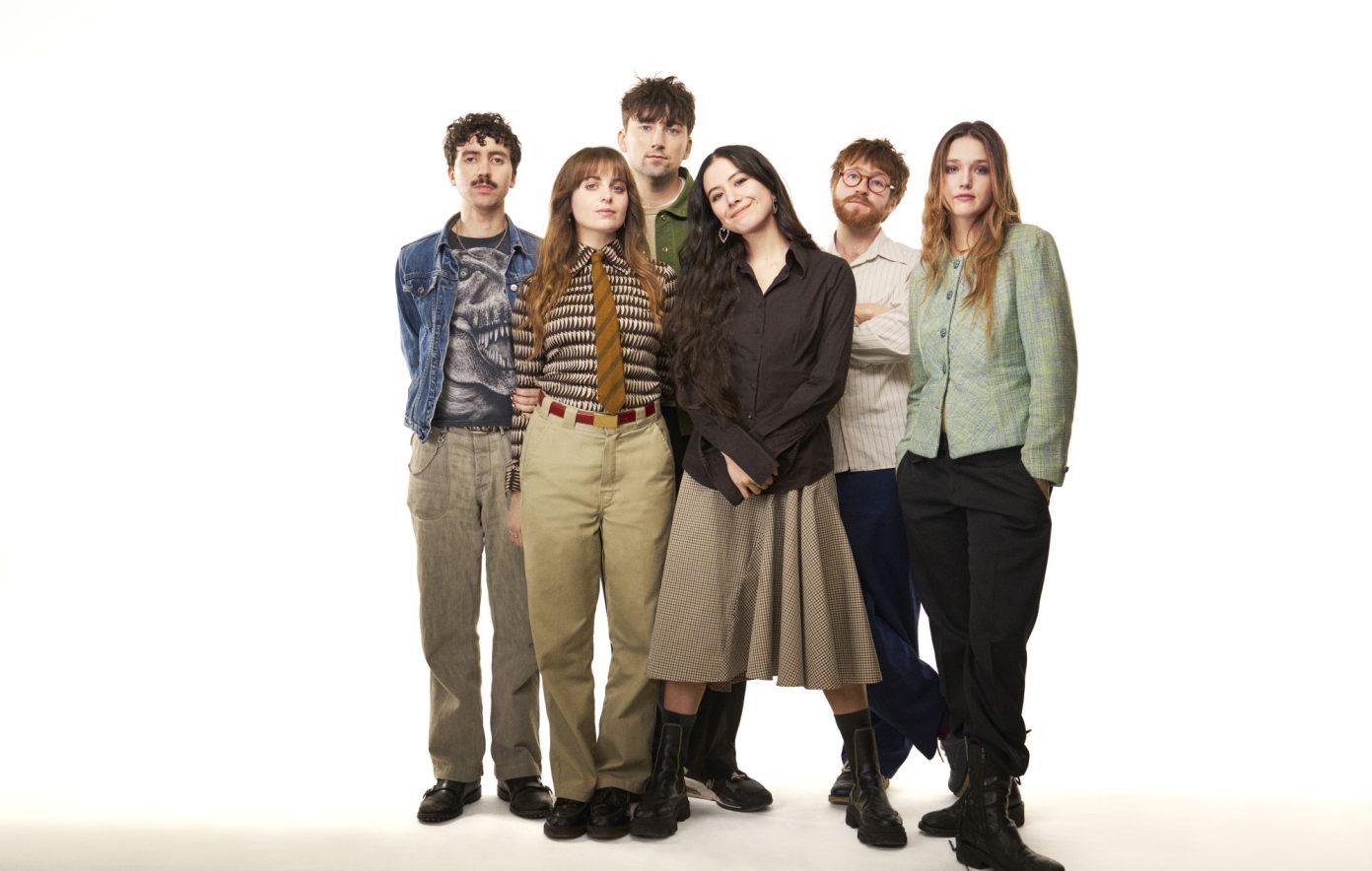
The transition to this new era was first teased during their 'Live at Bush Hall' performances, but 'Forever Howlong', released in April 2025, marks their most radical departure yet. Produced by James Ford, the album moves away from the "angsty neurosis" and Slint-inspired post-punk of their early days, leaning instead into a whimsical, almost pastoral world of progressive folk and English baroque pop. The most immediate shift from the 'Ants From Up There' era is the absence of a single leader, with vocal and songwriting duties now shared between Tyler Hyde, Georgia Ellery, and May Kershaw. Instead of Wood’s trembling, singular perspective that defined tracks like 'Basketball Shoes', the new record offers a spectrum of voices. Tracks like 'Besties', led by Ellery, and 'Happy Birthday', led by Hyde, replace the high-stakes drama of the previous record with something sprightlier, utilising recorders, mandolins, and even harpsichords.
Where 'Ants From Up There' was defined by its massive, weeping climaxes and a sense of impending doom, 'Forever Howlong' is exploratory and often celebratory. It trades the raw, "recorded live in a room" energy of its predecessor for a higher-fidelity, layered production style influenced by the 1970s Canterbury scene. While 'Ants From Up There' was a masterclass in tension and release, this new record is one of deep-set weirdness where lyrics about "boiling beans" coexist with lush, cinematic arrangements. Ultimately, the record demonstrates a band finding beauty in the aftermath, proving that their collective "power of friendship" is a creative force strong enough to build an entirely new world.
Radiohead: The Ghost in the Circular Box
2025 seemed to be the year when bands reunited. Pulp released new music, and Oasis reunited with Live 25. Radiohead's resurrection was a lot more understated.
After seven years of mystery and solo side-quests, Radiohead finally stepped back into the light for a run of residency shows that redefined what a legacy act can be. Eschewing the traditional "hits" tour, Thom, Jonny, Colin, Ed, and Phil performed in the round, encased in a circular box of semi-transparent screens that rose and fell like a digital lung.
The November residency at The O2 was a masterclass in tension, prompting the Evening Standard to hail it as "their most gleeful, hit-packed set in memory." Opening with a weightless, TikTok-rejuvenated version of ‘Let Down’, the band proved that they haven't just aged; they’ve become more "telepathic." The setlists were a fever dream for die-hards, whittling down 30 years of music into a 25-song nightly ritual that felt both "greatest hits" and "avant-garde." Watching Ed O’Brien take the lead on a transcendent ‘Arpeggi’ or Thom Yorke jigging across the stage to the industrial funk of ‘The National Anthem’ was a reminder that while they might be "grey-bearded sea dogs" now, their ability to channel cultural anxiety into communal ecstasy remains unmatched.
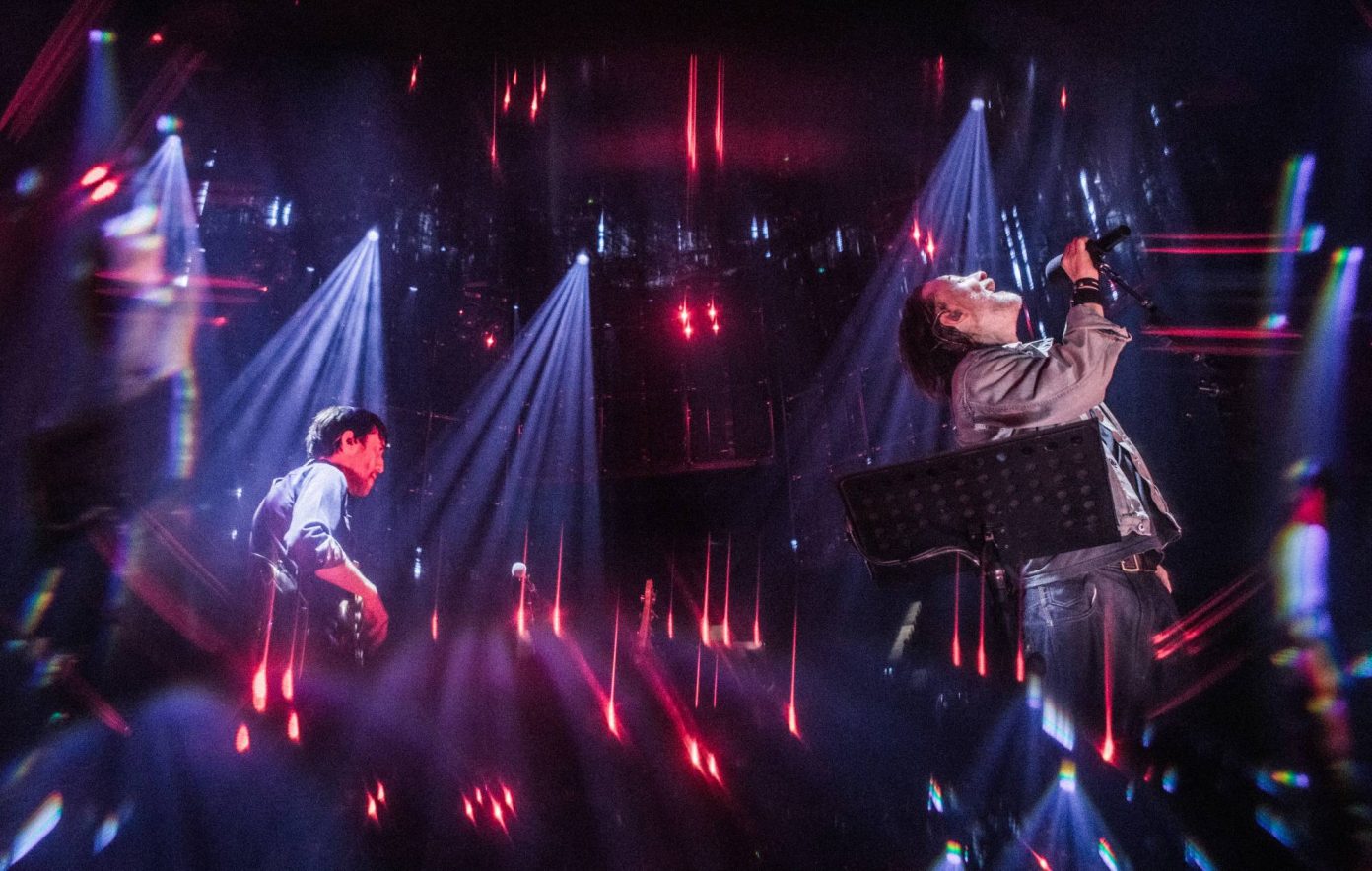
The main sets were anchored by a rotation of heavyweights, with a rare, soaring rendition of ‘Fake Plastic Trees’ blowing the roof off the arena. ‘Climbing Up The Walls’ made a haunting tour debut that saw Thom’s vocals pushed to their distorted limit, while staples like ‘No Surprises’, ‘Paranoid Android’, and ‘Karma Police’ provided the kind of massive, spine-tingling sing-alongs that once felt impossible for a band this experimental. They didn't need a new album to be one of the most important bands in the world; they just needed to be in the same room again.
Crucifixes and Handclaps: Geese are 'Getting Killed'
Geese have released their third studio album, 'Getting Killed'. Since the arrival of their 2021 debut 'Projector', the band have steadily become one of the most respected of their generation. They’ve built a fierce reputation for experimental indie bangers that nod to their influences, New York heroes like The Strokes and The Velvet Underground, alongside the swagger of The Rolling Stones, yet the music Geese make sounds unmistakably like Geese.
Their rise has largely been fuelled by word of mouth, but it was a recent detour into the mainstream that truly ignited their 2025. During a session for BBC Radio 1, the band performed a frantic, high-energy cover of 'You Get What You Give' by New Radicals. The clip went supernova online, eventually catching the eye of New Radicals frontman Gregg Alexander, who publicly praised the band for capturing the song's "original, chaotic spirit." The cover took on a life of its own as a digital anthem, notably going viral across social media as the unofficial soundtrack to the election of Zohran Mamdani as the new Mayor of New York, a fittingly bold moment for a band so deeply rooted in the city's soil.
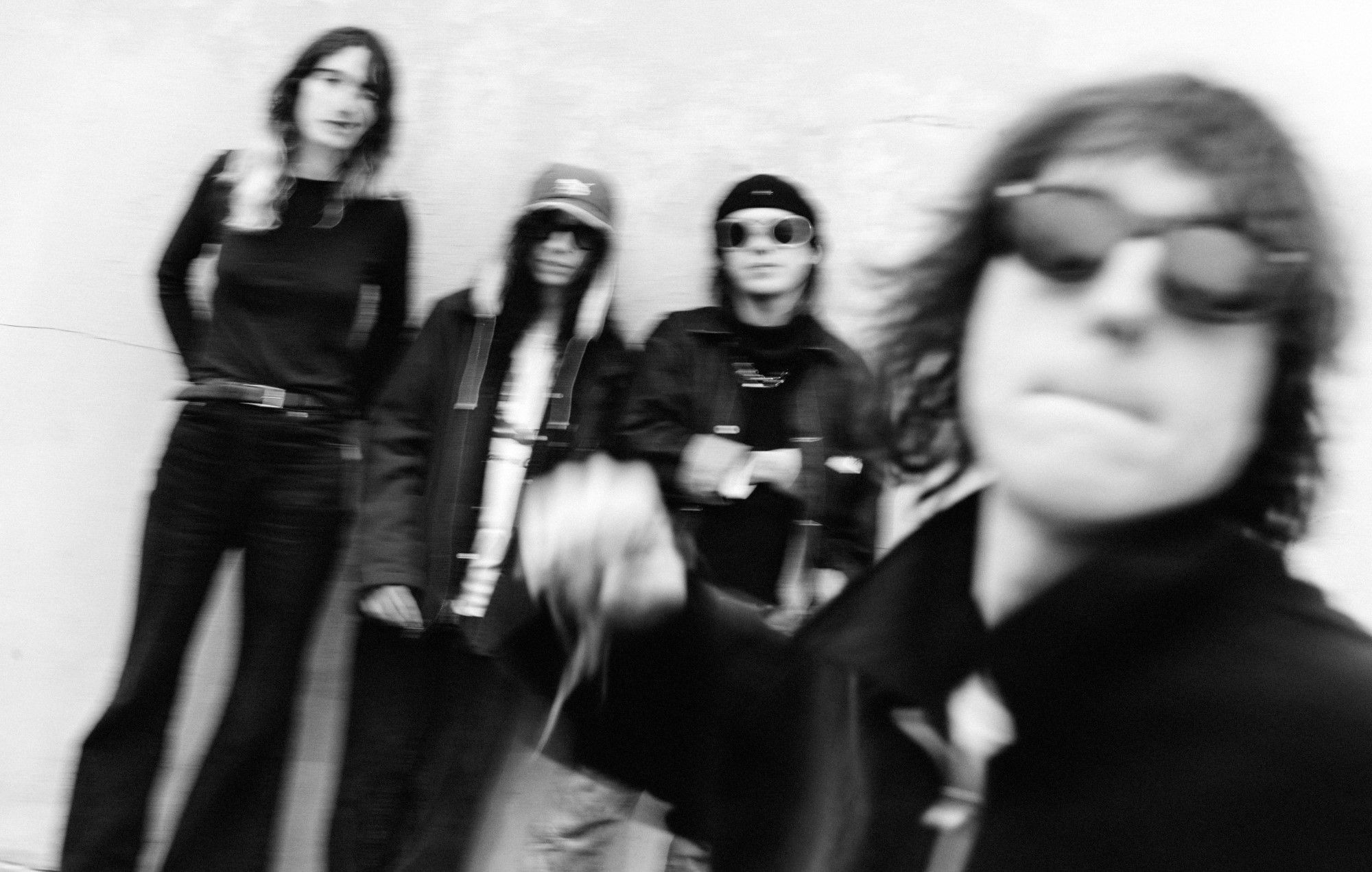
'Getting Killed' finds the band on the brink of superstardom. Frontman Cameron Winter’s solo record, 'Heavy Metal', carved out space for his magnetic presence, and here he reunites with Geese to double down on experimentation and ambition. The result is a record brimming with ideas, confidence, and spectacle. Geese aren’t reinventing the wheel for novelty’s sake, and there’s a comforting familiarity running through the album. Still, something larger looms within the songs themselves. At times, it surfaces through Winter’s vocal delivery, which can feel like that of a wandering yet captivating preacher, sermonising to an attentive congregation.
Elsewhere, it emerges in his vivid lyrical imagery, particularly on 'Taxes', where he laments, "I should burn in hell / But I don’t deserve this," before issuing the warning: "If you want me to pay my taxes / You better come over with a crucifix / You’re gonna have to nail me down." Ahead of the album’s release, Geese told Rolling Stone that during one recording session, they became so fixated on choosing a handclap sample that they forgot "to make the song." Given how much is packed into 'Getting Killed', it’s easy to imagine the five-piece getting lost in the details. Yet despite its sharp turns and meticulous construction, the album never feels cluttered. Instead, it captures a band fully embracing their exhilaratingly free-spirited identity, not so much trying to justify the fervent praise surrounding them, but boldly insisting upon it.
An overwhelming amount is happening across the record. From the shrieked, metal-like scream of "there’s a bomb in my car" on the opening track 'Trinidad', to the surreal and sardonic '100 Horses', where Winter deadpans, "All people must smile in times of war." On 'Taxes', syncopated percussion and a chiming guitar topline feel as though they could have been lifted from a Stone Roses record. 'Getting Killed' is brilliant and manic, performed by a band who know exactly how good they are. As the album closes with the declaration 'Long Island City Here I Come', it’s clear Geese have already travelled much further.
They’ve propelled themselves onto album-of-the-year lists and into record collections everywhere. I hadn’t even heard of them six months ago, and now I've proclaimed them to be the next big thing to far too many people!
The Great Wait Is Over: Oasis Live 25
The biggest musical event of the year, bar none. Oasis’s reunion sent shockwaves across the world. After fifteen years of "will they, won't they," we endured ten months of buildup defined by virtual radio silence from the Gallagher brothers.
Throughout the build-up, it had been quiet. The first time we saw the brothers together since the initial announcement back in August 2024 was in an advert, which premiered on Channel 4 on June 19th. Following the advert, the band announced pop-up stores across the UK & Ireland to coincide with the tour, and of course, a collaboration between themselves and Adidas.
All of the buildup, though, had been for one day: the 4th of July. The first night of the tour was at Cardiff’s Principality Stadium. The first time the brothers had performed together since the V Festival in 2009. "THIS IS NOT A DRILL" were the first words fans were greeted with. Even for those in the stadium, it didn't feel real until it happened.
In a moment that will go down in rock history, Liam and Noel walked out together, arm-in-arm, to a deafening roar of 75,000 people. The guns had fallen silent; the stars had aligned. With a semi-new powerhouse lineup, Joey Waronker on drums, Andy Bell on bass, and Gem Archer and Bonehead sharing guitar duties, Oasis knew exactly what they needed to do.
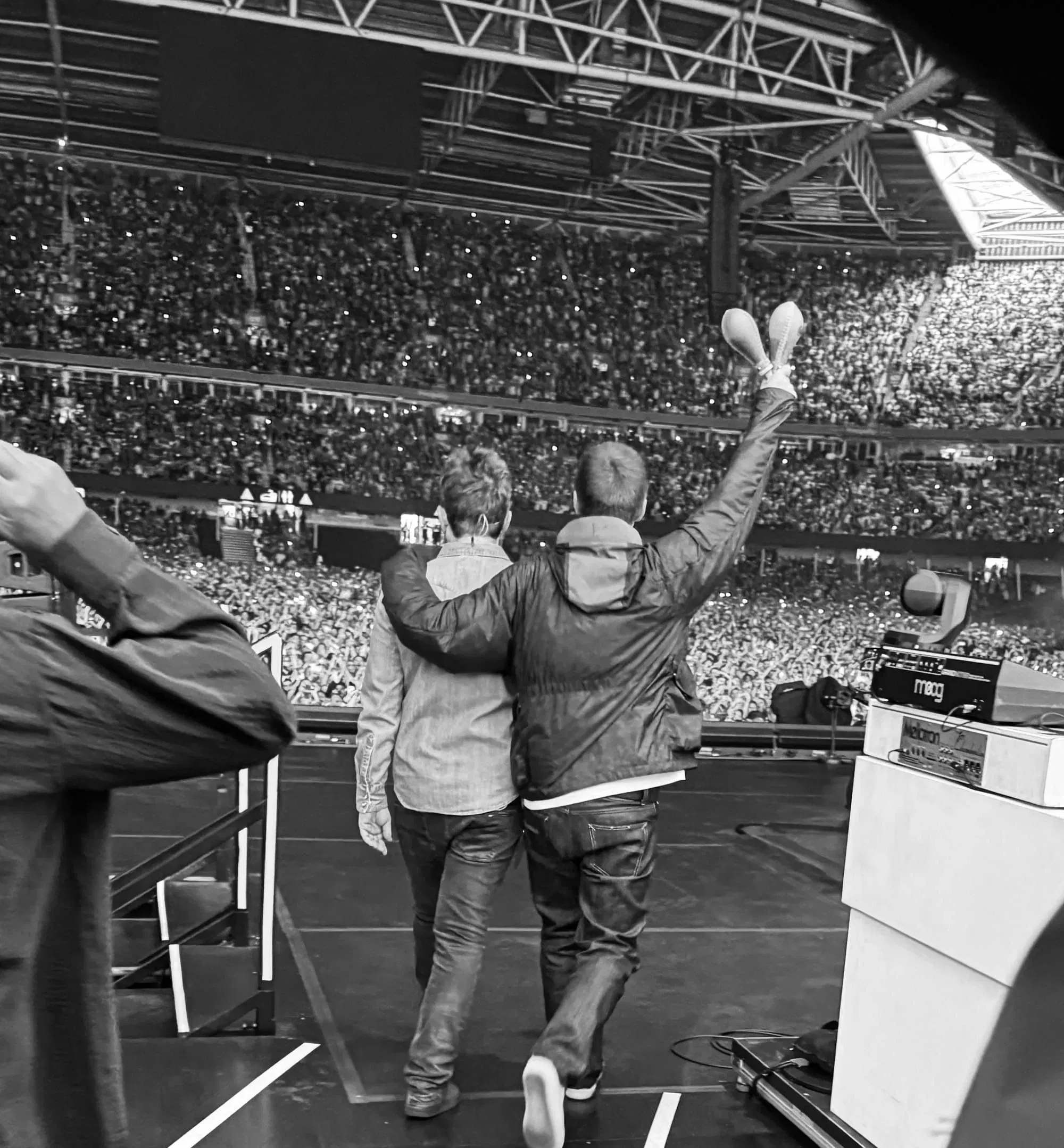
With a powerhouse lineup including Joey Waronker, Andy Bell, Gem Archer, and Bonehead, they kicked off with ‘Hello’ and charged straight into ‘Acquiesce.’ “Because we need each other, we believe in one another,” Noel sang back to Liam, and it had been far too long. The momentum was relentless, hitting ‘Morning Glory,’ ‘Some Might Say,’ and ‘Supersonic’ at a pace that proved they still wanted to be there.
The band knew exactly who they were playing to. As they moved into the encore, Noel dedicated fan-favourite ‘The Masterplan’ to “all the people in their twenties who’ve never seen us before and have kept this shit going for 20 years.” It was a moment that showed they understood the weight of the night; these songs have completely transcended time.
The setlist was a masterclass, featuring just one post-2000 track, ‘Little by Little.’ The night’s most emotional peak came during ‘Live Forever,’ dedicated to footballer Diogo Jota, who had tragically passed away earlier that week. As his shirt appeared on the screen, it felt like the band’s most significant and human moment in years. The show closed with the "holy trinity": ‘Wonderwall,’ ‘Don’t Look Back in Anger,’ and the swirling, glorious epic ‘Champagne Supernova.’
Following the opening salvos in Cardiff, Oasis returned to home soil for five sold-out nights at Manchester’s Heaton Park. Over 400,000 people passed through the gates, but the impact was felt far beyond the perimeter fence. Tens of thousands of fans who couldn't bag tickets gathered on the adjacent slope, now permanently etched into local lore as "Gallagher Hill" creating a secondary festival site where the roar of the crowd mirrored the one inside.
The Cardiff shows may have kicked things off, but it was in Manchester where the band truly raised the bar. A homecoming was always destined to be special, but with the opening-night nerves gone, the band hit the stage with a confidence that suggested they had nothing left to prove. They were back in the city that first believed in them, the same city that gave the world Joy Division, The Smiths, and The Stone Roses and the crowd played their part in a perfect storm of nostalgia and adrenaline.
I was there for the final night, and the energy was surreal. Both brothers addressed the crowd separately, their pride in the city obvious. Liam offered his thanks early in the set: “It’s been amazing being here the last fucking ten days. You’ve actually blown whatever brain cells I had left; they’re well and truly gone.”
Later, just before the opening chords of ‘Don’t Look Back in Anger’, Noel took a moment to reflect on the global spotlight: “For the last ten days, the eyes of the world have been on this city of Manchester, and I just want to say to all Mancunians, you’ve done yourself fucking proud. We’ve got people coming in from all over the world… what I can say from staying in the city is you’ve still fucking got it, Manchester.”
The setlist was a masterclass in why they remain untouchable. Only a band as incomprehensibly popular as Oasis could return after sixteen years and still leave out five Number 1 singles. Instead, they leaned into the classics and B-sides that defined a generation. Throughout the run, the city was woven into the show: ‘Cigarettes & Alcohol’ saw dedications to Pep Guardiola and Manchester City’s Rodri, Jack Grealish, and Phil Foden. ‘Fade Away’ was dedicated to the people of the city, and ‘Half the World Away’ to the beloved sitcom The Royle Family.
Turning to look at the crowd that final night was just as powerful as watching the stage. The demographic was a beautiful mess of ages: teenagers in bucket hats rubbing shoulders with grandparents who were there at Maine Road in '96. It wasn't just a gig; it was a genuine celebration of what these songs mean to people. No disrespect to Cardiff, London, Edinburgh, or Dublin, but these Manchester shows mattered. They were always going to be the heart of the tour.
By coming back, Oasis have achieved what even The Beatles never did, reforming to write a new chapter that actually makes the myth bigger. Their departure all those years ago was a celebration of how far they’d come; their return in 2025 was a reminder that they still hold the crown. They may not have gone out on top, but they definitely returned as the biggest band in the world.
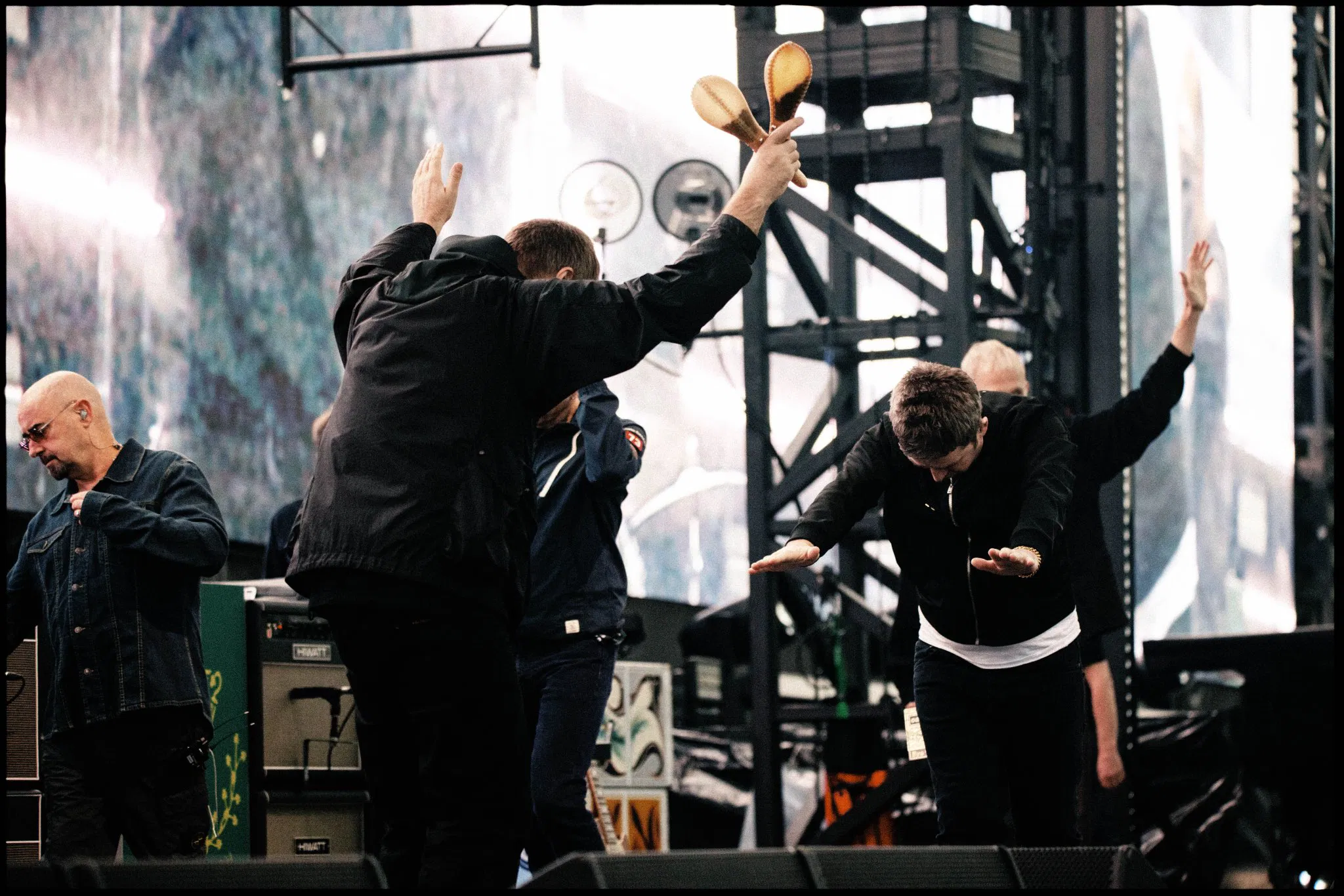
The momentum didn’t stop at the M60. The tour rolled into London’s Wembley Stadium for a seven-night stint. Under the iconic arch, the band proved they could fill the largest of spaces without losing their grit. Liam was in a particularly playful mood in the capital, giving a warm shout-out to Ozzy Osbourne and reclaiming the "Big Smoke" for the North. The sheer volume of 90,000 people singing the opening riff of ‘Cigarettes & Alcohol’ was a physical force, a reminder that Oasis had moved beyond a band and into the realm of a national institution.
From London, the tour headed north to Edinburgh’s Murrayfield Stadium. The Scottish weather did its worst, but the crowd did its best. Drenched but defiant, the audience provided some of the most raucous backing vocals of the entire tour. There was something fitting about hearing ‘The Masterplan’ echoing through a rain-lashed Scottish night; it felt like a return to the band’s early days of playing through whatever was thrown at them.
Then came Dublin. For many, the two nights at Croke Park were the spiritual heart of the tour outside of Manchester. Given the Gallaghers' Irish heritage, these shows felt like a second homecoming. The "Celtic" connection was palpable, with the crowd’s energy during ‘Slide Away’ reaching a level of intensity that even Liam seemed taken aback by. "You're the best singers in the world, man," he told the Dublin faithful, and for those two nights, it was impossible to argue. Dublin also marked the first time that Peggy Gallagher, Noel and Liam's mum, could attend the shows. Making it a special night for them both.
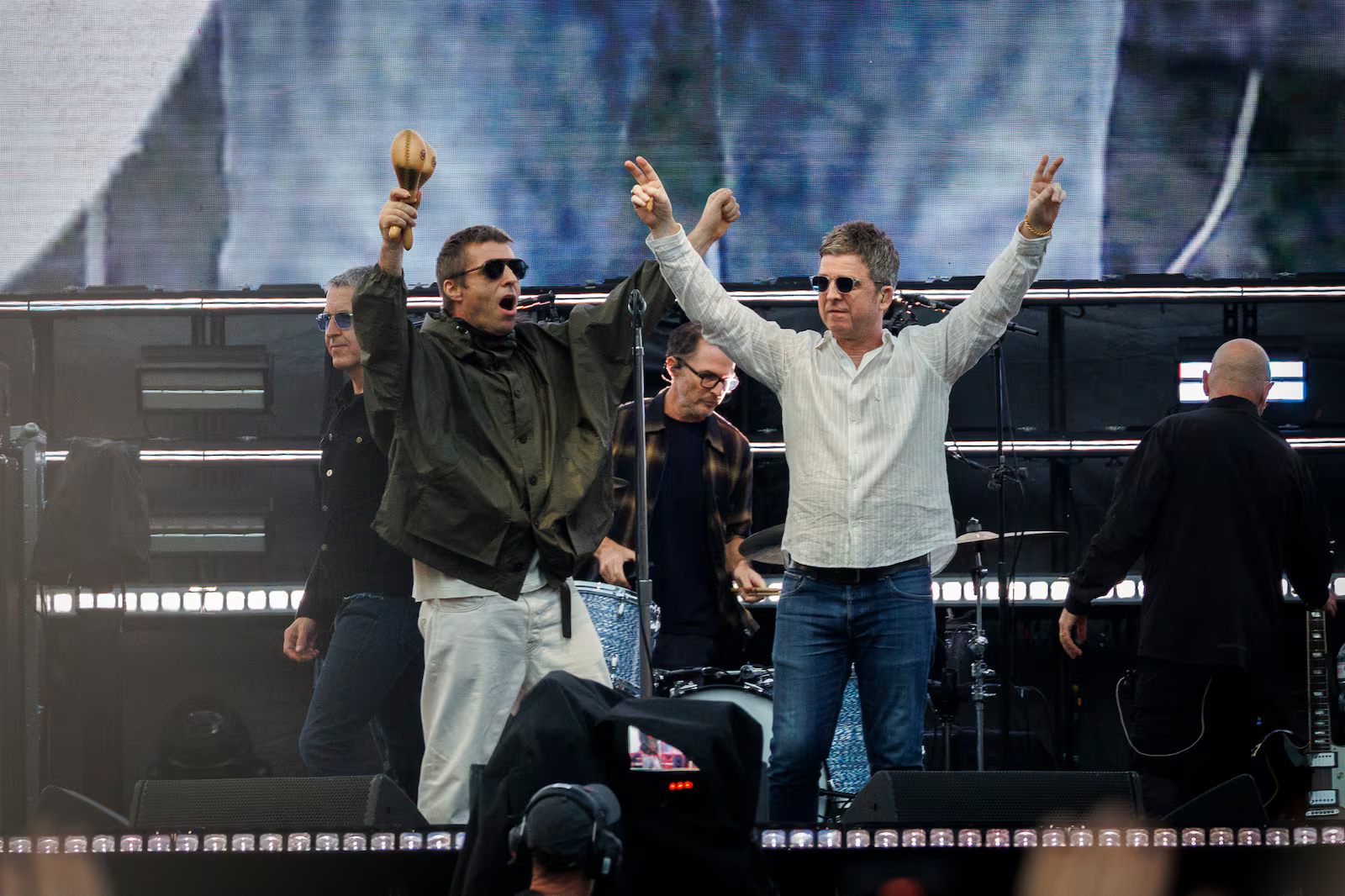
From there, the "special relationship" was tested as they crossed the pond. Selling out stadiums from New Jersey to Los Angeles, Billboard declared that Oasis had finally, truly conquered the States on their own terms. The marathon continued through Japan and Australia, where the demand was so high that extra dates were added within minutes of going on sale.
The final leg in South America provided the most atmospheric closing possible. While the world had been watching for months, Argentina reminded everyone why it remains Oasis’s spiritual home. The two-night run at Buenos Aires’ River Plate Stadium was nothing short of volcanic. With 85,000 fans packed into the "cathedral of sound" each night, the noise was deafening long before the band even touched their instruments.
Liam, tambourine in hand and buzzing with Manc swagger, declared them “the number one crowd, the best.” It wasn’t hyperbole; the fans responded by locking arms in a massive, stadium-wide "Poznan," bouncing in unison until the concrete literally shook. The band leaned into the local culture, with Liam dedicating a ferocious ‘Rock ’n’ Roll Star’ to the late Diego Maradona, and later giving a shout-out to Manchester City legend Sergio ‘Kun’ Agüero.
When the opening riff of ‘Cigarettes & Alcohol’ ripped through the night air, the stadium detonated. Flares lit up the sky in blue and white, and the chants of “Olé, olé, olé, Noel, Noel… Liam, Liam…” thundered across the terraces. It was a pilgrimage for the Argentine faithful, a crowd that doesn't just watch a show, but becomes a part of it. Liam’s social media post later that night summed it up in one word: “Biblical.”
From the chaos of Buenos Aires, the tour moved to its emotional crescendo in Brazil. Ending with two nights in São Paulo in late November, the band paused their set for a moment of profound silence followed by a roar of respect. They paid a moving tribute to Mani, whose loss had felt like a tectonic shift in the Manchester music scene just days prior. To see the Gallagher brothers standing together under the Brazilian stars, paying respects to a brother from back home, felt like the perfect closing of a circle.
With the final bow taken in Brazil, the story has taken an unexpected turn. By coming back, Oasis have somehow become the biggest band in the world again. They’ve achieved what even The Beatles never did, reforming to write a new chapter that actually makes the myth bigger.
The rumour mill is already spinning at a furious pace. While the brothers are currently in a "period of reflection," industry whispers suggest that a 2026 stadium run in territories they missed is highly likely, alongside a potential "Live ’25" concert film. There is even talk of a new album, spurred on by Liam’s cryptic tweets and the undeniable creative chemistry on display this year.
As the dust settles on 2025, one thing is certain: it’s not even half-time yet.
2025: The Year the Torch was Passed
As the final pyrotechnics faded over Villa Park and the tectonic echoes of the Oasis Live '25 reunion began to settle into the history books, 2025 left us with a landscape fundamentally transformed. This wasn’t just a year of massive spectacles; it was a year where the gears of British music shifted, grinding between the mythic nostalgia of the past and the raw, neon-soaked necessity of the future.
The reunion of Liam and Noel Gallagher onstage was more than a tour; it was a cultural miracle. From that first image of the brothers arm-in-arm at Cardiff’s Principality Stadium to the earth-shaking sing-alongs of 'Slide Away' at Heaton Park, Oasis proved they remain the undisputed cultural icons of a generation. But they weren't the only titans reclaiming their territory. Stereophonics dominated the calendar with their massive 'Stadium Anthems' summer tour, culminating in a triumphant homecoming in Cardiff before transitioning into a sold-out winter arena run. Kelly Jones and co. Proved that their catalogue, bolstered by their new 2025 album 'Make ‘Em Laugh, Make ‘Em Cry, Make ‘Em Wait', is as vital to the British soundtrack as ever.
But 2025 was also a year of profound reflection as we said goodbye to some of the most influential architects of sound. We stood together in muddy fields and silent arenas to mourn the titans we lost along the way. We lost the rhythmic heartbeat of Mani, whose basslines defined the swagger of a generation; Rick Buckler, the powerhouse behind the kit for The Jam, who helped soundtrack the mod-revival; and the incomparable Brian Wilson, the genius whose symphonic visions changed the DNA of pop music forever. Their departures felt like the closing of legendary chapters, but their influence was felt in every note played by the new vanguard this year.
That "new vanguard" was busy proving the scene is far more than a museum piece. Charli XCX scorched the zeitgeist at Glastonbury, while The Last Dinner Party and Wet Leg successfully navigated the "sophomore slump." With the gothic grit of 'From the Pyre' and the sharp-tongued wit of 'Moisturizer', they proved the modern indie-rock dynasty is in safe hands. This energy was bolstered by Fontaines D.C., who transitioned from critical darlings to undisputed heavyweights; their 2025 run felt like a victory lap for a band that has redefined what "stadium-sized" post-punk can sound like. Even from across the Atlantic, the influence was felt as Geese revitalised the New York lineage with the manic brilliance of 'Getting Killed'.
The year was also defined by those who courted chaos to speak their truth. Kneecap exploded into the mainstream, using their blend of Irish-language rap and satirical punk energy to challenge the status quo. Their meteoric rise was shadowed by controversy, from political backlash over their provocative mural art to heated debates in the press—but the noise only served to amplify their message, cementing them as the most vital, polarising voice of 2025.
Similarly, artists like Florence + The Machine reclaimed their crowns with the visceral catharsis of 'Everybody Scream', while HAIM returned to infuse the summer with their signature California-slick harmonies. Inhaler officially ascended to stadium-ready status, embracing a lush "alternative pop" sound on 'Open Wide' that resonated from their theatrical "Inhalerween" show at the Royal Albert Hall to the rafters of the M&S Bank Arena.
In the world of storytelling, Dave remained the undisputed poet of the streets, his live shows serving as a reminder of the emotional weight and lyrical dexterity that define the UK scene. Meanwhile, the return of Catfish and the Bottlemen brought a sense of mystery and renewed energy to guitar music, proving that the demand for high-octane indie anthems is as voracious as ever. This spirit was anchored by Sam Fender, who transformed his massive stadium run into a mission of mercy, funnelling hundreds of thousands of pounds back into the grassroots venues that birthed him.
If 2025 was about finding our collective voice again through the return of legends and the rise of new pioneers, then 2026 looks set to be the year we finally use that voice to start something entirely new. The fire has been relit. 2025 will be a year that we look back on for years to come.
Thanks for reading
Jack